More options were supposed to make us happier. The psychology says otherwise. Here's why infinite choice — on Netflix, Tinder, Amazon, and everywhere else — is making us more anxious, less decisive, and harder to satisfy.
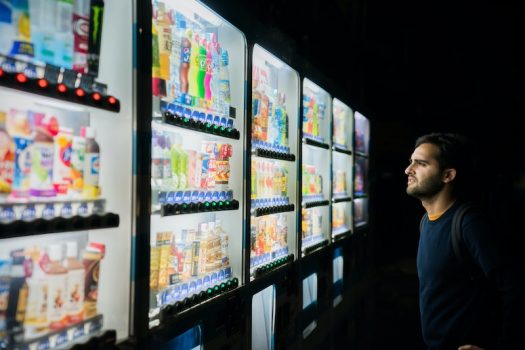
You have been there. Standing in a supermarket aisle in front of forty-seven varieties of shampoo, spending ten minutes reading labels before giving up and grabbing whatever you grabbed last time. Or opening Netflix after a long day and scrolling for twenty minutes before deciding you don’t actually want to watch anything. Or opening Tinder, swiping through dozens of faces, and feeling vaguely empty despite the apparent abundance of options.
This is not a personal failing. It is a documented psychological phenomenon — and it is getting worse as the platforms that organise our lives get better at manufacturing infinite choice.
“Learning to choose is hard. Learning to choose well is harder. And learning to choose well in a world of unlimited possibilities is harder still, perhaps too hard.”
Barry Schwartz, The Paradox of Choice: Why More Is Less
What Is the Paradox of Choice?
The paradox of choice is the observation that having many options to choose from — rather than making people happy and ensuring they get what they want — can cause them stress, anxiety, and paralysis, and leave them less satisfied with whatever they ultimately choose.
The concept was developed and popularised by psychologist Barry Schwartz in his 2004 book of the same name, drawing on earlier research by psychologists Amos Tversky and Daniel Kahneman on how people actually make decisions under uncertainty. The intuition that more choice equals more freedom equals more happiness turns out to be only partially true — and in many situations, actively wrong.
The mechanism involves several overlapping psychological effects. First, decision fatigue — the mental energy required to evaluate options is finite, and as the number of options increases, the quality of our decisions degrades and our satisfaction with them diminishes. Second, opportunity cost anxiety — when you have chosen one thing, every unchosen option becomes a ghost of what might have been, and the more options you passed over, the more ghosts haunt your choice. Third, regret — with many options, we hold ourselves to a higher standard. If there were forty-seven shampoos and we feel our hair looks bad, we wonder whether we simply made the wrong choice among the other forty-six.
“The secret to happiness is low expectations. Not because you deserve less — but because high expectations born from too many options are a reliable recipe for dissatisfaction.”
Maximisers and Satisficers
Schwartz distinguishes between two types of decision-makers that illuminate why the paradox of choice hits some people harder than others.
Maximisers always try to make the best possible choice. They research exhaustively, compare every option, and are not satisfied until they are confident they have found the optimal answer. In a world of limited choices, this strategy works reasonably well. In a world of unlimited choices, it is a recipe for paralysis, anxiety, and chronic dissatisfaction — because there is always one more option to check, always the possibility that somewhere out there is a slightly better answer.
Satisficers set a threshold of acceptability and choose the first option that meets it. They don’t need the best — they need something good enough. In a world of unlimited choice, satisficers are considerably happier than maximisers, even though they frequently end up with objectively inferior choices. The psychological cost of the search matters more than the quality of the result.
This is a genuinely counterintuitive finding. We live in a culture that celebrates the maximiser — the person who researches every purchase, considers every angle, and refuses to settle. But the evidence suggests that learning to satisfice, to accept good enough, is a skill closely correlated with wellbeing.
The platforms that exploit it
Netflix: The Scroll That Goes Nowhere
Netflix has roughly 17,000 titles available in its library at any given time. Its recommendation algorithm is among the most sophisticated ever built, trained on billions of viewing hours to surface content its models predict you will enjoy. And yet the experience of opening Netflix after a long day — the scrolling, the hovering, the trailers, the abandoning and restarting the scroll — is one of the most widely recognised sources of low-grade modern frustration.
The problem is structural. Netflix needs you to watch something to retain your subscription. Its algorithm is therefore optimised to keep you engaged with the browsing process as much as the viewing process. The abundance of content is not a bug — it is the product. The scroll is designed to feel productive even when it isn’t leading anywhere.
The irony is that satisfaction with viewing tends to be higher when the choice is made for you — when a friend recommends something specific, or when you read a review and come with a clear intention. The paradox of choice applies precisely because Netflix has so successfully removed all the external constraints that used to make choosing easier.
Tinder: Infinite Supply, Diminishing Returns
Tinder represents the paradox of choice in perhaps its most psychologically consequential form. The app’s fundamental mechanic — swipe through an essentially unlimited supply of potential partners, match with those who swipe back — is a direct implementation of infinite choice applied to human relationships.
The research on this is not comforting. Studies of online dating behaviour consistently find that more options do not lead to better outcomes — they lead to more superficial evaluation criteria, more switching, and lower commitment to any individual match. When you know there are thousands more potential matches available, the psychological cost of investing in any one person rises. Why work through a difficult conversation when you could just open the app again?
This is not to say dating apps have made dating worse in every way — they have also enabled connections across distance and social circles that would never have happened otherwise. But the architecture of infinite choice they embody has measurable effects on how their users relate to each other, and most of those effects are not positive.
Amazon: The Tyranny of 847 Results
Amazon’s search for almost any product category returns hundreds of superficially similar options with marginal differences in specifications, price, and review counts. The cognitive burden of navigating this is substantial — and the studies show that people frequently make worse purchase decisions on Amazon than in physical stores, despite having access to vastly more information, precisely because the sheer volume of options overwhelms their ability to evaluate them meaningfully.
Amazon’s solution — the “Amazon’s Choice” badge, the “Best Seller” label, the highlighted sponsored results — is itself an acknowledgment of the problem. The platform creates infinite choice and then has to create artificial shortcuts to help people escape it.
Facebook and the Infinite Feed
Social media’s version of the paradox of choice is less about choosing between options and more about the perpetual anxiety of potentially missing something. The infinite scroll was specifically designed to remove the natural stopping points that finite content creates — and it works, in the sense that people scroll far longer than they intended. The cost is a chronic low-level dissatisfaction, a sense that whatever you are looking at right now might be less interesting than what comes next.
Facebook currently has over three billion monthly active users. The average person spends somewhere between two and three hours per day on social media. Some portion of that time is genuinely enjoyable — staying connected, discovering things, being entertained. But the architecture of infinite choice means that a substantial portion is simply the cognitive cost of navigating too many options with no clear endpoint.
The Other Side of the Coin
It would be unfair to present this as entirely negative. The same abundance of choice that produces anxiety also enables genuine flourishing for millions of people. The ability to find, on Spotify, the specific genre of music that speaks to you; to find, on a dating app, a partner you would never have encountered in your physical social circle; to find, on Amazon, a book that changes your perspective — these are real goods that were not available to previous generations.
The paradox of choice is not an argument against choice. It is an argument for being thoughtful about how we design systems that present choices, and how we as individuals navigate environments saturated with them. The research suggests a few practical approaches: set criteria in advance before browsing, impose artificial constraints on your options, practice satisficing rather than maximising, and recognise when the search itself has become the product rather than a means to an end.
What This Means
We have built an economy and a digital infrastructure optimised for the production of choice. More SKUs, more content, more potential partners, more news sources, more investment options, more career paths. The underlying assumption is that more choice is always better — that the ideal end state is infinite personalised options available to every individual at every moment.
The psychology suggests this assumption is wrong, or at least incomplete. Choice is good. Too much choice, presented without structure or constraint, produces anxiety, indecision, and regret rather than freedom and satisfaction.
Barry Schwartz’s insight — published over twenty years ago, before smartphones, before streaming, before swipe-based dating — has only become more relevant as the platforms delivering us infinite choice have become more capable and more pervasive. The paradox of choice is not going away. It is, if anything, the defining psychological condition of the connected world.