
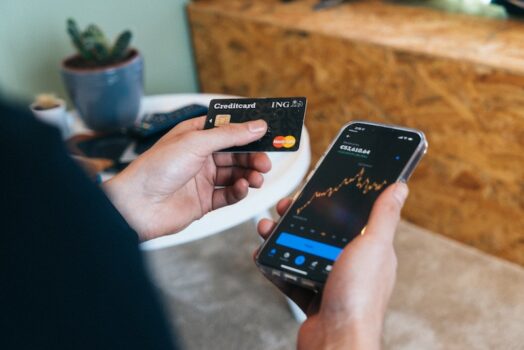
Bitcoin was supposed to make payments simpler. For years, that promise sat mostly unfulfilled — holding crypto was easy enough, but spending it in the real world meant exchanges, conversions, waiting periods, and fees that made it easier to just use your regular bank card. That’s changed. Bitcoin debit cards have quietly become one of the most practical tools in crypto, letting you spend your holdings anywhere Visa or Mastercard is accepted, often for free.
The market has matured significantly since the first crypto cards appeared in 2015. The best options in 2026 offer no annual fees, meaningful cashback rewards in Bitcoin or stablecoins, Apple Pay and Google Pay integration, and ATM access in over 100 countries. Getting one is free in most cases and takes about five minutes to set up.
If you don’t already own Bitcoin, start with our guide to the 5 different ways to buy Bitcoin — from spot ETFs to exchanges — before picking a card to spend it with.
This guide covers everything — how Bitcoin debit cards work, what fees to watch out for, how to get one for free, and which specific cards are worth your time in 2026.
“A Bitcoin debit card doesn’t make you spend your crypto. It makes it possible to spend it when you want to — at the checkout, not three steps before it.”
What Is a Bitcoin Debit Card?
A Bitcoin debit card is a Visa or Mastercard-branded debit card linked to a crypto wallet or exchange account. When you make a purchase, the card provider automatically converts the required amount of Bitcoin (or another cryptocurrency) into the local fiat currency at the point of sale, completing the transaction just like a regular debit card.
You never have to manually convert your crypto before spending. The conversion happens in real time, invisibly, in the background. From the merchant’s perspective, it looks exactly like any other card payment. From your perspective, you’re spending Bitcoin at the supermarket, online, or at an ATM — without the friction of having to pre-convert anything.
Most Bitcoin debit cards today support multiple cryptocurrencies beyond Bitcoin — Ethereum, Litecoin, stablecoins like USDC and USDT, and others. The best cards also offer cashback rewards paid in crypto, which means your everyday spending can grow your Bitcoin balance rather than reduce it.
How Bitcoin Debit Cards Work
The mechanics involve what the industry calls a liquidity bridge — a real-time system that holds an equivalent amount of crypto in your wallet, converts it to fiat at the moment of authorization, and guarantees the merchant’s payment within milliseconds. The process is:
Most cards draw from your balance on a crypto exchange or wallet — Coinbase, Crypto.com, Bybit, etc. Some cards like Oobit allow spending directly from self-custody wallets.
The payment terminal sends an authorization request to the card network (Visa or Mastercard).
The card provider holds the equivalent crypto value, converts it to fiat, and guarantees the merchant payment. The whole process takes milliseconds.
Your account reflects the deduction at the conversion rate at the time of the transaction, minus any applicable fees.
Bitcoin Debit Card Fees — What to Watch
The word “free” in crypto can mean different things. Most Bitcoin debit cards are free to apply for and issue — but they make money in other ways. Understanding the fee structure before you choose a card is essential.
The cleanest way to think about it: the card that’s cheapest depends on how you use it. If you spend primarily in your home currency and never use ATMs, conversion fees matter most. If you travel frequently, foreign transaction fees and ATM allowances become the critical variables — and if you’re planning a trip, it’s also worth knowing you can now book flights directly with Bitcoin, not just spend it once you land.
At a Glance: Best Free Bitcoin Debit Cards in 2026
| Card | Free to get? | Cashback | Conversion fee | ATM (free monthly) | Availability |
|---|---|---|---|---|---|
| Coinbase Card | Free (US) | Up to 4% in BTC | 2.49% | $0 fee (no allowance) | US, EU (fee in EU) |
| Crypto.com Visa | Free | Up to 8% CRO | $200–$800/mo | 90+ countries | |
| Wirex Card | Free | Up to 8% | 0–0.9% | $250/mo | US, UK, AU |
| Bybit Card | Free | Up to 10% MNT | 0% | €100/mo | EU, UK, APAC |
| Binance Card | Free | Up to 8% BNB | 0.9% | $300/mo | Non-US global |
| BitPay Card | Free | Merchant cashback | ~1.75% | $0 | US only |
The 6 Best Bitcoin Debit Cards to Get for Free in 2026
Best for US users
The Coinbase Card is the most straightforward entry point for US-based Bitcoin holders. It’s a Visa debit card funded directly from your Coinbase account balance, accepted at millions of locations globally. No annual fee, no monthly fee — and cashback rewards of up to 4% paid in Bitcoin, Ethereum, or other supported assets depending on your reward selection.
The 2.49% crypto liquidation fee is the main cost — charged every time you spend crypto. If you’re holding stablecoins like USDC in your Coinbase account and spending from those, the fee is lower. Apple Pay and Google Pay are supported. European users pay a small issuance fee; US users get the virtual card for free immediately after account verification.
Best rewards programme
Crypto.com’s card programme is the most feature-rich in the industry — tiered by how much CRO (Crypto.com’s native token) you stake, with benefits that escalate dramatically at higher tiers. The entry-level Midnight Blue card is completely free with no staking requirement and offers a modest cashback rate. Higher tiers unlock up to 8% cashback, free Spotify and Netflix subscriptions, airport lounge access, and enhanced ATM limits.
The card supports 19 cryptocurrencies and 20 fiat currencies, with no foreign transaction fees at most tiers. Available in 90+ countries. The main caveat: the best rewards require staking significant amounts of CRO, which exposes you to CRO’s price volatility. If you’re just after the free card with decent perks, the Midnight Blue tier works well without any staking commitment.
Best cashback rate
Wirex is a UK-founded payments platform that has been operating since 2015 — one of the longest-running crypto card providers. Its card offers some of the highest cashback rates in the industry: up to 8% depending on your pricing plan. No monthly, annual, or usage fees. Free ATM withdrawals up to $250 per month, with a 2% fee above that.
The platform supports a wide range of cryptocurrencies and allows you to hold and spend in both crypto and fiat from the same account. Available in the US, UK, and Australia. The lower conversion fees compared to Coinbase (0–0.9% vs 2.49%) make it more cost-effective for frequent spenders.
Best for Europe and APAC
The Bybit Card is a Mastercard funded by your Bybit exchange account, supporting eight cryptocurrencies including BTC, ETH, XRP, USDT, and USDC. It offers a generous cashback programme with a unique monthly bonus cashback category — rotating rewards that can push effective cashback rates higher than the headline figures suggest.
For European users, the Bybit Card is particularly competitive — €100 per month free ATM withdrawals, 2% above that. Advanced users in the APAC region can withdraw up to $2,000 per day. Not available in the US. The integration with Bybit’s trading platform makes it convenient for users who are actively trading and want to access their exchange balance with a card.
Best global coverage
The Binance Card draws directly from your Binance account and supports multiple cryptocurrencies with up to 8% cashback in BNB. No monthly fees, easy top-ups, and a $300 monthly free ATM allowance make it competitive for frequent users. The cashback rate is tiered by how much BNB you hold — the more BNB in your account, the higher the reward rate.
Importantly, the Binance Card is not available in the United States due to regulatory constraints. For users outside the US — particularly in Europe, Asia, and Latin America — it’s one of the most widely accessible options given Binance’s global footprint. 3D secure verification provides additional transaction security.
Best for US Bitcoin purists
BitPay is one of the oldest names in Bitcoin payments, having processed crypto transactions since 2011. Its prepaid Mastercard is designed primarily for spending Bitcoin and stablecoins, functioning as a prepaid card that you load manually — which provides a useful layer of budget control and security, since the card can only spend what you’ve loaded rather than having direct access to your full exchange balance.
The fee structure is less competitive than other cards on this list — ATM withdrawal fees are around 1.75% — but the simplicity and BitPay’s long track record make it a reliable choice for US users who want a straightforward Bitcoin spending tool without the complexity of a full exchange-linked card.
How to Get a Bitcoin Debit Card for Free — Step by Step
The process is broadly the same across all providers. Here’s what to expect:
Use the comparison table and card reviews above to pick the card that fits your location, usage pattern, and preferred cryptocurrencies. If you already use an exchange (Coinbase, Binance, Bybit), start there — the integration will be seamless.
If you don’t already have an account with the provider, sign up. Most take 5–10 minutes. You’ll need an email address and a password to start.
All regulated crypto card providers require identity verification before issuing a card. You’ll need a government-issued ID (passport or driving licence) and usually a selfie. This is a legal requirement — not optional. KYC approval typically takes minutes with automated systems, occasionally up to 24 hours.
Once verified, navigate to the card section of the platform and apply. Most issue a virtual card immediately — accessible via the app for online purchases and mobile payments. Physical card delivery typically takes 5–10 business days.
Deposit Bitcoin or your preferred cryptocurrency into your linked account. The card is ready to use as soon as your balance is funded. Add it to Apple Pay or Google Pay for contactless payments.
Things to Know Before You Apply
Final Thoughts
Bitcoin debit cards have matured from a niche product into genuinely useful financial tools. The best options in 2026 are free, fast to set up, and offer rewards that rival or beat traditional cashback credit cards. Getting one takes about ten minutes and requires nothing more than an existing crypto account and a government ID.
The right card depends entirely on where you are, where you already hold crypto, and how you plan to use it. For US users, Coinbase and BitPay are the most straightforward options. For Europeans, Bybit and Crypto.com are consistently competitive. For global coverage, Crypto.com’s footprint is hard to beat. Wirex stands out for anyone who wants the highest cashback rates.
Start with a virtual card. Use it for a month. Then decide whether the physical card is worth the delivery fee.
A debit card is only one way to spend Bitcoin. For a broader look at where crypto is accepted — retailers, gift cards, travel bookings, and more — see our roundup of the top 12 websites and apps to use Bitcoin and other crypto.
Disclaimer: Card terms, fees, and availability change frequently. Always verify current terms directly with the provider before applying. This article is for informational purposes only and does not constitute financial advice. Spending cryptocurrency may be a taxable event in your jurisdiction.