
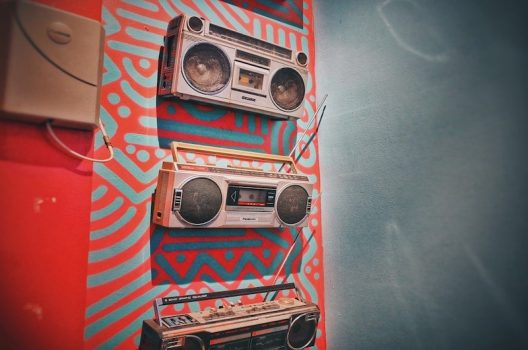
Cassette tapes should be dead. They were supposed to die in the 1990s when CDs arrived, then again in the 2000s when MP3 players made physical media feel pointless, then again in the 2010s when streaming made even owning music seem unnecessary. And yet here we are, in 2026, and cassette sales have hit their highest point in over three decades. The format that everyone buried has refused to stay buried.
This is not a minor novelty story. In the UK, cassette sales in 2023 hit 195,000 units — the highest since 1990. The British Phonographic Industry tracks them again because the numbers are too significant to ignore. In the US, cassette revenue has grown every year since 2016. And unlike the vinyl revival, which was driven initially by an older generation reconnecting with a format they remembered, the cassette comeback has a different demographic at its heart: people who were not alive when cassettes were mainstream.
Why Did Cassettes Come Back?
The honest answer has several layers, and “nostalgia” is only one of them — and arguably not the most interesting one.
The physical object problem. Streaming has made music infinitely accessible and completely intangible. You own nothing. You possess nothing. Your entire music library exists only as long as your subscription continues and the servers stay online. For a growing number of music fans — particularly younger ones — this feels like a loss of something, even if they struggle to articulate what. A cassette is an object you can hold. It has a physical presence, a particular smell, a satisfying click when you put it in the player. It exists in the world in a way that a Spotify playlist does not.
It is cheap. This is where cassettes diverge from vinyl in an important way. Vinyl records are expensive to produce and expensive to buy — a new release on vinyl typically costs £25–£35. Cassettes are astoundingly cheap to manufacture. Labels can produce small runs of cassette editions for a fraction of the cost of vinyl, making them accessible at prices that fans — particularly the young, relatively low-income fans of indie and underground artists — can actually afford. A cassette might retail for £8–£12. The economics work.
It is a collector’s item and a merch item simultaneously. Major artists have understood this. Taylor Swift released multiple cassette editions of her albums during the Eras era. Arctic Monkeys. Harry Styles. Olivia Rodrigo. Billie Eilish. The cassette has become a piece of merchandise that superfans buy not necessarily to play but to own — to have as a physical artefact of a moment in an artist’s career. In some cases, limited cassette editions sell out in minutes. The cassette, paradoxically, has become a luxury item for the digital generation.
“Taylor Swift’s cassette editions sell out in minutes. Arctic Monkeys, Harry Styles, Olivia Rodrigo. The format that was declared dead is now a collectors’ item — bought by people who’ve never owned a cassette player.”
The Sound Argument — Or the Lack of It
Here is where cassette defenders have to be honest: cassettes do not sound good. They never did. The format has inherent limitations — tape hiss, limited frequency response, degradation over time. Compared to CD, vinyl, or a lossless digital file, cassette audio quality is objectively inferior.
And this, paradoxically, may be part of the appeal. The imperfect, warm, slightly degraded sound of a cassette has its own aesthetic character — the same way that the crackle of vinyl has become associated with warmth and authenticity. It is the sonic equivalent of a photograph with grain. In a world of perfectly clean, losslessly reproduced audio, the cassette’s imperfections feel human.
The Lo-fi music genre — which we cover separately on AllinAllSpace — is essentially an entire aesthetic built around the simulated sound of cassette recording. Artists deliberately add tape saturation, wow and flutter, and tape hiss to digital recordings to evoke the cassette aesthetic. The cassette sound has become a style even among people who have never owned a physical cassette.
“In a world of perfectly clean digital audio, the cassette’s imperfections feel human. The hiss is not a flaw — it is the point.”
The Technology Has Improved
The cassette players of 2026 are not the Walkmans of 1985. Modern cassette players — particularly from brands like NINM Lab and the relaunched Sony Walkman lines — include Bluetooth connectivity, USB output for converting tapes to digital files, rechargeable batteries, and improved playback mechanisms that reduce the wow and flutter that plagued older players.
The Bluetooth cassette player is a genuinely useful modern object: pop in a tape, listen through wireless earphones, and get the physical ritual of cassette listening with the convenience of modern audio hardware. The cassette-to-MP3 converter has also enabled a generation of people to digitise family recordings, old mixtapes, and archived radio recordings that exist only on tape — giving cassettes a practical use case beyond music.
Is It a Trend or Something More?
The vinyl revival is now three decades old and showing no sign of reversing — vinyl outsells CD in the UK and the US. The cassette revival is newer and smaller, but it has been growing consistently for a decade. The question is whether cassettes will follow vinyl into permanent mainstream niche status, or whether the comeback will eventually plateau and recede.
The argument for durability: the cassette has found a genuine cultural function as a merch item and collector’s object, separate from its function as a listening format. As long as major artists continue releasing limited cassette editions, there will be demand that has nothing to do with whether people own cassette players. The cassette has, somewhat accidentally, solved its own obsolescence problem by becoming an object rather than a medium.
The argument against: cassette players are significantly harder to find than turntables, the listening experience requires more friction than vinyl (where at least the sound quality justifies the effort), and the format’s cultural moment may be driven more by social media aesthetics than genuine audiophile enthusiasm. When the aesthetic passes, the sales may follow.
For now, though, the numbers don’t lie. The cassette is back. It sounds exactly as bad as it always did. And that, apparently, is entirely the point.