
Pick three countries that agree on almost nothing else. A Nordic welfare state currently run by the left. An EU border country still fighting off the ghost of a border crisis engineered by its neighbour. And Japan, a country so demographically desperate it should, on paper, want immigrants more than anyone else on earth. Denmark, Poland and Japan share no ideology, no religion, no shared history, no shared enemy. And in 2026, all three are running some of the most restrictive immigration regimes in the developed world, built through three completely different mechanisms, for three completely different reasons.
That convergence is the actual story here, and most coverage of immigration politics still isn’t telling it. The comfortable framing, that restriction is a right-wing position and openness is the enlightened default, stopped being an accurate description of the world a while ago. Nobody updated the narrative.
Restriction Stopped Being a Right-Wing Position
For most of the last two decades, wanting less immigration was treated as a position, something you had to own, defend, and usually apologize for. Wanting more, or simply not talking about limits at all, was treated as the default, the view any reasonable, educated person held without needing to argue for it. Restriction was the fringe. Openness was the baseline.
That’s the framing this piece is arguing is now wrong, not as a matter of opinion about what should happen, but as a description of what’s actually happening. Denmark, Poland and Japan aren’t three isolated stories about three countries having their own local immigration debates. They’re evidence for a bigger claim: that restriction has quietly become the median position across the political spectrum, not a right-wing exception to a liberal consensus. And they were picked deliberately because they have nothing else in common. If only nationalist governments were doing this, you could write it off as a right-wing trend. They’re not. A left-wing government is doing it in Denmark. A country with no meaningful far-right party at all is doing it in Japan. That spread, three different ideologies landing on the same answer without coordinating, is the actual argument. The country-by-country detail that follows is the evidence for it, not the point of it.
Fourteen countries, five governing philosophies, one direction. Whatever line usually separates left from right, it hasn’t held on this one.
Denmark: The Left Learned to Build Walls, Too
Start with the one that should be the most surprising. Denmark’s immigration regime is, by most measures, the strictest in Western Europe, and it was not built by a far-right government. It was built by the Social Democrats, under Prime Minister Mette Frederiksen, a party that in most other European countries sits well to the left of anything resembling this policy.
In 2019, Denmark passed what its own government calls the paradigmeskiftet, the “paradigm shift”, 114 restrictive measures enacted at once. The core change: temporary protection became the default for every humanitarian migrant, including resettled refugees, not a fast track to permanent status. To even be considered for permanent residence now, a refugee needs eight years in the country, a passed language test, and 3.5 years of full-time employment within the preceding four. A 2016 law, nicknamed the “jewelry law,” lets the state confiscate cash or valuables above roughly $1,500 from arriving asylum seekers to help cover their own housing costs. A dedicated return agency, the Hjemrejsestyrelsen, exists purely to process departures.
The most restrictive immigration regime in Western Europe right now isn’t run by the party you’d expect. It’s run by the party that’s supposed to be its opposite.
What makes Denmark the sharpest data point isn’t the policy detail, it’s the politics around it. This has cross-party support inside Denmark, which almost never happens with policy this hardline anywhere else in Europe. And Frederiksen hasn’t been shy about exporting it: she’s actively pitched the Danish model to the rest of the EU, and Britain, among others, has reportedly been taking a close look at how she did it. When the party that built the modern welfare state decides the welfare state can’t survive open-ended asylum, that’s not a fringe position anymore. That’s the center relocating.
Poland: The Wall That Actually Worked
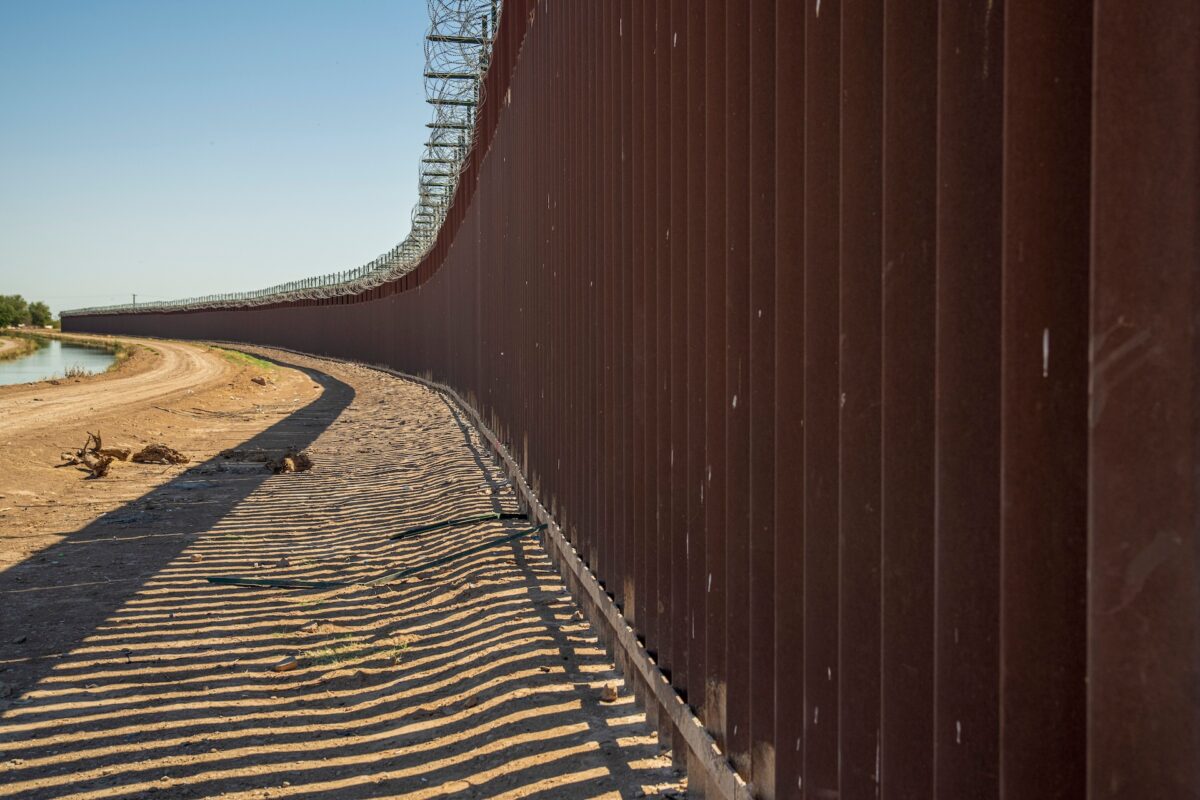
Poland’s version is blunter, and it has the kind of numbers that don’t leave much room for spin either way. Since 2021, Belarus has been actively funnelling migrants toward the Polish border as a deliberate pressure tactic, what Poland and the EU both call “weaponized migration.” Poland’s response was physical and legal: billions spent on fencing, electronic surveillance and personnel, plus a temporary suspension of asylum rights for people crossing irregularly at that border.
That’s not a modest decline, it’s a policy that did precisely what it was designed to do, at a real and still-contested human cost. Attempted crossings fell from roughly 40,000 at the 2021 crisis peak to roughly 12,000 in 2023 to just 235 in the first half of 2026, and of those 235 attempts, Poland’s interior ministry reports zero successful crossings, down from roughly 12,000 that got through in 2023 alone. Poland’s own human rights commissioner has flagged concern that the “temporary” asylum suspension is still in place well over a year on. That hasn’t slowed Poland down. In August 2026, in the wake of a separate mass-migration incident at Spain’s Ceuta enclave, Poland’s interior ministry pushed the entire EU to go further still: deny residence permits outright to anyone who enters illegally, EU-wide, not just at Poland’s own border.
Japan: Restriction Without a Single Fence
Japan is the case that should make everyone uncomfortable, because it’s the one country here with an actual economic gun to its head. Births fell to a record low for the tenth straight year running, just 686,061 births in the most recent full year on record, a 5.7% drop, and the population has now declined for eighteen consecutive years. If any developed country has a rational, self-interested case for opening the door wide, it’s Japan.
Instead, 2026 brought tighter rules, just not the kind you can see from a satellite. From April, some white-collar visa categories now require CEFR B2-level language ability, JLPT N2 for Japanese specifically. New permanent-residency guidelines from February penalize any history of late tax, pension or health-insurance payments, even years after you’ve caught up. The food-service sector hit its intake ceiling in April and had new certificates of eligibility temporarily halted. Compliance reporting shifted from quarterly to annual, with stricter ad hoc checks and mandatory coordination with local government.
That’s the paradox worth sitting with. Denmark and Poland are responding to something, a migration wave, an engineered border crisis. Japan is choosing this without any comparable external pressure, purely as a matter of preference about who comes in and how thoroughly they’re expected to fit in before they’re welcomed to stay. If restriction were only ever a reaction to crisis, Japan wouldn’t be doing it. It’s doing it anyway.
Three Countries, Three Playbooks
| Country | Mechanism | Who’s Doing It | Headline Result |
|---|---|---|---|
| Denmark | Policy design — temporary status as default, benefits and path-to-residency stripped back | Center-left government | Cross-party domestic consensus; model actively exported to the rest of the EU |
| Poland | Physical and legal deterrence — border infrastructure, suspended asylum rights | Border-security consensus, survives government changes | 98% drop in attempted crossings since 2021 peak |
| Japan | Administrative friction — language thresholds, compliance history, sector caps | Conservative status quo, no far-right party required | Selective admission maintained despite record demographic need |
Lay the three side by side and the table isn’t just a recap, it’s the argument in its most compressed form. Denmark restricted through policy design, from inside a welfare state built to be generous. Poland restricted through concrete and statute, under actual external pressure at its border. Japan restricted through paperwork alone, with no crisis forcing its hand and every demographic incentive pointing the other way. Three governments, three toolkits, zero coordination, and the same direction on the only variable that matters: who gets in, and on what terms. That’s what makes the comparison worth more than any single country’s story on its own. If restriction only showed up where the far right governs, or only as a reaction to a border crisis, this table would look nothing like it does.
The Real Story Isn’t Any One of These Countries
It’s that three governments with nothing ideologically in common, arrived independently at the same conclusion, using three different tools. A left-wing government did it through welfare-state policy design. A border state under active geopolitical attack did it with concrete and statute. A rapidly aging, labor-starved democracy did it with paperwork, for no reason anyone forced on it. When that many different systems, under that many different pressures, land on the same answer without coordinating, that’s not a coincidence of politics. That’s closer to data. Part of what’s underneath it, in all three places and plenty of others, is the same distributional anxiety that surfaces whenever economic inequality becomes a live political fight: when growth stops feeling broadly shared, tolerance for open borders tends to go first.
The old framing, restriction as the fringe position, openness as the responsible mainstream one, doesn’t describe 2026. What actually happened is quieter and less flattering to everyone’s priors: the mainstream moved, across the ideological spectrum, and a lot of commentary is still writing as though it didn’t.
Nobody coordinated this. A left-wing government, a border state under attack, and a labor-starved democracy all arrived at restriction on their own. That’s not politics converging. That’s something closer to consensus.
None of which settles the actual argument, and a piece that pretended it did would be cheaper than it’s worth. Denmark’s own integration researchers argue the hardline approach hasn’t actually starved the far right of support the way it was supposed to, the AfD-adjacent parties elsewhere in Europe are doing fine regardless. Poland’s rights concerns aren’t hypothetical, its own ombudsman is still raising them. And Japan is making a bet, that social cohesion and administrative order are worth more than the labor its own economy is visibly short of, that could look very different in a decade if the demographic math doesn’t bend the way the policy assumes. Restriction working, in the narrow sense of fewer people crossing a line on a map, is not the same claim as restriction being cost-free, and the countries doing it most aggressively aren’t pretending otherwise even when their critics abroad do. And not every left-of-center government has read the moment the same way: Spain’s Pedro Sánchez has gone the opposite direction, granting residency to nearly a million undocumented migrants even as Washington accelerates deportations, a divergence sharp enough that immigration is now one of the running fault lines in his defiance of Trump.
My own read: the immigration debate everyone thinks they’re still having, open borders versus closed, progressive versus reactionary, mostly ended a few years ago, and lost. What’s actually being argued about now, in Copenhagen, in Warsaw, in Tokyo, is something narrower and more practical: not whether to restrict, but how to do it competently, and how much cruelty a government is willing to accept as the price of control. That’s a less satisfying debate to have than the old one. It’s also the one actually happening, whether the rest of us have caught up to it or not.
This piece represents the opinion of the author. Facts, figures and dates are drawn from public government sources and reporting cited throughout, and are accurate to the best of our knowledge as of September 2026. Immigration policy is a fast-moving and contested area; readers should verify current rules directly with the relevant national authorities before relying on any detail here.