
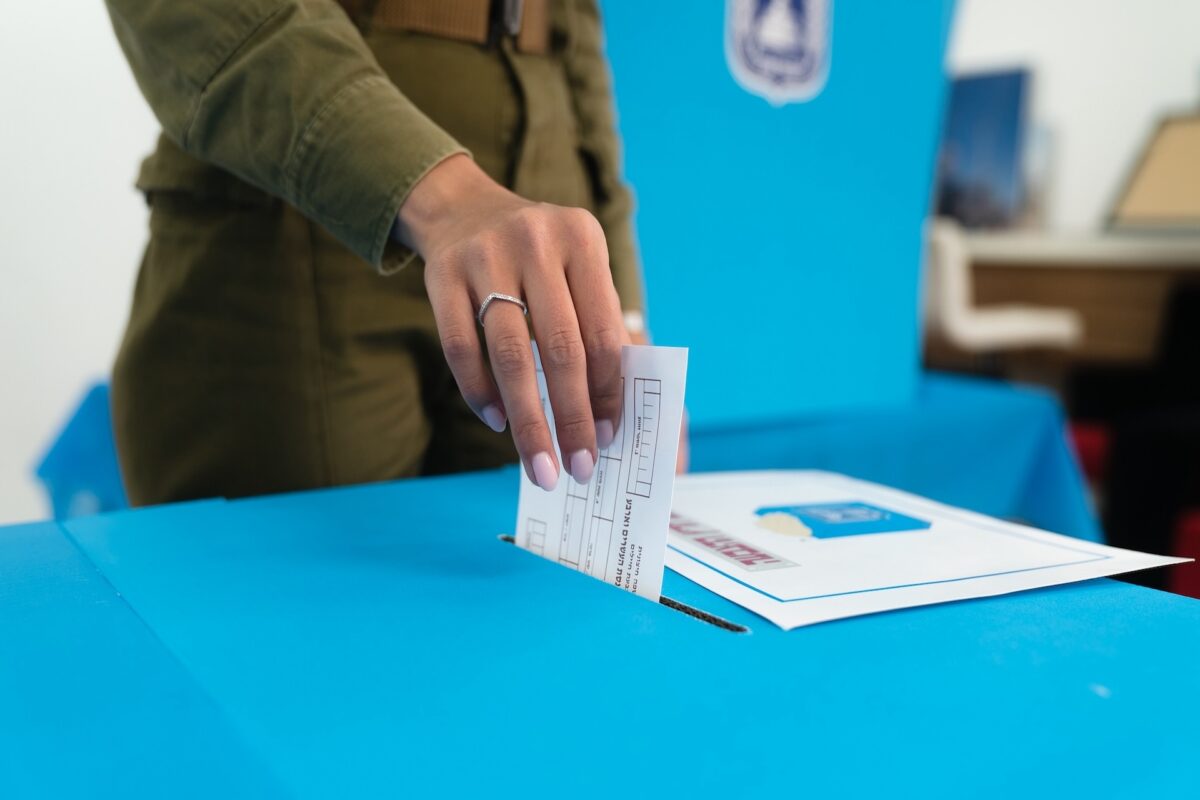
On October 27, Israelis vote in their next national election, and it may be one of the closest and most important in years. The story in a nutshell: will the opposition succeed in removing Netanyahu from power?
Netanyahu returned to office in December 2022, his third stint as prime minister. Add them all up, and he is the longest-serving prime minister in Israel’s history, with about 19 years in office. Some, obviously, say it’s too long.
And so, this time it feels different. The mood in the streets is mixed. Some Israelis feel it’s time for Netanyahu to go, and for new faces and new policies. Others still praise his leadership in recent years, and despite October 7, they still have faith in him.
So here’s what you should know: the story, the candidates, the polls, and the odds.
In this article
This article is updated regularly until election day, and again as soon as the results are published.
The Israeli Election on Polymarket
Prediction markets let people trade on the outcome of an event, and the prices work as probabilities. On Polymarket, the market for who will be Israel’s next prime minister currently favours Eisenkot, at about 48%. Netanyahu is at about 31%, Bennett at 11% and Lieberman at 2.5%. More than $46 million has been traded on the market.
The widgets above update live. The first asks whether Eisenkot will be the next prime minister. The second asks whether Yashar will win the most seats, and there traders are more confident: about 62% for Yashar and about 39% for Likud (the two prices can add up to slightly over 100% because of how the market quotes them). The gap between the two is worth noticing. Traders see Yashar as more likely to finish first than Eisenkot is to become prime minister, which fits the coalition problem described below: winning the most seats isn’t the same as getting to 61. The figures in the text are as of October 16.
That fits the polls, where Yashar leads or ties Likud. But a market price isn’t a forecast. It reflects what traders are willing to pay, it can move fast on a new poll, and a 48% favourite still loses more often than not. Netanyahu at 31% is far from out. The seats market is also much smaller, with under $1 million traded so far, so its prices can move more easily.
Prediction markets carry a risk of loss, are not available in every country, and are not investment advice. We may earn a commission if you sign up to Polymarket through the links in this article.
Background
This isn’t a snap election. The Knesset reached the end of its four-year term and dissolved on July 17, and the vote is set for October 27. The war with Hamas, Hezbollah and Iran kept Netanyahu’s coalition in place for longer than many expected. It wasn’t smooth, though. In July 2025, ministers from the ultra-Orthodox parties Shas and United Torah Judaism resigned over military service, and the coalition passed a last round of laws just before it dissolved.
Then there’s Netanyahu’s trial. He has been on trial since 2020 for bribery, fraud and breach of trust, charges he denies and calls a political witch hunt. In November 2025 he asked President Herzog for a pardon, and Herzog declined for now and pushed for plea talks. His critics fear that a win would help him end the case. His supporters say it should never have been brought.
The Parties, Sides, and How It Works
Israel has 120 seats in the Knesset, and a bloc needs 61 to govern. A party must win at least 3.25% of the vote to get in, and the small parties near that line can decide the whole thing.
Benjamin Netanyahu is running again as the leader of Likud. His main challenger is Gadi Eisenkot, a former IDF chief of staff, who left Blue and White and started his own party, Yashar. He is the new face of the bloc and the hope of many Israelis to replace Netanyahu. Eisenkot lost a son in the Gaza war, and many Israelis see him as an honest politician who can unite the country while keeping it secure.
Naftali Bennett, who was prime minister for a short time from 2021 to 2022, has joined forces with Yair Lapid on a joint list called Together. They are polling at 13 seats in the latest Channel 12 poll.
Another key player is Yair Golan, a former major general in the IDF and one of the most outspoken figures in Israeli politics. He represents the left, and along with Eisenkot, he is one of Netanyahu’s toughest opponents. He leads the Democrats, which he formed in 2024 through the merger of Labor and Meretz, and the party is polling at 9 seats.
Here are the players and the side they’re likely to be on if they pass the threshold:
| Party | Leader | Seats in latest poll* | Likely side |
|---|---|---|---|
| Likud | Benjamin Netanyahu | 20 | Netanyahu bloc |
| Otzma Yehudit | Itamar Ben-Gvir | 8 | Netanyahu bloc |
| Shas | Aryeh Deri | 8 | Netanyahu bloc (ultra-Orthodox) |
| United Torah Judaism | Yitzhak Goldknopf | 7 | Leans Netanyahu (ultra-Orthodox) |
| Religious Zionism | Bezalel Smotrich | 6 | Netanyahu bloc |
| Yashar | Gadi Eisenkot | 23 | Eisenkot bloc |
| Together | Naftali Bennett and Yair Lapid | 13 | Eisenkot bloc |
| The Democrats | Yair Golan | 9 | Eisenkot bloc |
| Yisrael Beiteinu | Avigdor Lieberman | 9 | Eisenkot bloc (won’t sit with Arab parties) |
| Joint List and Ra’am | Odeh and Tibi / Mansour Abbas | 8 and 5 | Arab parties, outside both blocs |
| The Reservists | Yoaz Hendel and others | 4 | Undecided, near the threshold |
| Blue and White | Benny Gantz | 0 (below threshold) | Says he would seek a unity government if he gets in |
*Channel 12 / Midgam poll, October 12. Source: N12 election hub.
How the Israeli Elections Work
Israelis don’t vote for a prime minister directly. They vote for a party list, and the 120 Knesset seats are split in proportion to the votes. A party needs at least 3.25% of the vote, about four seats, to get in, and with 38 lists running and only around 15 expected to pass, a lot of votes could be wasted. After the vote, the president picks a candidate to try to form a government. That person has 28 days, with an extension of up to 14 more. The goal is a coalition of 61 seats.
That’s why the race isn’t only about who wins the most seats. A party can finish first and still fail to form a government if its partners don’t add up to 61. Right now neither side gets there in most polls, with both blocs sitting somewhere around 50 to 54 seats. The Arab parties, polling around 13 or 14 seats combined, could tip the balance, but both camps say they won’t include them. Some argue that gives Netanyahu the easier path, since the opposition would need those votes and his natural partners are more willing to sit together. Others say he is in his weakest position in a decade, because at least one of his partners, Smotrich’s Religious Zionism, is near the threshold, while no opposition party is at risk. If neither side reaches 61, Israel could go back to the polls, and Netanyahu would stay on as a caretaker prime minister. It has happened before: Israel held five elections between 2019 and 2022.
What the Polls Say
The polls don’t agree on everything, and that is part of the story. The results are mixed, but they agree on one thing: as of writing, neither side has a clear majority of 61 seats. In other words, it’s all open.
Here are the latest polls from the three main TV channels, Channel 12, Channel 13 and Kan 11:
| Party | Channel 12 | Channel 13 | Kan 11 |
|---|---|---|---|
| Yashar (Eisenkot) | 23 | 20 | 22 |
| Likud | 20 | 20 | 20 |
| Together (Bennett and Lapid) | 13 | 12 | 12 |
| The Democrats | 9 | 10 | 8 |
| Yisrael Beiteinu | 9 | 9 | 8 |
| Joint List (Arab parties) | 8 | 9 | 8 |
| Otzma Yehudit | 8 | 8 | 9 |
| Shas | 8 | 7 | 7 |
| United Torah Judaism | 7 | 8 | 8 |
| Religious Zionism | 6 | 7 | 5 |
| United Arab List (Ra’am) | 5 | 6 | 5 |
| Reservists–Economic Party | 4 | below threshold (2.9%) | 5 |
| Amcha Yisrael (Ofer Winter) | below threshold (1.8%) | 5 | 4 |
| Blue and White (Gantz) | below threshold (0.9%) | below threshold (0.8%) | below threshold |
Source: N12 election hub, latest poll from each channel as of October 16. The Channel 12 poll is dated October 12. Seat counts are as displayed by N12 and may not add up to exactly 120 because of rounding.
A few things stand out. Eisenkot’s Yashar leads Likud in two of the three polls and is tied with it in the third, and Likud holds steady at 20 everywhere. The real differences are in the small parties near the 3.25% threshold. The Reservists and Amcha Yisrael are in or out depending on the poll, and a few seats there could change the whole picture.
What matters is the blocs. In Channel 12’s poll, Netanyahu’s bloc has 49 seats and the opposition has 67, which includes the Arab parties’ 13 seats. Without the Arab parties, the opposition has about 54, plus 4 for the Reservists, who aren’t in either bloc. By my count, the other two channels look similar: Netanyahu’s parties (Likud, Otzma Yehudit, Shas, UTJ and Religious Zionism) total about 49 to 50, and the Zionist opposition (Yashar, Together, the Democrats and Yisrael Beiteinu) about 50 to 54. The right could get 4 or 5 more if Amcha Yisrael passes the threshold. Some of the opposition parties won’t sit in a government with the Arab parties, so even 67 doesn’t give the opposition a clear path.
In short, Netanyahu’s side is far from 61 in every poll, and the other side only gets there with the Arab parties.
What the Election Is About, Not Left vs. Right
Primarily, the election is about internal issues rather than security and foreign policy. The biggest one is the judicial overhaul the coalition plans to push if it is elected again. As a reminder, that was the key issue that divided Israeli society before October 7, and it created one of the deepest internal rifts in the country’s history.
On the Palestinian issue, ironically, there is a kind of consensus. Apart from the Arab parties and the Democrats, most of the major parties reject the establishment of a Palestinian state under current conditions. Bennett rejects it outright, and Eisenkot has called the idea “delusional”.
Another key issue is the ultra-Orthodox (Haredi) community, which makes up roughly 13–14% of the population. In recent years, the coalition has expanded the role of religion in civil life and kept the ultra-Orthodox out of the draft. The opposition wants to stop that process and draft them.
Another major issue is the cost of living. Many Israelis are exhausted by the high prices and want change: new reforms, lower taxes and more social benefits.
Lastly, Israelis also care about international affairs, which are handled by the government. Many see Netanyahu (“Bibi”) as a master of foreign policy, and in many people’s opinion his relationship with Trump and other world leaders can’t be replaced. Eisenkot, Bennett and Golan have less experience on the world stage and, for some voters, less charisma, which makes them less appealing, even to some of their own supporters.
Overall, the 2026 election isn’t about the conflict. It’s about the nature of the regime, and about what kind of country Israel will be.
In a Word: What It Means for Markets
Well, the truth must be said, and this is from an economist’s perspective: Netanyahu has been good for the Israeli economy. Yes, it is debatable. Bibi is a neoliberal, and as such, he has managed to push the Israeli economy to new highs and sustained economic growth despite the wars in Gaza and with Iran. Overall, in his 19 years of governing, the Israeli economy has grown and become among the most resilient economies worldwide. Whether it should be attributed to his policy is debatable, but Netanyahu certainly knows economics, and some of the actions he took benefited the Israeli economy.
Still, one thing that cannot be ignored is the increase in the cost of living and in inequality. Israel is expensive, really expensive. For some, the cost of living is a bigger issue than missiles from Iran and any political and security issues. They want an easier life, and since Netanyahu cannot provide that, they turn to the other side.
For the Israeli markets, it is more than likely that investors prefer Netanyahu in power. The opposition may help its citizens by reducing the cost of living, but no other figure is perceived as an economic leader the way Netanyahu is.
This article is for informational and educational purposes only and does not constitute financial or investment advice. Prediction markets, stocks and leveraged products are volatile and carry a high risk of loss. Polls and market odds change quickly, and the figures quoted here are as of the date shown.