
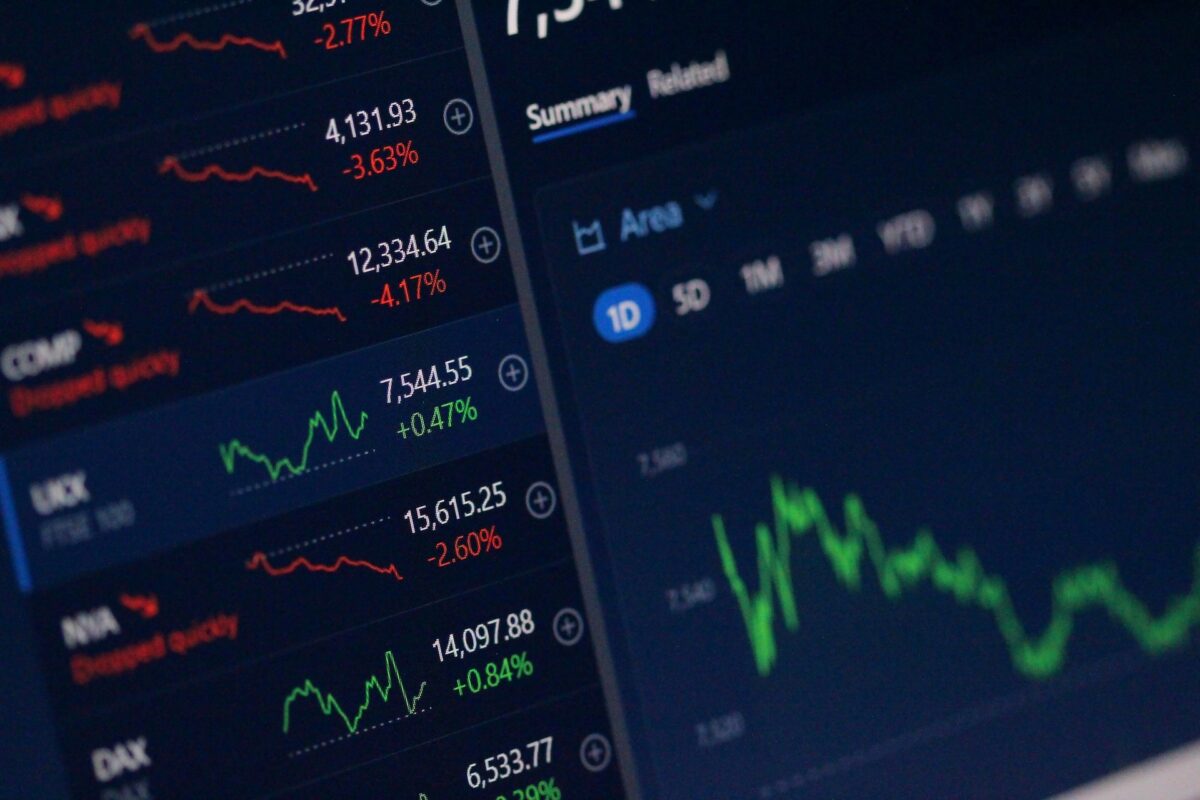
Wall Street had its worst day since July yesterday, as a hotter inflation report and Treasury yields above 5% kept weighing on the market. The sell-off then spread to Asia. In Seoul on Thursday, South Korea’s KOSPI plunged more than 7% in early trading, and is down more than 18% over the past five days, with Samsung Electronics down about 9% and SK hynix about 11%, reviving concerns about an AI bubble. After weeks of warnings, the crisis forecasts from analysts are starting to sound less like talk and more like a prediction.
Last week, Michael Burry, the investor who made his name betting against the US housing market before 2008, wrote on X on October 6 that the stock market is clearly in the first stage of grief, which he calls denial. Based on 2000 and 2008, he said, this stage lasts six to nine months. In the same fortnight, a British investment bank, one of the best-known fund founders in the world and the IMF all added their own warnings.
But there is another side. Strong earnings, led by technology, have been a key support for the market this year, and a new reporting season is now under way. FactSet expects S&P 500 earnings to grow 29.5% in the third quarter from a year earlier, with analysts raising their estimates during the quarter when they usually cut them. This week, ASML reported record quarterly sales and raised its full-year outlook, TSMC reports on Thursday, and the biggest tech companies follow in the coming weeks. That is the battle in the markets right now: warnings about rates, valuations and AI spending on one side, and a profit machine that keeps delivering on the other.
“Closer Than Many Investors Think”
That is how Joachim Klement, head of market strategy at the London bank Panmure Liberum, described the end of the bull market in a note reported by Reuters on October 5. His forecast: the S&P 500 falls to 5,000 by the end of 2027, more than 35% below its level at the time. Bloomberg reports that this is by far the most bearish call on the street, against an average of about 14% upside from seven other strategists it tracks. Just weeks earlier, in mid-September, Klement was forecasting 8,300.
His argument is mostly about rates. Higher bond yields and interest rates, and possible further hikes by the Fed and the Bank of England, could end the rally sooner than investors expect. He also sees the AI trade as caught in a trap: if spending keeps rising, it strains the cash flow of the mega-caps doing the spending, and if it slows, it hurts the chipmakers and data-centre suppliers. Klement told Bloomberg he is aware that he may be early.
That last point matters. A forecast that moved from 8,300 to 5,000 in a few weeks shows how uncertain even the bears are about timing. The call is for the end of next year, not next week, and Klement himself remains positive on US stocks for 2026.
Other Warnings: Dalio, the IMF and Goldman
Ray Dalio told a Forbes conference in Singapore on October 7 that the AI boom shows the classic signs of a bubble and is close to its breaking point, with companies funding heavy spending with debt just as yields rise. He argued that bubbles tend to burst when people have to turn paper wealth into cash. On October 13, the IMF described the global economy as resting on one leg, AI, and estimated that a steep AI correction could cut global GDP by 1.1% by 2028 and US output by 1.8%. At the same time, it said even its worst AI scenario would not push global growth to recession levels. Goldman Sachs derivatives strategist Brian Garrett said the S&P 500 is no longer reflecting the price of risk.
Where the Strain Is Showing
The clearest signs of strain this week came from Seoul and from US AI stocks. In South Korea, the KOSPI fell 5.46% on Tuesday to 6,035.35, triggering a trading curb, and then more than 7% in early trading on Thursday. Foreign investors have been net sellers for eight straight sessions, according to Korea JoongAng Daily. It cites worries about returns on AI spending and Chinese competition in memory chips, together with the US inflation figures and the prospect of another Fed rate hike.
In the US markets, the pressure on AI stocks is rising, with major semiconductor and AI chip stocks falling sharply. Other sectors that fell sharply include cloud computing, quantum computing, crypto infrastructure, nuclear energy and cybersecurity. Investors can see this shift in detail in our sector rotation tracker.
What to Do With Your Portfolio
The people warning of a crash are not telling investors to sell everything, and that is the most useful part of this story.
Klement’s advice, as reported by Bloomberg, is not to sell now. Instead, he says investors should build contingency plans and tools that help spot the start of a downturn. His main signal is the S&P 500 falling below its 200-day moving average, at which point he would move fully defensive, into sectors such as food, tobacco and pharmaceuticals. Globes reports that he personally prefers cash.
Dalio has previously suggested holding roughly 10% to 15% of a portfolio in gold as a hedge against debt stress, according to recent coverage, and he now favours gold over Bitcoin. Bitcoin, the same coverage notes, could fall together with tech stocks in a sell-off before any safe-haven demand appears. Burry is reported to have put options on Micron, Nvidia and Palantir, and put options lose value over time if the market does not fall, which is why early hedging is expensive.
The common thread is a plan, not a prediction. Nobody offers a date, and the one who gives the most precise target changed it by about 40% in a few weeks. The questions worth asking are how much of your portfolio sits in the biggest tech stocks, what level or signal would make you reduce risk, and whether your hedges, if you use any, are sized for the cost of being early.
This article is for informational and educational purposes only and does not constitute financial or investment advice. Stocks and leveraged products such as CFDs are volatile and carry a high risk of loss. Forecasts and warnings quoted here are the views of the people and institutions named and may not come true. Sources: Associated Press (October 14, 2026), Yahoo Finance and TheStreet (October 14, 2026), Korea JoongAng Daily (October 13 and 15, 2026), FactSet Earnings Insight (October 2, 2026), Globes (October 8, 2026), Reuters via Kitco (October 5, 2026), Bloomberg via Insurance Journal (October 9, 2026), BeInCrypto (October 2026), Reuters via BusinessDay (October 13, 2026). Figures accurate as of October 15, 2026, and Korean market figures are from early trading on October 15. All subject to change.