
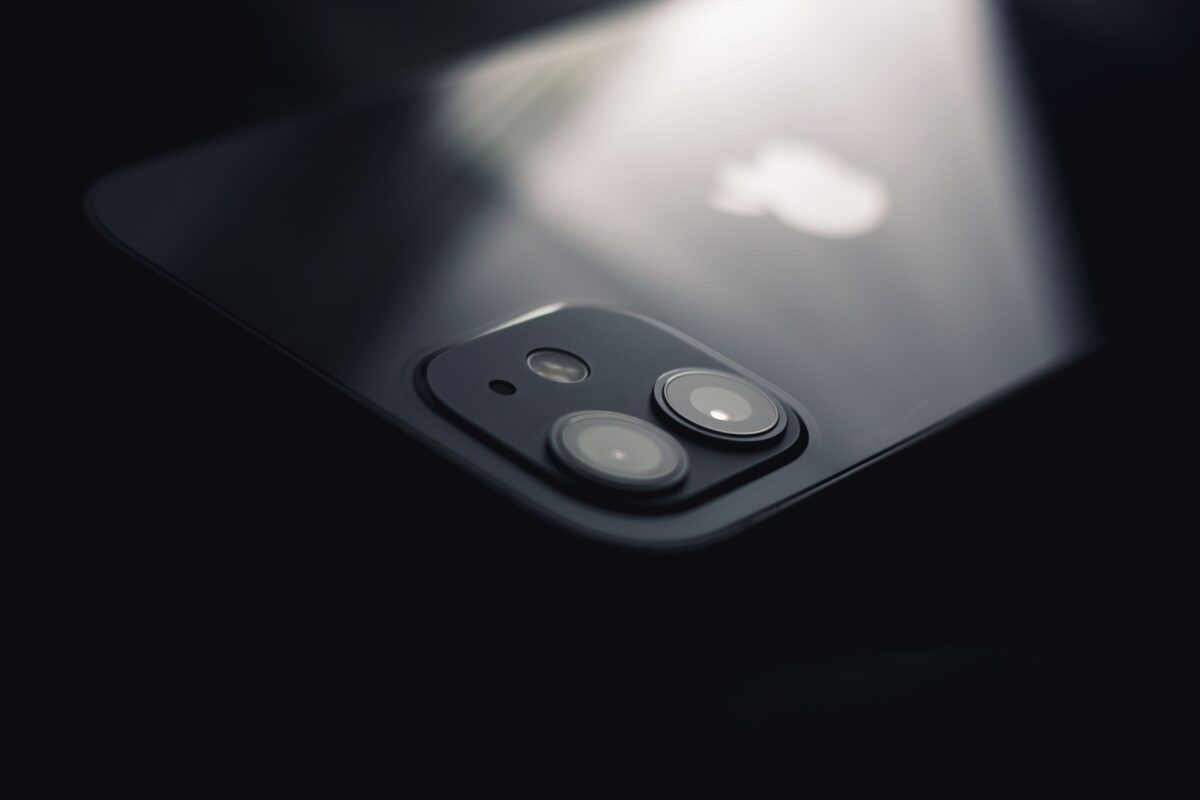
Apple’s September 9 event turned out to be about more than the usual Pro-tier refresh. The iPhone 18 Pro and Pro Max are now out and reviewed. The phone everyone’s actually talking about, though, is the iPhone Duo — Apple’s first foldable, and the biggest change to the iPhone since it dropped the home button — and it’s still five weeks from shipping.
Here’s the verdict on all three, now that real testing exists for two of them: the iPhone 18 Pro and Pro Max are, per the review consensus, an “S-year” refinement — genuinely excellent cameras and noticeably cooler thermals than the 17 Pro, but modest, single-digit battery gains and a Siri/AI layer that reviewers found unreliable. The Pro Max remains the easy pick if you’re going Pro at all, since Apple held its price flat while the smaller Pro went up $100. The iPhone Duo is still the one to think hardest about: at $1,999 and up, it’s a genuinely new category for Apple, not just a bigger screen — but nobody outside Apple has used a final unit yet.
What Actually Launched — And What We Know
The Pro and Pro Max shipped September 18 as scheduled. The Duo follows its own schedule — pre-orders open October 16, with sales starting October 23 in the U.S. and over 70 countries (October 30 in 28 additional regions). Three new phones, two ship dates, and reviewers have now had a full week with two of the three.
The camera was the actual headline, and reviews confirm it held up: a 48MP Fusion main sensor with a genuine variable aperture, moved by six laser-cut blades — a first for any iPhone, stepping between f/1.48, f/1.8, f/2.8 and f/4.0 for real optical control over depth of field, not a software simulation. Engadget called it the standout feature of the phone, especially paired with manual shutter controls, though the visual difference between the aperture settings themselves proved subtler in practice than the spec sheet suggested. The telephoto lens jump — from 4x optical zoom on the iPhone 17 Pro line to 8x optical on the 18 Pro line — was Apple’s biggest zoom increase in years.
Under the hood is the new A20 Pro chip, Apple’s first at 2nm: a 6-core CPU, a 7-core GPU rated about 40% faster than last year’s, hardware-accelerated ray tracing, and a dual 16-core Neural Engine. In testing, that chip ran meaningfully cooler than the iPhone 17 Pro — Engadget noted it “ran hot just once” through heavy use, a real fix for one of last year’s most-repeated complaints. Storage now tops out at 2TB, up from 1TB last generation. Both phones keep the same 3,000-nit peak outdoor brightness as last year, but the color lineup is entirely new: Black, Silver, Glacier, and Burgundy replace last year’s Silver, Cosmic Orange, and Deep Blue. iOS 27 ships with a rebuilt Siri — the one area where early reviews were consistently unimpressed, more on that below.
iPhone 17 Pro / Pro Max vs. iPhone 18 Pro / Pro Max — Everything That Changed
| Spec | iPhone 17 Pro | iPhone 18 Pro | iPhone 17 Pro Max | iPhone 18 Pro Max |
|---|---|---|---|---|
| Starting price | $1,099 | $1,199 | $1,299 | $1,299 |
| Chip | A19 Pro (3nm) | A20 Pro (2nm) | A19 Pro (3nm) | A20 Pro (2nm) |
| CPU / GPU cores | 6-core / 6-core | 6-core / 7-core | 6-core / 6-core | 6-core / 7-core |
| Display size | 6.3″ | 6.3″ | 6.9″ | 6.9″ |
| Resolution | 2622×1206 | 2622×1206, 460ppi | 2868×1320 | 2868×1320, 460ppi |
| Peak brightness | 3,000 nits | 3,000 nits | 3,000 nits | 3,000 nits |
| Storage | 256GB–1TB | 256GB–2TB | 256GB–1TB | 256GB–2TB |
| Weight | 206g | 211g | 233g | 249g |
| Colors | Silver, Cosmic Orange, Deep Blue | Black, Silver, Glacier, Burgundy | Silver, Cosmic Orange, Deep Blue | Black, Silver, Glacier, Burgundy |
| Telephoto zoom | 4x optical | 8x optical | 4x optical | 8x optical |
| Battery, video playback (tested) | 15:21 | 16:17 | 17:54 | 18:27 |
Laid out like that, the pattern holds up under real testing: the chip, camera zoom, and storage ceiling all move meaningfully forward, the screens and brightness stay identical, and battery life improved — but only by 6.1% on the Pro and 3.1% on the Pro Max in independent testing, a smaller jump than the A20 Pro’s efficiency claims implied. It’s the most substantial year-over-year Pro upgrade since the 15 Pro’s titanium switch on camera hardware alone, without being a reason on its own to skip a phone you bought last year.
Prices: Pro, Pro Max, and Duo
| Model | Starting Price | Storage | Ships |
|---|---|---|---|
| iPhone 18 Pro | $1,199 | 256GB–2TB | Sept 18 — now shipping |
| iPhone 18 Pro Max | $1,299 | 256GB–2TB | Sept 18 — now shipping |
| iPhone Duo | $1,999–$3,199 | 256GB / 512GB / 1TB / 2TB | Pre-order Oct 16, ships Oct 23 |
The Pro Max is the value story here, oddly enough: it’s the same price as last year while the standard Pro went up $100, so if you’re spending Pro-tier money at all, the Max now costs the same and gives you the bigger battery and screen. Apple has now confirmed the full Duo lineup — $1,999 for 256GB, $2,199 for 512GB, $2,599 for 1TB, and $3,199 for the top 2TB tier — so the pricing picture there is settled even though the phone itself isn’t shipping for another month.
The Big One: iPhone Duo
This is Apple’s first folding phone, and after years of Samsung and others owning the category, the spec sheet reads like Apple trying to skip straight past everyone else’s first-generation compromises. It’s also the one phone in this launch nobody outside Apple has tested yet — everything below is still built from announced specs and the brief hands-on time reviewers got at the September 9 event.
What actually launched
Apple confirmed the Duo at the same September 9 event as the Pro line — Apple’s first foldable iPhone, full stop, after years of rumors under names like “iPhone Fold” and “iPhone Ultra” that turned out to be wrong. Pricing runs from $1,999 for 256GB up to $3,199 for 2TB, in two colors, Star White and Night Sky. Pre-orders open October 16, with sales following October 23 in the U.S. and most major markets — about five weeks behind the Pro line, not a simultaneous launch.
What we already know
Closed, it’s a normal-ish phone with a 5.4-inch outer display. Open, it’s a 7.66-inch inner screen — both panels are 120Hz AMOLED rated at 3,000 nits peak brightness, among the brightest displays Apple has ever shipped. The build is titanium with liquid metal used in parts of the hinge — Apple’s answer to the durability question every foldable eventually has to answer.
It runs the same A20 Pro chip as the 18 Pro line, but with a dual-battery system instead of one: roughly 24 hours of typical use, or up to 44 hours of video playback closed versus 31 hours open — Apple’s own figures, not yet independently tested. There’s no charger in the box; Apple quotes a 60W USB-C brick getting you to 50% in about 20 minutes, or 35W MagSafe in about 30.
Biometrics are the one place the Duo breaks from every other current iPhone: Touch ID, built into the power button, replaces Face ID entirely, working whether the phone is open or closed. The camera system is two 48MP sensors — main and ultrawide — with no telephoto in this first generation, a real omission if zoom matters to you.
iPhone Duo vs. iPhone 17 Pro and Pro Max
The fairest comparison isn’t the 18 Pro — it’s last year’s Pro line, since that’s what most Duo buyers are actually trading up from. Here’s where it genuinely diverges:
| Spec | iPhone 17 Pro | iPhone 17 Pro Max | iPhone Duo |
|---|---|---|---|
| Starting price | $1,099 | $1,299 | $1,999 |
| Display | 6.3″ | 6.9″ | 5.4″ outer / 7.66″ inner |
| Form factor | Fixed slab | Fixed slab | Foldable, book-style |
| Biometrics | Face ID | Face ID | Touch ID (power button) |
| Rear cameras | Triple, incl. telephoto | Triple, incl. telephoto | Dual, no telephoto |
| Chip | A19 Pro | A19 Pro | A20 Pro |
| Battery (video playback, Apple-rated) | 33 hrs | 39 hrs | 44 hrs closed / 31 hrs open |
That’s a $900 jump over last year’s entry Pro for a phone that gives up a telephoto lens and swaps Face ID for Touch ID — not a straightforward upgrade so much as a different product entirely, priced like one.
Early hands-on notes
Reviewers who got hands-on time at the event came away impressed with build quality specifically: a nano-texture matte coating on the inner screen visibly reduces both glare and the crease down the middle that’s plagued every foldable before it. It’s not invisible, but it’s the least noticeable crease anyone’s reported on a first-generation fold. The trade-off is size — at over 250 grams and 11.3mm folded, this is a genuinely heavy, thick phone next to a standard iPhone, and nobody’s tested yet whether that matte coating holds up after months of actual folding.
The Catch: Not Every “iPhone 18” Exists Yet
What Reviewers Are Saying — iPhone 18 Pro and Pro Max
With a full week of testing now in, the review consensus is consistent and, per AppleInsider’s roundup of the reviews, best summarized by Marques Brownlee’s framing: this is what Apple itself would call an “S-year” release — a refinement, not a reinvention. Engadget’s review scored it 9/10 and called the variable aperture the standout feature, particularly when paired with manual shutter controls, while noting the visual difference between the four aperture settings themselves was subtler in practice than expected, and that cinematic video effects using the aperture gave mixed results depending on subject distance and movement. Thermal performance was the quieter win: the A20 Pro “ran hot just once” through heavy use in Engadget’s testing, a real improvement over the iPhone 17 Pro’s well-documented overheating complaints.
Tom’s Guide ran independent battery tests rather than relying on Apple’s video-playback figures, and the results were more modest than the marketing suggested: 18 hours 27 minutes for the Pro Max (a 3.1% gain over the 17 Pro Max) and 16 hours 17 minutes for the Pro (a 6.1% gain over the 17 Pro). Both are real improvements, just smaller ones than the A20 Pro’s efficiency claims implied.
“An iterative ‘S-year’ upgrade offering meaningful camera improvements but incremental gains elsewhere.”
Engadget, iPhone 18 Pro reviewThe one area reviewers agreed was a genuine weak spot: Siri and the new AI features in iOS 27. Engadget’s testing found the rebuilt Siri struggled with basic contextual requests — asked repeatedly for vegan meal ideas, it kept suggesting salads and tuna — and mispronounced words it couldn’t self-correct on. The reviewer’s conclusion was that Apple’s AI layer needs dedicated side-by-side testing against competitors like Gemini before any firm verdict, which is a notably different tone than the confident marketing language Apple used at the event.
Across the review roundup, the recurring theme is that the 18 Pro and Pro Max are, in AppleInsider’s words, “elite in every respect” but not revolutionary — and that most reviewers see them as the more sensible purchase next to the $1,999-and-up Duo, while still suggesting anyone curious about the fold try it in person before deciding.
Who Should Buy What
The Bottom Line
Now that real testing exists, the iPhone 18 Pro and Pro Max hold up: genuinely excellent camera hardware, meaningfully cooler thermals than last year, and battery gains that are real but smaller than Apple’s marketing implied — with Siri and the new AI features as the clear weak point reviewers flagged. Apple held the line on price for the Pro Max while asking $100 more for the smaller Pro. The Duo remains the actual story of this launch — Apple’s first foldable, priced from $1,999 to $3,199, shipping October 23 — but it’s still an unknown quantity outside of Apple’s own claims and a few minutes of hands-on time. If you were buying Pro-tier anyway, the reviews back it up. If the fold is what caught your eye, it’s worth pre-ordering only if you’re comfortable being an early adopter on a first-generation product Apple hasn’t let independent reviewers test yet.
This article was originally published ahead of the September 18 launch and has been updated with real review data for the iPhone 18 Pro and Pro Max now that both have shipped. The iPhone Duo section still reflects Apple’s announced specs and brief hands-on impressions from the September 9 event, since the device does not ship until October 23 — we’ll update that section with independent testing once it’s in reviewers’ hands. Pricing and specs are accurate as of September 20, 2026 and subject to change. AllinAllSpace has no affiliate relationship with Apple; a buying-guide update with retailer links will follow once the Duo is actually in stock.