
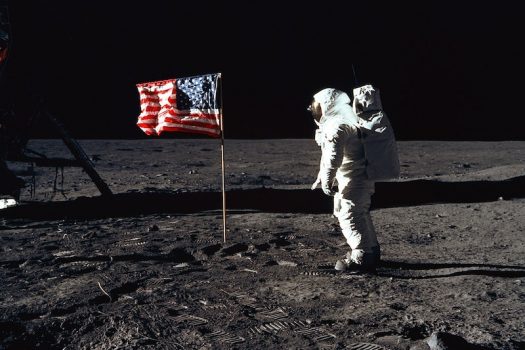
The last time a human being walked on the Moon was December 14, 1972. Eugene Cernan climbed back into the Apollo 17 lunar module, became the last person to stand on the lunar surface, and humanity has not returned since. That was 53 years ago.
In those 53 years, we have sent probes to the outer edges of the solar system. We have landed robots on Mars. We have built and inhabited a space station continuously for over two decades. We have developed reusable rockets, private space companies, and spacecraft capable of carrying tourists to orbit. And still, no human being has walked on the Moon.
The question is worth taking seriously: why not? And why, despite repeated promises that we were going back “soon,” has it still not happened?
“In 2024, NASA said humans would return to the Moon that year. They didn’t. The same promise had been made in 2020, 2021, 2022, and 2023. The Moon keeps waiting.”
When Was the Last Moon Landing?
The last human Moon landing was Apollo 17, on December 11, 1972, when astronauts Eugene Cernan, Harrison Schmitt, and Ronald Evans reached the Moon. Cernan and Schmitt descended to the lunar surface at Taurus-Littrow valley while Evans orbited above. The mission lasted 12 days and remains the longest lunar landing in history — the astronauts spent over 75 hours on the surface and brought back 110 kilograms of lunar samples, the largest haul of any Apollo mission.
Before Cernan climbed the ladder for the last time, he said: “As I take man’s last step from the surface, back home for some time to come — but we believe not too long into the future — I’d like to just say what I believe history will record: that America’s challenge of today has forged man’s destiny of tomorrow.”
Cernan died in 2017, still waiting to be proven right about that “not too long into the future” part. Nobody has been back.
Why Did We Stop Going?
Between the mid-1950s and 1972, the fierce competition between the United States and the Soviet Union created the Space Race. After Yuri Gagarin became the first person in space in 1961, the US responded by committing to a Moon landing before the decade was out — and delivered on that promise on July 20, 1969, when Neil Armstrong and Buzz Aldrin walked on the lunar surface. Six more Moon landings followed between 1969 and 1972.
And then, nothing.
The official explanation is that the Moon landings became a victim of their own success. Once the US had beaten the Soviets to the Moon, the political motivation that had driven the programme evaporated. Congress cut NASA’s budget. The Vietnam War was consuming political and financial capital. The public lost interest. Apollo 18, 19, and 20 were cancelled. Apollo 17 was the end, not by design but by budget.
This explanation is partially convincing. Space exploration is expensive. Political will is fickle. But it doesn’t fully satisfy, for a reason the original article identified correctly: technology has improved dramatically in 50 years. Computing power that once filled a room now fits in your pocket. Rocket technology has advanced to the point where private companies can launch to orbit. The Moon is only 384,000 kilometres away — roughly a three-day journey. If we could do it in 1969 with 1960s technology, why is it so hard to do it again in 2026?
“Technology has improved a thousandfold since 1969. The Moon is the same distance away. Something else must explain why we haven’t been back.”
The Artemis Programme — The Promises That Kept Slipping
In 2019, the Trump administration announced the Artemis programme — NASA’s plan to return humans to the Moon. The initial target was 2024. President Biden continued the programme. The target slipped to 2025. Then 2026. Now the most optimistic estimates point to 2027 or 2028 for a crewed lunar landing.
Notice the pattern. Every time a human Moon landing is announced as imminent, it moves. It has been “two to three years away” since 2019. The reasons are always technical, or budgetary, or political — all legitimate, all real. But the cumulative effect is that we have been “about to go back” for longer than the entire Apollo programme lasted.
The Conspiracy Angle — Why It Won’t Go Away
In all honesty, there’s something strange about the fact that humans stopped going to the Moon — and the strangeness only deepens as the decades pass.
The standard conspiracy theory is that the Moon landings were faked — a Hollywood production staged to win the Space Race against the Soviets. This requires believing that thousands of NASA engineers, astronauts, scientists, and contractors maintained a perfect lie for over 50 years without a single credible whistleblower. The evidence against the conspiracy is overwhelming: independent tracking by other nations, retroreflectors placed on the lunar surface that anyone with a powerful enough laser can still bounce beams off today, 842 pounds of Moon rocks distributed to scientists worldwide and studied for decades. We went to the Moon.
But there is a different, more interesting version of the conspiracy question — not “did we go?” but “why won’t we go back?” This question doesn’t require believing in a lie. It just requires noticing that something we demonstrably did in 1969, with less computing power than a modern dishwasher, we apparently cannot do again in 2026 despite having incomparably better technology, private companies with reusable rockets, and announced programmes that have been running for seven years.
The most sceptical interpretation is not that there’s a hidden conspiracy — it’s that the political will, the sustained funding, and the institutional focus required to return humans to the Moon simply don’t exist in the same way they did during the Cold War. The Apollo programme existed because the US was in an existential competition with the Soviet Union and the Moon was the scoreboard. That motivation is gone. What remains is rhetoric, bureaucracy, and budget cycles.
Whether that explanation satisfies you depends on how much you trust institutions. But it’s fair to say that the 53-year absence of humans from the Moon is genuinely strange — not because of what it implies about 1969, but because of what it reveals about us now.
What Actually Needs to Happen for Humans to Return
The Artemis programme is real, the technology exists or is being developed, and the political will — while not as fierce as during the Cold War — is present enough to keep funding flowing. Here is what needs to happen before humans stand on the Moon again:
SpaceX Starship must work. NASA selected SpaceX’s Starship as the Human Landing System for Artemis. Starship has made extraordinary progress — it has successfully completed orbital test flights — but it has not yet demonstrated a Moon landing capability. Until it does, the crewed landing cannot happen.
Artemis II must lead to Artemis III. Artemis II flew humans around the Moon for the first time since 1972. Artemis III is the actual landing. The gap between these missions has historically been longer than announced.
The budget must hold. The Space Launch System costs approximately $4 billion per launch. NASA’s overall budget is under constant political pressure. A change of administration, a budget fight, or a compelling alternative use of funds can delay a space programme indefinitely — as history has demonstrated repeatedly.
The most honest prediction is this: humans will return to the Moon before 2030. The technology is there, the programme is real, and the geopolitical pressure from China’s lunar ambitions is adding urgency that didn’t exist in the 1990s and 2000s. But whether it happens in 2027, 2028, or 2029 depends on factors — political, technical, and financial — that are genuinely uncertain.
Eugene Cernan said it wouldn’t be “too long.” It’s been 53 years. But for the first time since Apollo, it actually looks like he might eventually be right.
Sources include NASA, the European Space Agency, SpaceX mission logs, and contemporaneous reporting from major news outlets. Timeline information reflects public announcements and may be subject to change.