
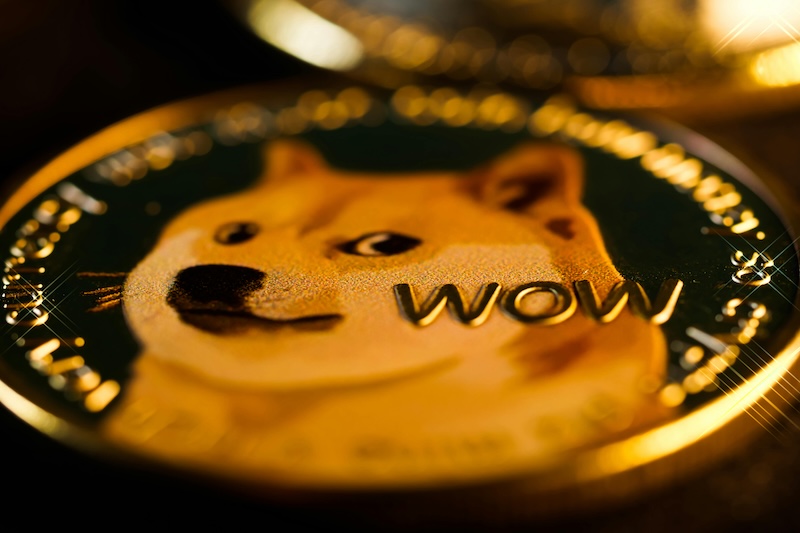
In 2013, two engineers spent two hours building a cryptocurrency as a joke. In 2025, Elon Musk named a government efficiency body after it. The story of Dogecoin is not really about crypto — it’s about what happens when irony becomes indistinguishable from sincerity.
In December 2013, two software engineers spent two hours building a joke. Jackson Palmer and Billy Markus wanted to mock the explosion of absurd altcoins flooding the early cryptocurrency market, so they took the most viral meme of the moment — a Shiba Inu dog with broken-English captions — and turned it into a coin. Dogecoin. The punchline was the point. Neither of them expected anyone to take it seriously.
In 2025, Elon Musk named his government efficiency advisory body the Department of Government Efficiency — DOGE. The joke that was built in two hours had become the unofficial mascot of a presidential administration.
The story of Dogecoin is not really a story about cryptocurrency. It’s a story about how memes become money, how irony collapses into sincerity, and what happens when the world’s richest person decides a joke should be real.
“Dogecoin was created in two hours as a parody of Bitcoin. It now has a larger market cap than many publicly traded companies. The joke is on all of us.”
What Is Dogecoin?
Dogecoin is a digital currency — you can invest in it, buy it, sell it, trade it, or use it to pay for things, like other cryptocurrencies. It runs on its own blockchain and uses a proof-of-work system similar to Bitcoin’s. But there are some key differences that reflect its origins as a parody rather than a serious monetary experiment.
Bitcoin has a hard cap of 21 million coins — a built-in scarcity that is central to its investment thesis. Once all Bitcoin is mined, no more can ever be created. Dogecoin has no such cap. There are currently over 140 billion Dogecoin in circulation, and new coins can still be mined indefinitely at a rate of about 5 billion per year. This unlimited supply is one of the reasons serious crypto economists have always been sceptical of Dogecoin as a long-term store of value — inflation is built into the system by design.
And yet none of that has stopped it from becoming one of the most traded and most recognised cryptocurrencies in the world.
How Did a Joke Become Valuable?
The honest answer is: Elon Musk. But that explanation, while accurate, is too simple.
Dogecoin spent its first seven years largely irrelevant. It was used for Reddit tipping, small charitable donations, and occasional novelty transactions. Its creators had moved on — Markus sold all his Dogecoin and bought a used Honda Civic. Palmer left the crypto world entirely and became one of its most vocal critics. The coin they built in an afternoon was doing its thing in the background, forgotten by everyone except a small community of enthusiasts.
Then two things happened simultaneously in late 2020 and early 2021. The retail investing frenzy that swept through GameStop and meme stocks reached crypto. And Elon Musk — already the most followed person on what was then Twitter — started tweeting about Dogecoin.
Not seriously. Or not entirely seriously. Musk’s Dogecoin tweets were in his usual mode: cryptic, ironic, and very hard to read as either genuine or not. “Doge to the moon.” “Who let the Doge out.” “Doge spelled backward is Egod.” Each tweet moved the price. Not because the tweets contained information, but because millions of people were watching, and in a market driven almost entirely by sentiment rather than fundamentals, Musk’s attention was a price-moving event regardless of content.
Dogecoin rose 5,000% in 2021. At its peak it had a market capitalisation of over $80 billion — more than Ford Motor Company.
“At its peak, Dogecoin was worth more than Ford Motor Company. It had been built in two hours, as a joke, by two engineers who had since sold their holdings.”
The DOGE Moment — When the Joke Became Government Policy
The most extraordinary chapter in the Dogecoin story has nothing to do with its price. In 2025, Elon Musk was appointed to lead a new advisory body created by the Trump administration to identify government waste and cut federal spending. The body was called the Department of Government Efficiency. Its acronym: DOGE.
Whether this was deliberate Musk trolling, an inside joke that got out of hand, or a genuine coincidence nobody has credibly explained. The result was that a cryptocurrency created to mock the absurdity of crypto culture became the name of a real government initiative, staffed by real people, with real consequences for real federal employees. Life imitated meme.
DOGE — the government department — became one of the most controversial political stories of 2025. Its mandate was to cut $2 trillion from federal spending, a target that economists broadly considered impossible. The actual cuts achieved were a fraction of that. But the name stuck, the meme persisted, and Dogecoin’s price responded to the news coverage with characteristic volatility.
What Dogecoin Actually Is in 2026
Dogecoin in 2026 is something genuinely strange: a cryptocurrency that nobody takes seriously as a monetary instrument, that serious economists dismiss as fundamentally flawed due to its infinite supply, and that remains one of the most traded digital assets in the world by volume.
It has real acceptance. Tesla accepted Dogecoin for merchandise purchases. Some airlines have experimented with it. The Dallas Mavericks accepted it for ticket sales. These are not the hallmarks of a currency with a serious monetary future — but they are real use cases, which is more than most cryptocurrencies can claim.
Its original creators’ verdict is unambiguous. Billy Markus has been vocal about the absurdity of Dogecoin’s continued existence and value. Jackson Palmer went further in 2021, calling the entire cryptocurrency industry “a cult” driven by greed and manipulation, and vowing never to return to it. The people who built Dogecoin in two hours as a joke do not think it should be worth anything.
And yet here we are.
How to Buy Dogecoin
If you want to buy Dogecoin, the process is straightforward — it’s available on virtually every major cryptocurrency exchange. Coinbase, Binance, Kraken, and eToro all list it. You can also buy it through Robinhood if you’re in the US. The process is the same as buying any other cryptocurrency: create an account, complete identity verification, deposit funds, and buy.
The more important question is whether you should. Dogecoin has no hard supply cap, meaning its value is structurally prone to inflation. It has no significant technical development roadmap. Its price movements are driven almost entirely by social media and celebrity attention rather than fundamentals. These are not characteristics of a reliable store of value.
What Dogecoin does have is cultural relevance, genuine community, and the demonstrated ability to generate extraordinary short-term price movements. If you understand what you’re buying — a speculative asset whose value depends primarily on sentiment — and you size your position accordingly, it’s no more or less legitimate than any other speculative bet. Just don’t mistake the meme for the money.
The Bottom Line
Dogecoin was created as a parody of the thing it became. That is its most interesting quality — not its technology, not its supply model, not its price history, but the sheer strangeness of a joke outrunning its punchline. Two engineers spent two hours mocking crypto culture and accidentally created one of the most recognisable financial assets of the decade, inspired the naming of a US government department, and made Elon Musk its de facto central banker.
If the story of Dogecoin tells us anything about the modern financial system, it’s that belief is the only thing that makes any of it real. The dollar is valuable because we agree it is. Bitcoin is valuable because enough people agree it is. And Dogecoin — born as a reductio ad absurdum of that exact logic — is valuable for precisely the same reason. The joke, as it turns out, was always on us.
This article is for informational purposes only and does not constitute financial advice. Cryptocurrency investments are highly volatile and speculative. Always do your own research.