In December 2019, Putin and Xi smiled at the opening of the Power of Siberia pipeline. Three years later, Russia invaded Ukraine, Europe cut off its gas, and that pipeline stopped being a symbol and became a lifeline. Here's how that bet is playing out in 2026.
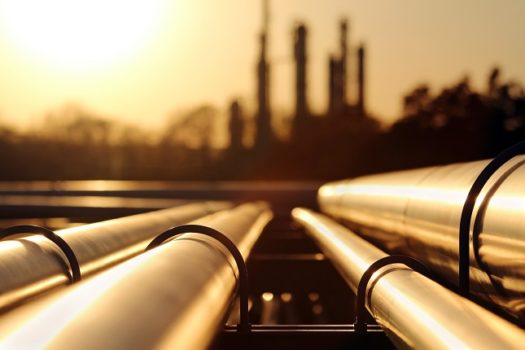
In December 2019, Putin and Xi smiled at the opening of the Power of Siberia pipeline. Three years later, Russia invaded Ukraine, Europe cut off its gas, and that pipeline stopped being a symbol and became a lifeline. Here’s how that bet is playing out in 2026.
In December 2019, Vladimir Putin and Xi Jinping stood together at a ceremony marking the opening of the Power of Siberia pipeline — a 3,000-kilometre stretch of steel crossing some of the most remote terrain on earth, connecting Russia’s gas fields in eastern Siberia to northeastern China. Putin called it a “historic event.” Xi called it a “landmark project.” Both men smiled for the cameras. The pipeline would carry 38 billion cubic metres of gas per year when fully operational, and was presented as a symbol of the deepening partnership between the world’s largest country and the world’s most populous one.
Nobody mentioned, at that ceremony, what would happen if Russia invaded Ukraine and Europe cut off its gas. But that is exactly what happened. And when it did, the Power of Siberia stopped being a symbol of ambition and became something more urgent: Russia’s last major energy exit.
“Russia lost Europe. Now it needs China. The question is whether China is a partner or a landlord — and the answer, so far, looks more like the second.”
How Russia Lost Its Best Customer
Before February 2022, Europe was Gazprom’s golden goose. Russia supplied roughly 40% of Europe’s natural gas — over 185 billion cubic metres per year — and did so at prices that made Gazprom one of the most profitable energy companies on the planet. Germany built its industrial model around cheap Russian gas. Italy, Austria, Hungary, Slovakia — all deeply dependent. For decades, the mutual dependency felt like a guarantee of stability. Russia wouldn’t cut off Europe because it needed the money. Europe wouldn’t cut off Russia because it needed the gas.
Then Russia invaded Ukraine on February 24, 2022.
What followed was the most dramatic restructuring of a major energy market in modern history. Europe moved with surprising speed to cut its dependence on Russian gas — diversifying to Norwegian supplies, importing record volumes of American LNG, building new regasification terminals, and crushing demand through efficiency programmes and mild winters. By 2024, Russian pipeline gas to Europe had fallen by over 80% from 2021 levels. The Nord Stream pipelines — the most direct route under the Baltic Sea — were destroyed in September 2022 in an act of sabotage that has never been conclusively attributed but definitively ended any possibility of a quick return to normal.
Gazprom’s CEO, Alexei Miller, admitted 2022 had been a “very, very difficult year.” That was something of an understatement. Gazprom posted its first annual loss in over two decades. The company that had been Russia’s most reliable revenue engine was haemorrhaging money. And there was, structurally, only one direction to turn.
The Pipeline Numbers — What’s Actually Flowing
The Power of Siberia ramp-up has gone roughly to schedule. Deliveries went from 4 billion cubic metres in 2020, to 10.4 bcm in 2021, 15.5 bcm in 2022, 22.7 bcm in 2023, and approximately 31 bcm in 2024. In 2025, the pipeline reached its planned maximum capacity of 38 bcm — and in January 2026, Gazprom announced it had set a new daily delivery record, with China requesting volumes above the contractual daily obligation.
Russia is now China’s largest single supplier of natural gas, accounting for up to one-third of China’s total gas imports when pipeline and LNG volumes are combined. In May 2025, the pipeline delivered its cumulative 100 billionth cubic metre of gas to China. Gazprom and CNPC agreed in September 2025 to increase deliveries by a further 6 bcm per year, raising the pipeline’s annual ceiling from 38 to 44 bcm.
On paper, this looks like success. The pipeline is full, the volumes are growing, and Russia has found a buyer. But the numbers only tell part of the story.
“Russia is selling gas to China at around $260 per thousand cubic metres. Before the war, it was selling to Europe at over $1,000. The volumes went up. The revenue did not.”
The Price Problem
Here is where the story gets uncomfortable for Moscow. The original Power of Siberia contract was signed in 2014 with a pricing formula indexed to a basket of oil products with adjustments. The exact price has never been officially disclosed — which is itself telling. What Russian customs data and Chinese import statistics suggest is that in 2024, China was paying around $260 per thousand cubic metres for Russian pipeline gas.
Before the Ukraine invasion, Russia was selling gas to Europe at prices that peaked above $1,000 per thousand cubic metres during the 2022 energy crisis. The volume Russia now sells to China is roughly one-fifth of what it used to sell to Europe. The price is roughly one-quarter. The arithmetic is painful.
China knows this. China knew this before it agreed to the deal. Beijing has multiple alternative gas sources — Turkmenistan supplies via the Central Asia-China pipeline, domestic production from the Sichuan, Tarim, and Ordos basins is growing rapidly, and China has signed long-term LNG contracts with Qatar, Australia, and others. When Russia came to China needing a buyer, China was not in a hurry. It negotiated accordingly.
Power of Siberia 2 — The Deal That Isn’t
Russia has been trying to build a second pipeline to China — the Power of Siberia 2, which would run through Mongolia and connect Russia’s vast western Siberian gas fields (the ones that used to supply Europe) to northern China. Its designed capacity is 50 billion cubic metres per year — potentially transformative for Russia’s energy export revenue.
During Putin’s visit to Beijing in May 2025, Gazprom announced it had signed a “legally binding memorandum” with CNPC. This was presented in Russian media as a breakthrough. Then the details emerged. The two sides had not agreed on the gas price. They had not agreed on investment conditions. They had not agreed on a timeline for first delivery. The Mongolian government had quietly removed the project from its 2025–2027 priority list.
Analysts at the Oxford Institute for Energy Studies assessed that even if a full agreement were signed in 2026, construction would take at least five years and another five to reach meaningful capacity — putting substantial Power of Siberia 2 deliveries no earlier than 2035. A decade away. China, sitting on growing domestic production and a diversified import portfolio, has absolutely no urgency to sign a deal on terms that don’t suit it.
The Power of Siberia 2 has become a negotiation in which Russia brings desperation and China brings patience. These are not equal bargaining positions.
The Geopolitical Picture
Step back from the pipeline numbers and the story is about power — specifically, about who has it and who has lost it.
Russia built its foreign policy for two decades on energy leverage. The ability to turn off the gas tap gave Moscow influence in European capitals that its military power alone could never have achieved. Germany was deferential. Austria was accommodating. Hungary still is. The gas relationship was not just economic — it was geopolitical.
That leverage is gone, and it is not coming back. Europe has demonstrated it can live without Russian gas — expensively, uncomfortably, but permanently. No European government is going to rebuild deep dependence on a supplier that weaponised that dependence during a war.
Russia has not replaced that leverage with China. If anything, it has created the inverse — a dependency on China that Beijing can exploit at will. China buys Russian gas at discounted prices, on Chinese terms, through infrastructure that Russia built and China did not pay for. Power of Siberia 2 sits unbuilt because China hasn’t decided whether it needs it yet. Russia’s energy revenues are a fraction of what they were. Gazprom is posting losses. The sovereign wealth fund is being drawn down to cover budget deficits.
The “no limits” partnership that Putin and Xi proclaimed in February 2022 — days before the invasion — has revealed its actual limits fairly clearly. China has not sanctioned Russia. China buys Russian oil and gas at discount prices. China provides diplomatic cover at the UN. What China has not done is provide the kind of unconditional economic and strategic support that Russia actually needs. Beijing is doing what Beijing always does: acting in its own interest, with patience and without sentiment.
So — Is It Working?
That depends entirely on what you think “working” means.
If the question is whether the Power of Siberia pipeline is physically delivering gas — yes. It reached full capacity in 2025, set daily delivery records in 2026, and will likely expand modestly over the next few years. Russia has a functioning energy relationship with China that provides some export revenue and some geopolitical cover.
If the question is whether Russia has successfully replaced what it lost in Europe — no. Not close. The volumes are lower, the prices are far lower, and the second pipeline that might change the arithmetic is ten years away at best. Russia exchanged a customer it could leverage for a customer that is leveraging it.
The Power of Siberia pipeline is full. Russia’s energy position is not. The bet on China has produced a working pipeline and a weak negotiating position — and the gap between those two things is where the real story of Russian foreign policy lives.
Sources include OilPrice.com, The Moscow Times, Reuters, the Oxford Institute for Energy Studies, Deluair Consultancy, and Pipeline Technology Journal. Gas volume figures are from Gazprom disclosures and Russian customs data.