
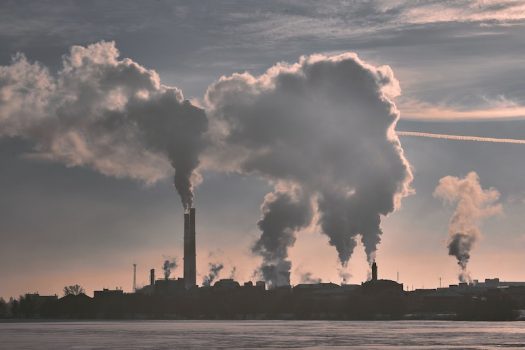
- Human activities and greenhouse gases: Since the 1800s, burning fossil fuels (coal, oil, and gas) has become the primary driver of climate change by producing heat-trapping greenhouse gases like carbon dioxide.
- The counterintuitive finding: Burning wood emits more carbon dioxide per unit of energy than burning fossil fuels — making it worse for the climate in the short to medium term, despite feeling more “natural.”
- The carbon timing problem: Wood burning puts carbon into the atmosphere immediately. Regrowing the forest to reabsorb that carbon takes decades — exactly the period when we most need to be cutting emissions.
- The real solution: Investing in energy efficiency and genuinely carbon-free energy sources — solar, wind, nuclear — rather than switching between different forms of combustion.
Climate change refers to the long-term shifts in temperature and weather patterns. Since the 1800s, human activities — burning fossil fuels like coal, oil, and gas — have become the main reason for these abnormal changes. Human activities produce heat-trapping gases called greenhouse gases. These gases in the atmosphere, such as carbon dioxide, trap heat similar to the glass roof of a greenhouse — the greenhouse effect — which has caused significant concerns over global warming.
Most people intuitively feel that burning wood is more environmentally friendly than burning coal. It comes from a tree — a natural, renewable thing. Coal is a fossil fuel, dug from the ground, associated with industry and pollution. Surely wood is better?
The science says otherwise. And understanding why requires thinking carefully about carbon, timing, and what “renewable” actually means in a climate context.
“Burning wood feels natural. But the carbon it releases today takes decades for a forest to reabsorb. That timing is the problem.”
Main Causes of Climate Change
Before comparing fossil fuels and wood, it helps to understand the full picture of what drives climate change:
- Fossil fuels — coal, oil, and gas, burned for energy and transport
- Deforestation — removing forests that absorb CO₂
- Increasing livestock farming — methane from cattle is a potent greenhouse gas
- Fertilisers containing nitrogen — release nitrous oxide, another greenhouse gas
- Fluorinated gases — used in refrigeration and air conditioning
And, unknown to many, burning wood is also on this list — not because wood itself is a fossil fuel, but because of what burning it does to atmospheric carbon in the short term.
Burning Fossil Fuels vs Burning Wood — At a Glance
| Factor | Fossil Fuels (Coal/Gas) | Burning Wood |
|---|---|---|
| CO₂ per unit energy | High (coal worst) | Higher than coal |
| Carbon reabsorption | None — carbon locked underground is released permanently | Possible — but takes decades of forest regrowth |
| Particulate pollution | Significant | Significant — worse for local air quality |
| Considered “renewable”? | No | Technically yes — but misleadingly so |
| Climate verdict | Bad | Worse (short to medium term) |
Burning Fossil Fuels
There are three types of fossil fuels — coal, oil, and gas. When these fuels are burned, they release large amounts of carbon dioxide, a greenhouse gas, into the air. Greenhouse gases trap heat in our atmosphere, causing global warming. Emissions from fossil fuels are the dominant cause of global warming, and coal is the dirtiest of the three. Oil releases a huge amount of carbon when burned, and gas accounts for a significant share of the world’s total carbon emissions.
Additionally, fossil fuels release nitrogen oxides when burned, which contribute to the formation of smog and acid rain. They also pollute soil and water and can be dangerous to extract. The bottom line is that burning fossil fuels is the main driver of climate change — this is well established and not seriously contested in the scientific literature.
Burning Wood
Wood — unlike oil, coal, and natural gas — is not a fossil fuel. But burning wood does release carbon dioxide, and the amount it releases per unit of energy generated is higher than burning coal. This surprises most people.
The key issue is timing. When coal is burned, it releases carbon that was locked underground for millions of years — adding net new carbon to the atmosphere. When wood is burned, it also releases carbon — but the argument for wood is that a new tree can grow to reabsorb that carbon. In theory, the cycle is carbon-neutral over time.
In practice, the problem is the timeframe. Burning a tree releases its stored carbon immediately. Regrowing a forest to reabsorb that carbon takes 20, 40, or even 80 years — depending on the species and the management. During those decades, the carbon is in the atmosphere warming the planet. This is exactly the period when scientists say we need to be cutting emissions most sharply, not banking on forests we’ll plant in the future to offset fires we’re burning today.
The problem compounds if wood-burning is scaled up. As the forest products industry has proposed in various contexts, treating wood as a carbon-neutral energy source at industrial scale would put enormous volumes of carbon into the atmosphere immediately, with the reabsorption benefit arriving too late to help in the critical near-term window for climate action.
Burning wood also releases significant particulate matter — fine particles that are harmful to human health and contribute to air pollution. This is why several European cities have introduced restrictions on wood burning during winter months, and why the EU has been reassessing its classification of biomass as a “renewable” energy source under its energy directives.
The Verdict
Even though most people believe that burning wood is the better option of the two, the science says the opposite. Burning wood emits more carbon dioxide per unit of energy than coal — the most carbon-intensive fossil fuel — and that carbon enters the atmosphere immediately, before any forest regeneration can begin. Burning wood is worse for the climate in the short to medium term. The real answer to climate change is neither coal nor wood — it is stopping combustion altogether and shifting to genuinely carbon-free energy sources.
By now, we all know that we can help our environment. From our form of transportation to the electricity we use and even the food we consume, investing in energy efficiency and using energy sources that are carbon-free — instead of burning wood or coal — are the only ways to meaningfully address the abnormal changes happening in the atmosphere.
Sources include ClientEarth, Inside Climate News, IOP Science, MPR News, Woods Hole Research Center, and Science Daily. All external links verified at time of publication.