
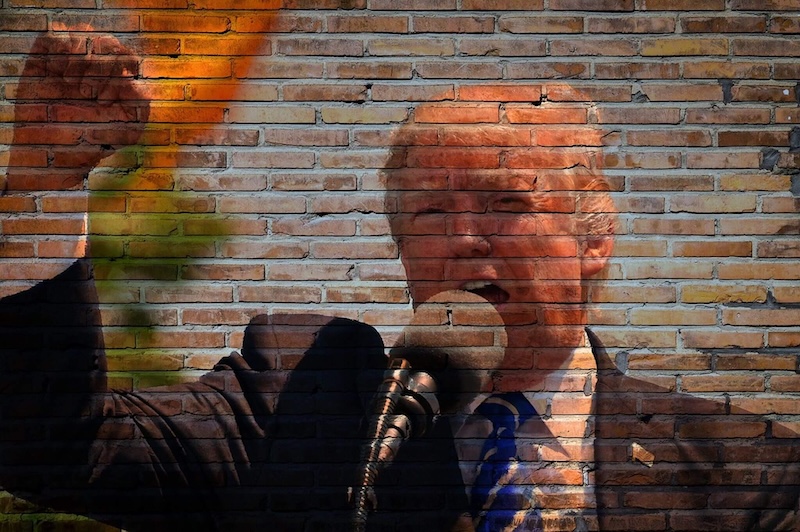
In January 2020, Donald Trump’s administration released what it called the most detailed peace proposal ever put forward for the Israeli-Palestinian conflict. Led by Trump’s son-in-law Jared Kushner, the plan — quickly dubbed the “Deal of the Century” — promised a Palestinian state, $50 billion in economic investment, and a new approach to one of the world’s most intractable disputes.
The Palestinians rejected it immediately. The Arab world largely dismissed it. And within three years, the region had descended into its worst violence since 1948. Today, with Trump back in the White House and proposing something even more radical — the complete redevelopment of Gaza into what he has called a “Riviera of the Middle East” — understanding what the Deal of the Century was, why it failed, and what has replaced it is essential context for anyone following Middle East politics.
“Jared Kushner’s ‘Deal of the Century’ was the most detailed peace proposal ever put to the Israeli-Palestinian conflict. The Palestinians rejected it within hours. Three years later, October 7 happened.”
What Was the Deal of the Century?
The plan was officially unveiled at the White House on January 28, 2020, with Israeli Prime Minister Benjamin Netanyahu present but no Palestinian representatives. It was a 181-page document — detailed, ambitious, and structurally one-sided in ways that made Palestinian acceptance almost impossible from the start.
Why It Was Rejected
Palestinian Authority President Mahmoud Abbas rejected the plan before it was formally released, calling it a “slap of the century” and declaring that the Palestinian leadership would not accept it under any circumstances. The Arab League, while less absolute in its language, also declined to endorse it. The core objections were consistent and predictable:
- The proposed Palestinian state was non-contiguous, demilitarised, and dependent on Israeli security cooperation — not a sovereign state in any meaningful sense
- Jerusalem’s status was decided unilaterally in Israel’s favour, removing the city from negotiation
- The right of return for Palestinian refugees — a foundational Palestinian demand — was essentially eliminated
- The Palestinian Authority was not involved in drafting the plan and felt it was designed with Israeli interests as the primary consideration
- Hamas, which controlled Gaza, was not part of the process at all
The deal’s architects argued that previous approaches — based on the 1967 borders and equal negotiations — had failed repeatedly and that a new framework was needed. Critics argued the plan simply formalised Israeli control over Palestinian territory while offering economic incentives as compensation for political rights.
“Every previous peace plan started from the 1967 borders. Trump’s plan started from the 2020 reality — settlements included — and asked Palestinians to accept it. They didn’t.”
What Happened Next — The Timeline
Trump’s 2025 Gaza Proposal — Even More Controversial
When Trump returned to the White House in January 2025, he did not revive the Deal of the Century. He proposed something significantly more radical: the complete evacuation of Gaza’s 2.3 million Palestinian residents — to Egypt, Jordan, and other Arab countries — and the redevelopment of Gaza into what he described as a “Riviera of the Middle East.”
The proposal drew immediate and near-universal rejection. Egypt flatly refused — accepting millions of Palestinian refugees would destabilise Egypt’s own politics and effectively end any Palestinian national aspiration. Jordan similarly refused. The Arab League called the proposal a violation of Palestinian rights and international law. Even some of Israel’s closest allies expressed discomfort with the optics.
The proposal highlighted a fundamental tension in Trump’s approach to the Middle East: his willingness to think outside the conventional diplomatic framework sometimes produces genuine breakthroughs (Abraham Accords) and sometimes produces proposals that go further than any major party — including Israel’s government — is willing to support.
As of mid-2026, the Gaza Riviera proposal has not advanced. Ceasefire negotiations continue. The question of Gaza’s post-war governance and political status remains entirely unresolved.
What the Deal of the Century Got Right — and Wrong
In hindsight, the Deal of the Century’s most significant achievement was not the peace plan itself — which was rejected immediately — but the Abraham Accords that emerged from the same diplomatic process. Normalising Israel’s relations with four Arab states was a genuine diplomatic breakthrough, even if it did not resolve the Palestinian question. It demonstrated that Arab-Israeli normalisation was achievable independently of Palestinian consent — a precedent that continues to shape regional diplomacy.
What the plan got wrong was its assumption that Palestinian political rights could be exchanged for economic investment. The $50 billion investment package was designed to make Palestinian acceptance of reduced sovereignty economically attractive. But Palestinians consistently chose national aspiration over economic incentive — as they did in Camp David 2000, and as they did in 2020. Economic development without political rights is not a peace deal. It is a management strategy for occupation.
The conflict’s core issues — borders, settlements, Jerusalem, refugees — remain exactly as they were before the Deal of the Century, as they were before Oslo, as they have been since 1948. Every proposal that has failed to address all four simultaneously has ultimately failed. The Deal of the Century is now another entry on that list — more detailed than most, more explicitly one-sided than most, and ultimately no more successful than its predecessors.
Sources include the US State Department, the Jerusalem Post, Al Jazeera, Reuters, and BBC reporting on the Deal of the Century and subsequent developments. Internal link to our full analysis of the Israel-Palestine conflict.