
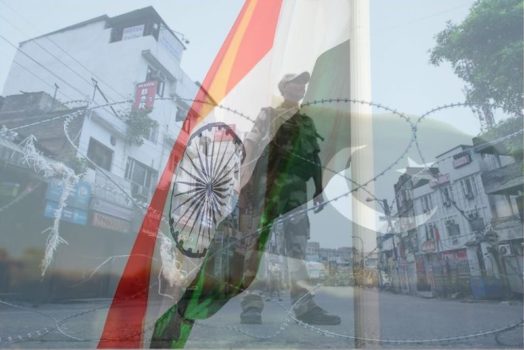
In August 2019, when India revoked Article 370 and stripped Jammu and Kashmir of its special constitutional status, the response was immediate and loud. Pakistan called it “sinister” and “apocalyptic.” Mehbooba Mufti, the former Chief Minister of Jammu and Kashmir, said the people of the region felt “defeated and betrayed.” Imran Khan called a special parliamentary session. Pakistan downgraded diplomatic ties, reached out to China, and appealed to the Organisation of Islamic Cooperation. The UN Security Council convened — and concluded there was nothing to act on.
Then the noise died down. The internet blackout in Kashmir was lifted. The arrests of local political leaders were eventually rescinded. Life in Srinagar returned, in the outward sense, to something resembling normal. And India moved on — to elections, to other crises, to the 2024 general election campaign in which Kashmir was barely mentioned.
Six years later, it is worth asking honestly: what actually happened? Was it the catastrophe critics predicted? The transformation India’s government promised? Or something more complicated and less conclusive than either side was willing to admit?
“India revoked Article 370 and the world held its breath. Then the noise died down. Six years on, the honest answer about what it changed is more complicated than either side will tell you.”
What Articles 370 and 35A Actually Were
For readers unfamiliar with the background: Jammu and Kashmir’s special status dated to the circumstances of Indian independence in 1947. When British rule ended, the princely states — of which Jammu and Kashmir was one — had to choose between joining India or Pakistan. The Maharaja of Kashmir, a Hindu ruler of a Muslim-majority region, initially sought independence. When Pakistani-backed tribal militias invaded in October 1947, he signed the Instrument of Accession to India in exchange for military assistance. The accession was conditional — it was supposed to be ratified by a plebiscite that never happened.
Article 370 of the Indian Constitution formalised this conditional relationship. Jammu and Kashmir had its own constitution, its own flag, and its own laws. The Indian parliament could not legislate for Jammu and Kashmir in most areas without the state government’s consent. Article 35A — inserted through a presidential order in 1954 — went further, prohibiting outsiders from buying property, settling permanently, or holding government jobs in the state. Kashmiri women who married men from outside the state lost their property rights.
Critics of these provisions argued — not unreasonably — that they had entrenched a local elite, prevented economic development, and provided constitutional cover for discriminatory practices including against Kashmiri women. Supporters argued they were the foundation of the Kashmir accession and that removing them unilaterally violated the terms under which Kashmir had joined India.
On August 5, 2019, India’s BJP government removed both provisions by presidential order, split the state into two Union Territories — Jammu and Kashmir, and Ladakh — and imposed a communications blackout and large-scale security lockdown. The speed and secrecy of the action were deliberate: there was no prior consultation with the state government, no parliamentary debate in Kashmir, and no opportunity for legal challenge before the act was done.
What Happened Next — The Timeline
The Video That Started the Conversation
Was India Right?
This is where opinion rather than fact takes over — and where honest analysis is most needed.
The case for the revocation is not trivial. Article 35A’s prohibition on women marrying outside Kashmir without losing property rights was genuinely discriminatory. The special status had, over decades, created conditions in which a local political elite could perpetuate its power without accountability to broader Indian democratic norms. The economic argument — that lifting restrictions on property ownership and investment would stimulate growth — has had some empirical support in the years since, with tourism and certain investment metrics improving.
But the manner of the revocation matters as much as the act itself. It was done unilaterally, without consent, under communications blackout, with political leaders preemptively arrested. Whatever the merits of removing Article 370 in principle, doing it in a way that left Kashmiris with no voice in the process, no opportunity for legal challenge, and no dignified political transition was not the action of a government confident that its case could withstand scrutiny. It was the action of a government that knew it could not win the argument and chose to make the argument irrelevant instead.
“The Supreme Court upheld the revocation as constitutional. Elections were held. Tourism increased. And yet the Pahalgam attack of 2025 killed 26 tourists in a meadow. The dispute did not end — it just changed shape.”
The Pahalgam attack of April 2025 is the most important data point in the post-370 story. If the revocation had genuinely integrated Kashmir into India — economically, politically, emotionally — it is hard to explain how 26 tourists could be murdered by militants in a popular meadow six years later, triggering a military exchange between two nuclear-armed states. The terrorism did not end. The Pakistan-India dynamic did not fundamentally change. What changed is that the constitutional arrangement through which India claimed Kashmir has been simplified — but the underlying grievance, the disputed accession, the unfulfilled plebiscite, the competing national narratives — none of that has been resolved.
Pakistan’s Position — Then and Now
Pakistan’s reaction in 2019 was furious but ultimately impotent. The international community — including the OIC, which declined to interfere, and the UN Security Council, which took no action — offered no meaningful support. China expressed concern but did not act. The United States maintained diplomatic language about human rights while its strategic relationship with India made confrontation impossible.
Six years later, Pakistan’s position has hardened but its leverage has not improved. The 2025 military exchange — India’s airstrikes into Pakistan and Pakistan-administered Kashmir following Pahalgam, Pakistan’s retaliatory strikes, the tense days that followed before a US-brokered ceasefire — was the most serious India-Pakistan military confrontation since Kargil in 1999. It demonstrated that the Kashmir dispute retains its capacity to generate genuine war risk between two nuclear powers. It also demonstrated that neither side has a clear path to victory — India cannot politically integrate Kashmir against the will of its population, and Pakistan cannot militarily recover it against Indian opposition.
The international community, as in 2019, watched and intervened only when the risk of nuclear escalation became too acute to ignore. As soon as the ceasefire held, attention moved elsewhere.
Where This Leaves Kashmir
The honest answer, six years on, is that the revocation of Article 370 changed the constitutional framework of Jammu and Kashmir without changing its fundamental reality. The dispute over the region’s status — between India, Pakistan, and the Kashmiri people themselves — has not been resolved. It has been simplified on the Indian side, entrenched on the Pakistani side, and suppressed on the Kashmiri side.
Omar Abdullah, who was arrested in 2019 for opposing the revocation, is now Chief Minister of Jammu and Kashmir — suggesting that India is willing to allow a degree of political normalisation. But the region remains a Union Territory rather than a full state, the promised statehood has not materialised, and the security apparatus that defines daily life in Srinagar has not been meaningfully reduced.
The people of Kashmir — who were not consulted in 2019 and whose views remain the central unanswered question of the entire dispute — continue to navigate a reality defined by forces beyond their control: Indian administrative ambition, Pakistani strategic interest, and a geopolitical rivalry between two nuclear powers that shows no sign of resolution.
Whether what India did in August 2019 was right or wrong depends on the framework through which you assess it. By the framework of Indian constitutional law — the Supreme Court has answered: it was legal. By the framework of democratic consent — it was not. By the framework of outcomes — the answer is still being written, in tourism statistics and targeted killings, in election turnout and militant attacks, in the meadow at Pahalgam where 26 people were shot dead six years after India declared the Kashmir question settled.
The question is not settled. It never is.
This article reflects the views of the author and AllinAllSpace editorial team and does not constitute a political endorsement of any position on the Kashmir dispute. Sources include the Indian Supreme Court judgment (2023), Reuters, Al Jazeera, The Hindu, BBC, and Human Rights Watch reporting.