
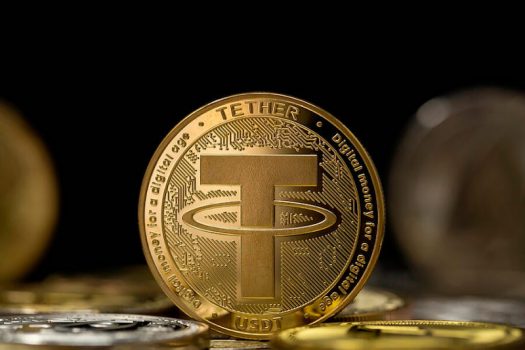
Tether USDT has a market cap of nearly $190 billion, processes more daily volume than Bitcoin, and underpins the entire crypto market. It has also been fined by the DOJ, been caught misrepresenting its reserves, and has never once published a full independent audit. This is the most important coin in crypto — and possibly the most dangerous.
Let’s start with a number: $190 billion. That is approximately how much Tether USDT is in circulation as of mid-2026. To put that in context, it is larger than the GDP of Ukraine, larger than the entire market cap of many Fortune 500 companies, and larger than the foreign exchange reserves of most nations.
Now let’s start with another number: zero. That is the number of full, independent, Big Four audits Tether has ever published. After more than a decade of operation, after two regulatory settlements, after repeated promises, Tether still does not have a completed audit from a major accounting firm. It has attestations — quarterly snapshots that confirm reserves exist at a specific point in time — but not the comprehensive review of systems, controls, and historical accuracy that a real audit would provide.
Those two numbers together tell you almost everything you need to know about Tether USDT. It is simultaneously the most important financial infrastructure in the crypto industry and the institution the industry is least able to verify. And in 2026, with the GENIUS Act now law, MiCA forcing delistings across Europe, and KPMG finally engaged for what may be the first real audit, the reckoning that Tether has been postponing may be arriving.
What Is Tether, and Why Does It Matter?
Tether USDT is a stablecoin — a cryptocurrency pegged to the US dollar. One USDT is supposed to always be worth one US dollar. That stability makes it enormously useful: traders use it to exit volatile positions without converting back to fiat, exchanges use it as the primary trading pair, and an estimated 350 million users worldwide use it as a practical dollar substitute, particularly in countries where access to US dollars is restricted or where local currencies are collapsing.
The practical role Tether plays in emerging markets is often underappreciated in Western coverage. In Argentina, Turkey, Vietnam, and Nigeria, ordinary people hold USDT not as a speculative investment but as a defensive one — a way to protect savings from local currency devaluation. Roughly $189 billion of USDT sits on just two blockchains, Ethereum and Tron, with Tron dominating the retail and remittance flows because its transaction fees are a fraction of a dollar compared to Ethereum’s sometimes substantial gas costs.
In pure trading volume terms, Tether has been the most traded cryptocurrency since 2019 — consistently outpacing Bitcoin by a significant margin. The crypto market runs on Tether. Every major exchange uses it as a primary settlement layer. Every significant DeFi protocol integrates it. If Tether collapsed tomorrow, the crypto market would not merely fall — it would seize up entirely.
The Reserve Question That Never Goes Away
The central controversy around Tether has always been the same: what is actually backing these tokens? The question sounds simple. The answer has never been simple.
When Tether launched in 2014, its marketing was clear: every USDT was backed 1:1 by US dollars held in reserve. Clean, simple, verifiable. Except it turned out not to be verifiable at all, because Tether repeatedly declined to produce the audit that would have confirmed it. The firm that was supposed to perform the first audit, Friedman LLP, parted ways with Tether in 2018 without completing it. No explanation was given.
What followed was a decade of shifting definitions. In February 2019, Tether quietly updated its terms of service to say that USDT was backed by “traditional currency and cash equivalents and, from time to time, may include other assets and receivables from loans made by Tether to third parties.” That is a significantly different claim from “every USDT is backed by one US dollar” — and Tether made the change without announcement.
The CFTC eventually caught up with them. In October 2021, Tether paid a $41 million fine for making “untrue or misleading statements” about its reserves between June 2016 and February 2019. The New York Attorney General had separately settled for $18.5 million earlier that year, finding that Tether had misrepresented its backing and — more troublingly — that Bitfinex had used $850 million of Tether funds to cover its own losses without disclosing this to users.
“Tether’s current quarterly attestation program was a settlement requirement, not a voluntary disclosure. That is worth remembering every time the company claims to be committed to transparency.”
The quarterly attestations that Tether now publishes — conducted by BDO Italia — are a direct result of those settlements. They were not Tether’s idea. They were a condition of avoiding further regulatory action. And while they do provide a snapshot of reserve composition on a specific date, they are emphatically not an audit. They confirm that on the date in question, Tether held assets in the categories listed. They do not examine what happened between attestation dates, whether the historical record is accurate, or whether the internal controls are sound.
What Are the Reserves Actually Made Of?
Based on the Q1 2026 BDO attestation, Tether’s reserves look substantially better than they did in 2021. The commercial paper that once made up nearly 50% of reserves — including, it later emerged, significant holdings in Chinese state-owned bank securities — has been wound down. The current composition is approximately:
| Asset Category | Approx. Share | Risk Assessment |
|---|---|---|
| US Treasury Bills (direct + repo + MMF) | ~80% | Low |
| Cash & Cash Equivalents | ~5% | Low |
| Gold | ~$8bn | Medium |
| Bitcoin | ~$7bn | High |
| Secured Loans | Smaller bucket | Medium |
| Other Investments | Residual | Medium |
The Treasury-heavy composition is a genuine improvement on 2021. But two things stand out as ongoing concerns. First, the Bitcoin and gold holdings introduce mark-to-market volatility that pure cash reserves do not. In a severe crypto downturn — exactly the scenario in which people would be most likely to redeem USDT — those holdings would be declining in value at the same time redemption demand was rising. Second, the secured loans bucket made a quiet return to the reserve composition in 2023, after Tether had previously committed to winding it down. That reversal attracted criticism from Bloomberg and the Wall Street Journal, and it should. It is exactly the kind of change that a full audit would scrutinise and a quarterly attestation cannot.
Tether vs USDC: The Transparency Gap
The most revealing way to understand the Tether controversy is to compare it to its closest competitor, Circle’s USDC. The two stablecoins are performing essentially the same function, backed by similar assets. But the transparency gap between them is stark.
| Tether USDT | Circle USDC | |
|---|---|---|
| Supply | ~$189.5bn | ~$76.5bn |
| Auditor | BDO Italia (mid-tier) | Deloitte (Big Four, since 2022) |
| Attestation frequency | Quarterly | Weekly + Monthly |
| Reserve vehicle | Tether Holdings balance sheet | Circle Reserve Fund (BlackRock) |
| Public company | No (BVI private) | Yes (SEC filer) |
| Full audit completed | No (KPMG engaged, pending) | Yes |
| Regulatory settlements | CFTC $41m, NYAG $18.5m | None |
Circle publishes weekly attestations and monthly reserve reports, audited by Deloitte. It routes reserves through a BlackRock-managed fund with full transparency on the underlying holdings. It files with the SEC. By every measurable transparency standard, USDC is the more verifiable product.
And yet USDC has $76 billion in circulation against Tether’s $190 billion. The market has consistently chosen the less transparent option. The reason is liquidity: Tether’s network effects are so deep, its integration so universal, that switching to USDC would require coordinated action across hundreds of exchanges, protocols, and trading desks simultaneously. Nobody wants to be the first to move.
The Regulatory Picture in 2026
Two major regulatory developments have reshaped the Tether conversation since the original version of this article was written.
MiCA and European Delistings
The EU’s Markets in Crypto-Assets regulation came into full force and began requiring stablecoin issuers to meet strict reserve and transparency standards. Tether, operating from El Salvador under a BVI corporate structure, does not comply. The result has been a wave of delistings: European exchanges have been required to remove USDT from their platforms. For a company that built its dominance on ubiquitous availability, losing the European market is a meaningful setback — though it has not yet dented the overall supply figures significantly, given how much of Tether’s use is in emerging markets outside the EU.
The GENIUS Act
In the United States, the GENIUS Act was signed into law on July 18, 2025. It requires stablecoin issuers operating in the US to maintain 100% reserves in US dollars or short-dated Treasuries and to publish monthly composition disclosures. It also subjects stablecoin issuers to the Bank Secrecy Act and gives holders priority claims in insolvency. Tether’s response was to launch USAT — a separate, US-compliant token issued under the new regulatory framework — rather than bringing USDT itself into compliance. That tells you something about how Tether views the relationship between its existing product and the requirements of regulated transparency.
The Big Question: Is Tether a Systemic Risk?
This is where the opinion piece begins in earnest. Because the question of whether Tether is a systemic risk depends entirely on what you think the probability of a reserve failure actually is — and that is a question nobody can answer with confidence, because nobody has done the audit.
The bull case for Tether’s safety is actually stronger than its critics often acknowledge. The reserves are now predominantly US Treasuries — among the most liquid assets on earth. Tether holds $8.23 billion in net equity above its liabilities, meaning it could absorb a significant reserve loss before it would become under-collateralised. It has maintained its peg through multiple crypto winters, the FTX collapse, and the LUNA/UST implosion that wiped $40 billion from the stablecoin market in days. It has also, not incidentally, been quietly minting money: Tether reported over $10 billion in profit for the first nine months of 2025, largely from the yield on its Treasury holdings. A company generating that kind of income has strong incentives to keep the machine running.
But the bear case is not about whether Tether is currently solvent. It is about what we cannot verify. We are taking Tether’s word for it — filtered through a quarterly attestation from a mid-tier Italian accounting firm — that a private company incorporated in the British Virgin Islands and headquartered in El Salvador is correctly custodying $190 billion in assets on behalf of 350 million users. That is an extraordinary amount of trust to extend to an institution with two regulatory settlements on its record and a decade-long history of opacity.
“The question is not whether Tether is currently solvent. The question is whether we would know if it wasn’t.”
The comparison that comes to mind is not flattering. Before its collapse, FTX published proof-of-reserves attestations too. They confirmed assets existed at a point in time. What they did not reveal was the full picture of liabilities, the intercompany loans, the exposure to illiquid assets. A attestation is not a lie detector. It is a snapshot, and a snapshot can be managed.
Does this mean Tether is another FTX? Almost certainly not. The asset profile is radically different — US Treasuries are not illiquid venture investments. But the structural parallel — a dominant market institution, trusted by millions, subject to limited third-party scrutiny — is uncomfortable enough that it deserves to be named.
What Would Actually Need to Change?
For the Tether controversy to be resolved rather than merely managed, three things would need to happen.
First, the KPMG audit needs to be completed and published. KPMG was engaged in 2026 to conduct the first full independent audit of USDT reserves. If that audit is clean — if it confirms not just that reserves exist at a snapshot date but that the historical record is accurate, the controls are sound, and the reported composition reflects reality — it would go a long way toward settling the debate. If it is not completed, or if its findings are qualified, the debate will intensify.
Second, the attestation cadence needs to match USDC’s. Quarterly is too infrequent for an institution of Tether’s systemic importance. Weekly or monthly attestations, published proactively rather than as a settlement condition, would reflect the transparency commitment Tether claims to have.
Third, the secured loans bucket needs to be genuinely wound down and kept wound down. Not announced as wound down and then quietly reintroduced. The reappearance of that exposure in 2023 was a credibility problem that Tether never fully addressed.
Until those things happen, the Tether controversy will remain exactly what it has been since 2017: an unresolved question at the foundation of the crypto market. The industry has chosen to build on it anyway — because the alternative, coordinating a migration away from the most liquid asset in crypto, is harder than living with the uncertainty.
That might be rational. It might also be the kind of thinking that feels obvious in hindsight when something eventually goes wrong.
For live crypto prices and market data, see our Crypto Analysis page and the full Markets Today dashboard.
This is an opinion piece. The views expressed are the author’s own. Data sourced from Tether Transparency page, BDO Italia Q1 2026 attestation, DeFiLlama, CFTC enforcement records, NY Attorney General settlement documents, and StablecoinInsider.org. Figures as of Q1-Q2 2026.