
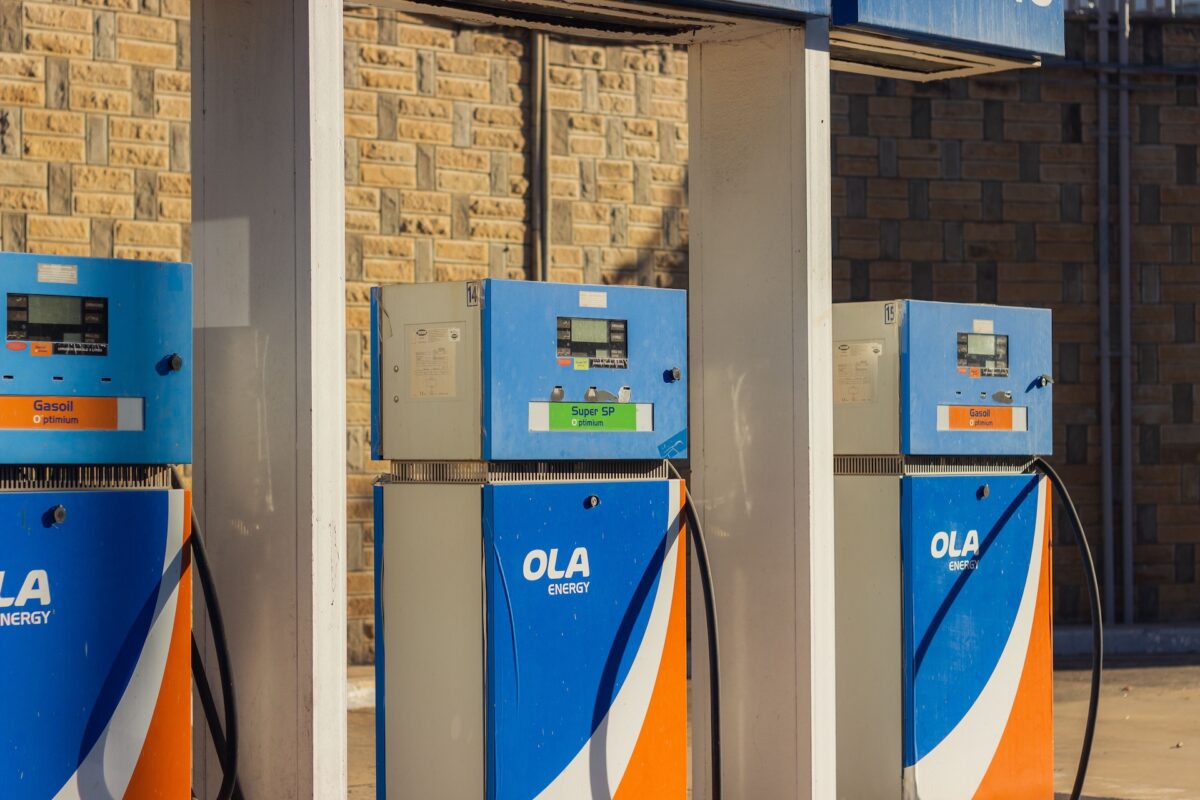
A barrel of oil at $94 means something completely different depending on where you’re standing. In Lagos, it means diesel prices up 86% in a year and generator owners doing mental math before every trip. In Algiers, it means almost nothing at all, the government is still paying the difference, same as always. In Oslo, it means a slightly more expensive fill-up and not much else. Same barrel, same price, three completely different realities.
That gap is the whole story. Global oil markets are currently sitting on two contradictory forecasts at once: the tightest supply shock in years, and one of the largest gluts in decades, both true, both coming, and both aimed at answering the same question. How long can the world actually keep paying prices like this?
Is There Really a Shortage in Oil?
Here’s the strange part nobody’s really saying out loud: the physical numbers don’t actually support $94 oil. Global demand this year is running at roughly 104.9 million barrels a day, up less than a million barrels a day from 2025, one of the slowest growth years in over a decade. Global supply, meanwhile, is on pace to average closer to 108.6 million barrels a day. Do that subtraction and the world is already sitting on a multi-million-barrel-a-day surplus in 2026, before you even get to the International Energy Agency’s own projection that spare capacity will hit levels “never seen before other than at the height of the Covid-19 lockdowns” by 2030, a glut of roughly 8 million barrels a day.
So why isn’t oil cheap? Because none of that surplus matters if it can’t reach a ship. The number that actually moves prices right now isn’t total supply, it’s how much of that supply is sitting genuinely ready to deploy on short notice. OPEC’s official spare capacity figure is north of 5 million barrels a day. Analysts who’ve actually tried to stress-test that number put the real, quickly-deployable figure closer to 1.5 to 2.5 million barrels a day, and almost all of it sits in exactly two countries.
barrels/day, 2026
barrels/day, 2026
vs. 5M+ claimed by OPEC
In plain terms: the world is pumping more oil than it’s actually using, that’s the surplus. But spare capacity is different, it’s the emergency backup supply that could be switched on fast if something goes wrong, like a war or an attack on a pipeline. OPEC claims it has over 5 million barrels a day of that backup ready to go. The real, quickly-usable figure looks much smaller, and almost all of it sits with just two countries. So there’s no shortage of oil itself, there’s a shortage of the safety net underneath it.
The world isn’t short on oil. It’s short on oil it can actually move on short notice, and that’s a much smaller, much more fragile number.
The Same Barrel, Different Bills
What that fragility does to any single country’s economy depends almost entirely on policy, not physics. Global crude surged roughly 70% between mid-January and mid-June, but African diesel prices rose only about 25% on average, and that average is hiding a huge split. Nigeria, which removed fuel subsidies in 2023 and now lets pump prices track the global market, saw diesel jump 86% in local terms. Tanzania, Ethiopia, Lesotho and Liberia all saw increases above 50%. Meanwhile a dozen countries running administered pricing systems, Algeria, Angola, Cameroon among them, kept diesel essentially flat by absorbing the difference themselves.
The World Bank’s own numbers show the toll of that absorption: inflation across developing economies now projected at 5.1% for 2026, growth cut to 3.6%, and as many as 45 million more people at risk of acute food insecurity if the war drags on. None of that shows up in a Brent chart. It shows up in national budgets, currency reserves, and grocery bills, on a delay of many months, since one study found it takes roughly nine months for 80% of a global oil move to actually reach the price of a bag of maize.
| Country / Region | Diesel Price Change | Pricing System | What’s Absorbing the Shock |
|---|---|---|---|
| Nigeria | +86% | Market-determined | Consumers, in full, since 2023 subsidy removal |
| Tanzania, Ethiopia, Lesotho, Liberia | 50%+ | Partial pass-through | Mostly consumers, some state cushioning |
| Algeria, Angola, Cameroon & others | ~Flat | Administered / subsidized | Government budgets, not consumers |
| Developing economies (avg.) | Inflation +1pt | Mixed | 5.1% inflation, growth cut to 3.6% (World Bank) |
Is the World Already Opting Out?
There’s a second force working against high prices that has nothing to do with tankers or spare capacity: demand itself is quietly leaving the building. In China, EVs made up nearly a quarter of vehicle sales during one May holiday period, up 33% year-on-year. Europe’s grid-scale electrification and rail-shifting habits, accelerated by a separate energy shock back in 2022, never really reversed either. JPMorgan’s analysts have made the same point in their own research: past oil shocks tend to leave permanent dents in gasoline demand, not temporary ones, because once someone buys the EV or takes the train, they usually don’t go back.
That’s what makes this shock structurally different from the 1970s comparisons it keeps drawing. Back then, high prices hurt until they came back down, and the world’s habits snapped back with them. This time, high prices are actively feeding the one long-term trend, electrification, that permanently shrinks how much oil the world needs, which means every extra month of $90-plus crude is arguably financing its own eventual demise.
How Long Until Something Breaks
Put the pieces together and the honest answer is: this was never a supply story, it’s a fragility story. The world has more than enough oil on paper and nowhere near enough of it sitting genuinely ready to ship. That gap is exactly why prices can stay elevated on the back of a single missile strike even while the underlying global economy is bracing for a supply glut just a few years out. Add in wildcards like the newly announced 65-billion-barrel Venezuela deal, unlikely to move actual barrels for years but one more reason traders are already pricing in eventual abundance, and you get a market betting against itself in both directions simultaneously.
My own read is that the fragility wins in the short run and the surplus wins in the long run, which is really just another way of saying: the next tanker incident or missile strike can still send Brent toward $100 overnight, but the multi-year trend, slower demand growth, EVs eating into gasoline for good, and a wall of new supply from the US, Guyana, Brazil and eventually Venezuela, all point the other way. Something breaks here, and it’s more likely to be the price than the planet’s ability to pay it. The only real question is whether it takes one bad month or three good years to get there.
For more on energy markets and commodities, see our State of Energy & Commodities report.
This article represents the opinion of the author and does not constitute financial advice. AllinAllSpace is not a registered investment advisor. Commodity trading involves significant risk. All data correct as of early September 2026.