
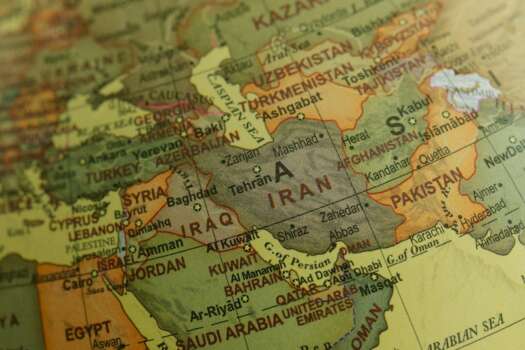
On February 28, 2026, the world changed. The United States and Israel launched coordinated airstrikes on Iran, killing Supreme Leader Ali Khamenei, targeting nuclear and military facilities, and triggering a conflict that has disrupted global energy markets, reshaped the Middle East, and raised profound questions about what comes next. This piece was first written in May, when a Pakistan-brokered ceasefire and hopeful talk of a comprehensive deal made it feel like the worst might be over. It wasn’t. Since then, that ceasefire has been declared, violated, re-negotiated, and violated again — and by September, the US and Iran are back to trading attacks in the Strait of Hormuz. The deeper questions this piece originally asked — about nuclear ambitions, oil supply, Iran’s future, and regional stability — are not just unresolved. Six months in, they’ve gotten harder to answer, not easier.
This is an attempt to take stock of where things actually stand, updated to reflect what’s happened since the ceasefire that was supposed to end this.
How It Started — And Why It Was So Complicated
The February 2026 strikes did not come out of nowhere. They followed a June 2025 Israeli operation — Operation Rising Lion — which had already hit Iranian nuclear sites and killed several top IRGC commanders, and a period of failed US-Iran negotiations over Tehran’s nuclear program. When talks collapsed, Washington and Jerusalem acted.
The opening salvo was staggering in its ambition. Within 24 hours, US and Israeli forces had established effective control of Iranian airspace from western Iran to central Tehran. Around 200 Iranian air defense systems were reportedly destroyed in the initial phase. US B-1 and B-2 bombers, capable of flying nonstop for nearly 37 hours, struck underground facilities that Israel alone had been unable to reach. The Iranian response — hundreds of ballistic missiles and thousands of drones fired across the Middle East — was fierce but increasingly constrained as the campaign destroyed launch sites, storage facilities, and missile squads in western Iran.
But even with air superiority established rapidly, the US and Israel had to be extraordinarily careful. Iran is not a small country. With a population of 90 million and a landmass four times the size of Iraq, the scale of any ground involvement would have been unmanageable. Iran’s missile arsenal, estimated at around 2,500 ballistic missiles before the conflict began, meant that even with 90%+ interception rates, the volume of incoming fire put serious strain on Israeli interceptor stockpiles. Numbers matter in modern warfare, even when technology is on your side.
The result was a campaign that was fundamentally about air power, precision strikes, and degrading capability — not occupation, not regime change in the traditional sense, and not a ground war that no one wanted to fight.
The Ceasefire That Kept Not Holding
This is the part that’s changed the most since this piece was first written. Pakistan brokered an initial ceasefire on April 8, 2026, after Trump threatened Iran over the Strait of Hormuz closure. It collapsed almost immediately — Israel launched a fresh air campaign against Hezbollah in Lebanon within days, Iran struck back at Gulf infrastructure, and both sides accused the other of violating the terms. Follow-up talks in Islamabad failed on April 12, and Washington responded by imposing a naval blockade on Iranian ports and mining Iranian waters.
A second attempt fared better, briefly. On June 12–17, the two sides signed a memorandum of understanding establishing 60 days of new ceasefire conditions and a framework for final peace talks — the “close to a deal” moment this piece originally described. That 60-day window ran out in mid-August. It was not renewed.
By September, the conflict had re-escalated into what analysts are now calling a tanker war: the US striking Iranian oil tankers it says are financing Iran’s regional proxy network through a sanctions-evading “shadow fleet,” and Iran firing ballistic missiles at American warships and targeting tankers of its own in response. Oil prices, which spiked above $100 a barrel during the initial Hormuz closure back in the spring, are back up above $96 as of early September. One Middle East analyst summed up where both sides now see their options: escalate, because neither is willing to concede. That is a considerably darker place than “very close to a deal” — and it’s worth sitting with how quickly that optimism turned out to be wrong.
A ceasefire that gets signed, broken, re-signed, and broken again isn’t really a ceasefire. It’s a pause between rounds.
The Nuclear Question — Setback, Not Solution
The stated purpose of the original strikes was to prevent Iran from building a nuclear weapon. On paper, significant damage was done. The Pentagon assessed that Iran’s nuclear program was set back by “one to two years at least.” The key enrichment facilities at Fordow, Natanz, and Isfahan were severely damaged or destroyed.
But the more sobering assessment came from the head of the UN’s nuclear watchdog, the IAEA:
“War can’t entirely eliminate Iran’s nuclear program. The material will still be there, and the enrichment capacities will be there.”
That’s held up. As of early September, the IAEA says it still cannot verify Iran’s stockpile of enriched uranium — roughly 440 kilograms of it enriched to 60%, unaccounted for since the strikes. Some nuclear weaponization sites have shown cleanup activity, suggesting Iran is already thinking about reconstitution rather than dismantlement. The deeper problem is structural and hasn’t changed: Iran’s nuclear knowledge cannot be bombed away. The scientists, the institutional memory, the technical expertise — these survive military strikes. Iran’s program was deliberately decentralized for exactly this reason, spread across dozens of sites and tied to individuals rather than specific locations. Many of those individuals are still alive.
The consensus among analysts remains that Iran’s path to a deliverable nuclear weapon has been pushed back by perhaps one to two years. That is a significant delay. It is not a permanent solution, and six months on, with inspections still contested and the ceasefire collapsed into a tanker war, the window that delay bought hasn’t obviously been used for anything constructive on either side.
The Strait of Hormuz — Still the World’s Most Dangerous Bottleneck
If the nuclear question is the long-term challenge, the Strait of Hormuz has been the recurring acute one. Iran closed it in early March in retaliation for the initial strikes; tanker traffic plunged by 90% almost immediately, and oil prices surged past $100 a barrel. It reopened in stages over the following months as ceasefires took hold — and has been disrupted again each time fighting resumed, including in the current September tanker war.
The numbers explain why this keeps being the pressure point. The Strait — just 21 miles wide at its narrowest point — handles roughly 20% of global oil consumption, or about 20 million barrels per day. For Iraq, Kuwait, Qatar, and Iran itself, it is essentially the only export route, and around 20% of global LNG trade also flows through it. The alternatives are limited: Saudi Arabia’s East-West Pipeline and the UAE’s Abu Dhabi Crude Oil Pipeline together handle roughly 5–6 million barrels per day under optimal conditions — meaningful, but nowhere near a replacement for 20 million. Every time Hormuz has flared up this year, that gap is what’s moved oil prices.
The closure exposed what energy experts had warned about for decades but no one had acted on: the global energy system was built around the assumption that the Strait would always be open. Saudi Arabia, the UAE, and others are now treating alternative pipeline capacity as a matter of national security rather than a cost consideration — a shift in posture that’s likely to outlast this conflict whatever happens next.
Air Superiority vs. the Missile Math
One of the defining features of the 2026 conflict has been the tension between US-Israeli air dominance and the sheer scale of Iran’s missile arsenal. The US and Israel controlled the skies from the opening days — Iranian air defenses were dismantled rapidly, and Iran’s navy largely ceased to exist as an offensive force within the first week of the initial campaign.
Iran’s ballistic missile program presented a different kind of challenge. Before the war, Iran possessed around 2,500 long-range ballistic missiles. Missiles like the Fattah-1 — capable of traveling at Mach 13–15 and reaching targets 1,400 kilometers away — were specifically designed to overwhelm missile defense systems through speed and saturation. Iran’s strategy was never to defeat Israel’s air force; it was to fire enough missiles that even a 90% interception rate would let meaningful numbers through.
That strategy has limits, and the campaign has steadily eroded it — launch sites, depots, and missile squads have been repeatedly targeted. But the uncomfortable lesson holds: Iran’s missile program, even severely degraded, is a persistent structural problem rather than a one-time obstacle. Estimated production capacity of around 100 missiles a month means stocks can rebuild over a few years if the pressure ever lets up, which is part of why neither side seems willing to be the one to stand down first.
Iran After the War — Leadership, Economy, and the Road Ahead
Internally, Iran is in a worse state than it was when this piece was first written. The killing of Khamenei and the rapid appointment of his son Mojtaba as Supreme Leader — more hawkish, more repressive, and less broadly trusted within the system — hasn’t stabilized the regime. It has hardened it. The economic toll of six months of war, blockade, and financial isolation now shows up starkly in the country’s own currency: the rial has lost roughly 60% of its value since March alone, inflation has run well above 40% on some measures, and the government is reportedly struggling to guarantee payroll without sanctions relief it currently has no path to — we cover that collapse in detail here.
New international sanctions were imposed in September 2025, before the war even began, and have only tightened since. Infrastructure in major cities was damaged during the initial campaign, and hundreds of thousands of Afghan refugees left the country under duress in its early weeks. None of this is happening in a vacuum: economic strain had already triggered mass protests and a harsh government crackdown before the February strikes, and a war that hasn’t produced a lasting peace has only added to that pressure rather than resolving it.
The regime’s survival strategy still looks like hardening domestic control while pursuing nuclear reconstitution covertly, betting that time and international fatigue eventually work in its favor, as they have before. Whether that bet pays off depends on whether the current tanker war burns itself out into another ceasefire attempt, or keeps escalating.
What Comes Next — Scenarios to Watch
Bottom Line
The initial phase of the US-Iran war was a significant military success for the United States and Israel: Iranian air defenses were dismantled, nuclear facilities were severely damaged, and the Strait of Hormuz was reopened, at least for a while. But “success” was always a complicated word for a conflict whose most important questions remained open — and six months on, calling this the “aftermath” gives the wrong impression. It isn’t over.
The nuclear program has been set back, not eliminated, and the IAEA still can’t verify what Iran actually has left. Two separate ceasefires have been signed and have both broken down. The Strait of Hormuz has opened and closed more than once. And the human and economic cost keeps compounding rather than resolving — visible most clearly in Iran’s own currency collapse, but also in an oil market that’s now spiked twice in one year and a region that’s realigning around the assumption that this isn’t finished.
What happens next in Iran, in the tanker war, and in the wider Shia arc from Baghdad to Beirut will define whether 2026 ends up being remembered as the year a new regional order began, or simply the year the region learned to live with an unresolved war rather than an ended one.
This article is based on publicly available reporting and analysis, updated as of September 2026. AllinAllSpace does not take political positions. Intended as editorial analysis only, and given how quickly this situation has moved since it was first published in May, treat any specific figure or status here as provisional — verify against a live source before relying on it.