
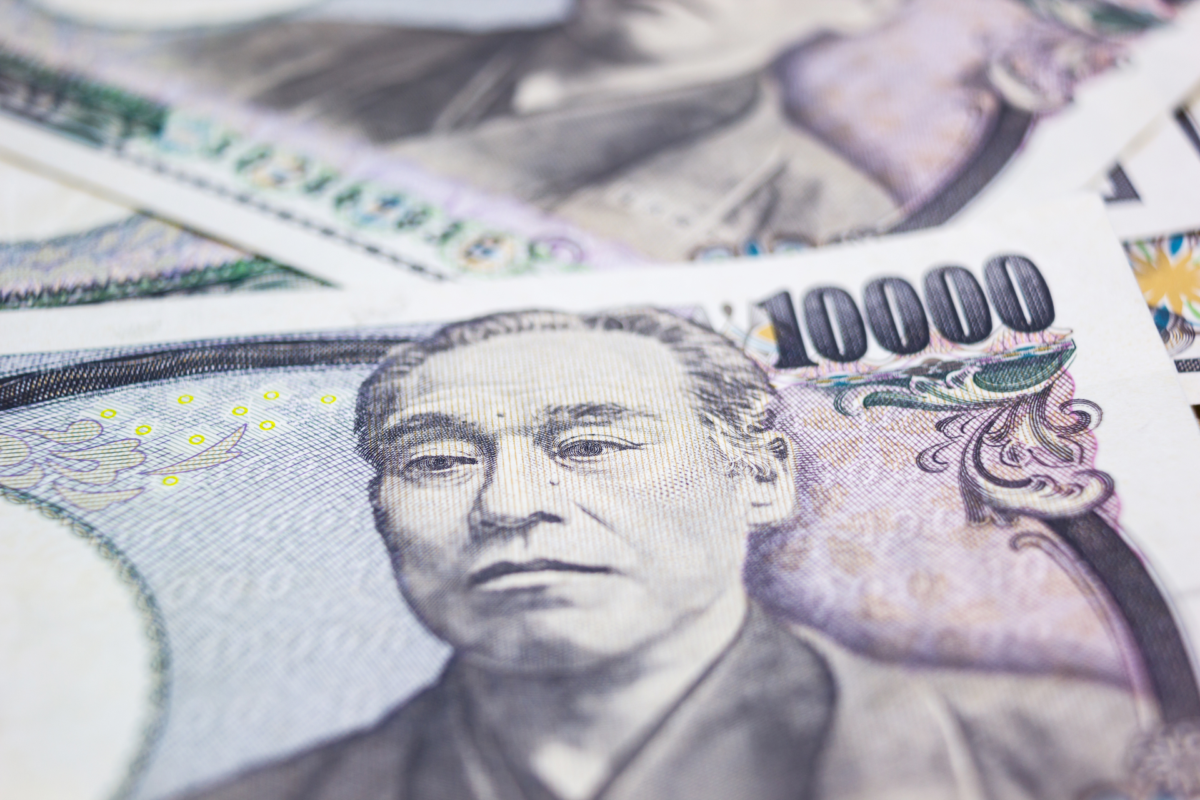
On June 16, the Bank of Japan raised its policy rate to 1%. The highest level since 1995. A historic moment by any measure, and the kind of headline that suggests Japan is finally getting serious about its currency problem.
The yen barely moved. By the following morning it was back above 160 against the dollar, right where it has spent most of the past several months.
This is not a surprise. And it should not be a surprise to anyone at the BoJ either. Because the problem with the Japanese yen is not the Bank of Japan’s resolve, or its willingness to act, or even the pace of its rate hikes. The problem is arithmetic. As long as there is a meaningful positive interest rate differential between the US dollar and the yen, Japan cannot win this war. The yen will stay weak. Intervention will not fix it. Rate hikes at the current pace will not fix it. And the reasons for that tell us something important about the bind Japan has been in for decades.
The Carry Trade Is the Real Enemy
To understand why the yen stays weak, you need to understand the carry trade. The mechanics are simple. You borrow in a currency with low interest rates — the yen, for years at effectively zero percent — and invest in assets denominated in a higher-yielding currency, pocketing the difference. The trade is so popular, so deeply embedded in global portfolio construction, that it has become structural.
With the Federal Reserve’s funds rate sitting between 3.5% and 3.75%, and the BoJ now at 1%, the differential is still roughly 275 basis points. That is an enormous gap. Investors borrowing in yen and holding US Treasuries are earning nearly three percentage points of yield simply by sitting still. The yen would need to appreciate by roughly that amount per year just to make the trade unattractive — and with the yen already weak, the direction of travel has been the opposite. Carry traders are being paid to be short yen, and they are. This dynamic is reinforced further by the way algorithmic trading has rewired market correlations — when systematic funds pile into a trade this crowded, the feedback loop becomes self-reinforcing in ways that manual intervention simply cannot break.
As long as the interest rate gap between the Fed and the BoJ remains this wide, the yen carry trade is a one-way bet. No amount of intervention changes that math.
Japan’s Ministry of Finance knows this. They spent 11.7 trillion yen — roughly $73.5 billion — on intervention operations in May alone, and the yen is back above 160. The intervention buys time. It creates volatility that makes short-yen positions more uncomfortable to hold. But it does not close the interest rate gap, which is the only thing that would actually change the structural incentive. As one analyst put it, intervention without changing domestic monetary policy is like tapping the brake while keeping your right foot firmly on the accelerator.
Why the BoJ Keeps Rates So Low
Here is the part that frustrates observers from the outside. Japan has run ultra-loose monetary policy for so long — essentially since the early 1990s — that the policy itself has become structural. The question is why a country with rising inflation, a depreciating currency, and soaring import costs continues to hold rates at levels that would have seemed extraordinary even a decade ago in Europe or the United States.
The answer is that Japan is caught between two fires. On one side, inflation is rising. Producer prices are up over 6% year on year, driven partly by the oil price shock from the Iran war and partly by the weak yen itself, which makes every import more expensive in yen terms. The BoJ’s own forward guidance acknowledges that underlying inflation could accelerate above its 2% target.
On the other side, Japan’s economy remains fragile in ways that are easy to underestimate from outside. Real wages have been stagnant or negative for most of the past three years. Household consumption is weak. Japan’s demographic collapse — the fastest aging population of any major economy — means the domestic growth engine is structurally impaired. Hiking rates aggressively would push Japanese government bond yields higher, at a time when yields are already at their highest levels in nearly three decades. It is worth noting that this is the mirror image of a problem faced elsewhere — the Israeli central bank, for instance, has spent years managing the opposite challenge: a currency that strengthens relentlessly, making exports uncompetitive, despite the bank’s best efforts to hold it back. A significant rise in JGB yields would increase the cost of servicing Japan’s national debt, which is already the largest in the developed world as a percentage of GDP.
The BoJ is not holding rates low because it does not understand the problem. It is holding rates low because the alternative — a rapid normalization — carries risks that the Japanese economy may not be able to absorb.
40 Years of the Same Policy. Should Japan Try Something Different?
This is the most interesting question, and the one that rarely gets asked directly. Japan has been running some variant of the same monetary policy framework since the mid-1980s. The logic has always been the same: keep rates low to stimulate growth, use fiscal policy to support the economy when needed, avoid the kind of monetary tightening that might precipitate a financial crisis in an economy carrying enormous debt loads.
It has not worked. Japan’s two lost decades — actually closer to three now — are a testament to the limits of this approach. The economy has not achieved sustained growth. Inflation targets were missed for years. The yen has depreciated to levels that are genuinely damaging to ordinary Japanese households, who face imported inflation on energy and food while their wages fail to keep up.
The counterargument is that things would have been worse with tighter policy. Perhaps. Japan avoided the kind of financial crisis that hit the United States in 2008, partly because its banks never had the same exposure to complex securitized products, and partly because loose monetary policy provided a consistent backstop. The BoJ can point to the fact that Japan did not experience a sovereign debt crisis despite its extraordinary debt levels — a feat that would have seemed impossible to many observers twenty years ago.
But there is a reasonable case that the policy has run its course. The yen is now so weak that it is becoming a genuine social and political problem. Prime Minister Takaichi’s government has had to introduce a 3 trillion yen supplementary budget just to shield households from rising energy costs. The subsidy is necessary because the currency is weak. The currency is weak because rates are low. The rates are low because the BoJ is afraid of what happens if it tightens. It is a circular trap, and the circle is getting tighter.
What Would Actually Help?
A genuinely hawkish pivot by the BoJ — rates moving toward 2.5% or 3% over the next two years — would start to meaningfully close the interest rate differential and reduce the structural incentive for the carry trade. It would be painful. JGB yields would rise further. Government borrowing costs would increase. Some highly leveraged parts of the Japanese corporate sector would come under pressure. But it would give the yen a fighting chance.
The alternative is the current path: incremental 25 basis point hikes every few months, intervention operations that buy time but not structural change, and a yen that drifts weaker over years, slowly eroding the purchasing power of Japanese households and making Japan’s import dependency more expensive with each passing quarter.
The BoJ raised rates to 1% this week and described it as part of a gradual normalization. The yen is at 160. You can draw your own conclusions about how that normalization is going.
My view is that Japan needs to be more aggressive than it is currently willing to be. Not recklessly so — there is no scenario where a shock rate hike to 4% would end well for an economy carrying Japan’s debt load. But the current pace of tightening is too slow to close the differential that is driving yen weakness, and the BoJ knows it. The question is whether the political will exists to accept the short-term pain of faster normalization in exchange for a more sustainable currency and monetary policy framework.
Based on 40 years of precedent, the answer is probably no. Japan will continue hiking slowly, continue intervening occasionally, and the yen will remain structurally weak for as long as the interest rate gap with the United States persists. The carry trade will run until it is unwound by something external — a Fed rate cut cycle, a financial shock, or a yen crisis severe enough to force the BoJ’s hand.
Until then, the Bank of Japan is not losing a battle. It is fighting the wrong war.
For live USD/JPY data and other forex pairs, visit the AllinAllSpace Market Watchlist. For a broader view of global market moves, see our Sector Rotation Tracker.
This article represents the opinion of the author and does not constitute financial advice. AllinAllSpace is not a registered investment advisor. Currency trading involves significant risk.