
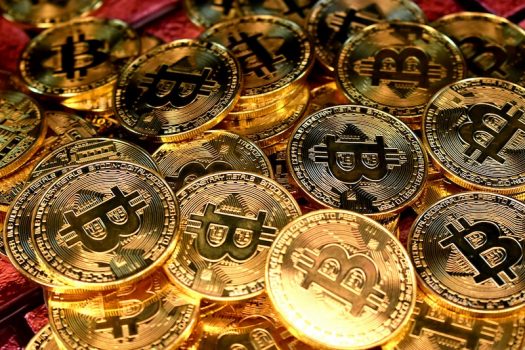
Here’s the thing — this article has no intention to convince anyone to buy or sell Bitcoin, or to believe it is the currency of the future that will replace fiat currencies and make the economic system more “fair”. Nope, not at all. That was the original promise of Bitcoin, and by most measures it hasn’t happened. Bitcoin has not replaced the dollar. People still use dollars, euros, and pounds for groceries, rent, and salaries. Central banks still exist. Governments still print money.
But here’s what I wrote in 2021: “The truth, in my opinion, is somewhere in the middle.” Five years later, that holds up — except the middle ground has shifted considerably. Bitcoin is legitimate now. Just not in the way anyone expected.
“Bitcoin didn’t win the argument it was originally making. It won a different one — and that one turned out to be more important.”
What I Got Right — and What Changed
When I originally wrote this in 2021, Bitcoin was trading around $35,000–$45,000 and the debate was still very much alive about whether it was a scam, a bubble, or a revolution. I said it would probably become “just another means of exchange” alongside fiat currencies — nothing more, nothing less.
What actually happened was different and more interesting. Bitcoin didn’t become a medium of exchange in any meaningful way. You still can’t pay your rent in Bitcoin without jumping through hoops. Most merchants don’t accept it. El Salvador made it legal tender in 2021 and the experiment has had mixed results — the population largely continued using dollars. Bitcoin as a day-to-day currency remains a niche use case.
But Bitcoin as a store of value — as digital gold, as a scarce asset that holds its purchasing power over time — has won that argument decisively. And that turns out to be a much bigger market than payments.
The Legitimacy That Actually Arrived
In January 2024, the SEC approved eleven spot Bitcoin ETFs simultaneously. This was not a minor regulatory event. It was the moment that the US government’s financial regulator acknowledged that Bitcoin is a legitimate asset that ordinary Americans should be able to access through standard brokerage accounts. BlackRock — the world’s largest asset manager, managing $10 trillion in assets — launched IBIT and gathered $10 billion in the first month, the fastest any ETF in history had ever reached that milestone.
When BlackRock is your custodian, it’s hard to call Bitcoin a scam.
MicroStrategy — a publicly traded software company — converted its entire corporate treasury to Bitcoin, holding over 500,000 BTC as of 2026. Other companies followed. Several US states have passed legislation allowing state pension funds to hold Bitcoin as part of their investment portfolios. The US government itself holds significant Bitcoin reserves seized from criminal operations — and rather than selling them, has been debating whether to designate them as a strategic reserve asset.
This is not the Bitcoin revolution that its original proponents imagined. They imagined a world where Bitcoin replaced the dollar, where central banks became irrelevant, where the little guy was liberated from institutional finance. None of that happened. What happened instead is that institutional finance absorbed Bitcoin — made it a product, packaged it, sold it to pension funds, and in doing so gave it the one thing its critics said it could never have: legitimacy.
“Gold didn’t replace the dollar either. But nobody questions whether gold is legitimate.”
The Original Argument Still Stands
I wrote in 2021 that a few years earlier I was traveling using traveler’s cheques, Western Union, and credit cards just to get money abroad — crazy fees, not convenient, always feeling someone was ripping you off. And I wrote that for freelancers and small businesses transferring money across borders, the conversion fees and commissions were unfair.
That problem has not been solved by Bitcoin. But it hasn’t been solved by anyone else either. Cross-border payments are still expensive, slow, and opaque in ways that benefit banks rather than individuals. Stablecoins — USDT, USDC — have made more progress on this specific problem than Bitcoin has, because they have the price stability that makes them actually usable as a payment method.
And this leads to the honest 2026 version of my original conclusion. Bitcoin is no longer trying to be a currency. It has settled into being a scarce digital asset — something closer to gold than to dollars. Its maximum supply is 21 million coins. It cannot be inflated away by a government printing press. It can be held in self-custody without a bank or broker. For people who believe those properties are valuable — and there are now hundreds of millions of them — Bitcoin is legitimate.
What I Still Believe
Very often, I hear people say that Bitcoin doesn’t have value because there’s nothing behind it — no country, government, GDP, or production. But our economic system already works in strange ways — even dead people have economic value, debts outlast their debtors, and the dollar’s value ultimately rests on the same thing Bitcoin’s does: collective belief that it is worth something.
Bitcoin already has value. That question is answered. It crossed $100,000 in December 2024. BlackRock holds billions of it. Nation-states hold reserves of it. That’s not nothing.
The more interesting question for 2026 is not whether Bitcoin is legitimate — it is. The question is what role it plays in a financial system that has absorbed it, institutionalised it, and made it available to anyone with a brokerage account. It did not replace the system. It became part of it. Whether that’s a victory or a compromise depends on what you were hoping for.
For me, the original take still holds: if Bitcoin can solve just some of the problems of fiat currencies, I’m a Bitcoin fan. And if not, that’s also fine. I still support it because it’s a good idea as it tries to solve something. The something it ended up solving wasn’t the thing it started out trying to solve. But it solved it well.
This article is for informational purposes only. It reflects the personal views of the author and does not constitute financial advice. Bitcoin and other cryptocurrencies are highly volatile assets. Always conduct your own research.