
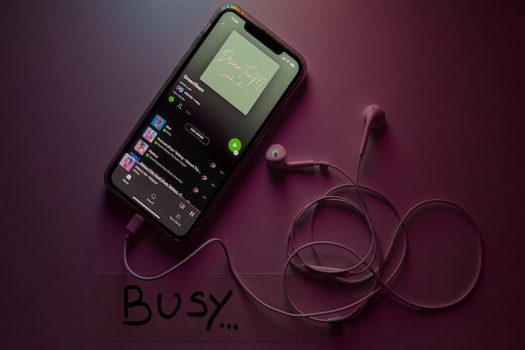
If there’s one thing we can be certain of, it’s that music is always evolving. The sound, instruments, technology, style, and the people on the front stage of the music industry — every element is always changing. But most importantly, the way we consume music is changing in a direction that would have been hard to predict even a decade ago. Two of the most notable developments in the way we listen are playlists and headphones. Five years on from when we first wrote about this, both trends have only accelerated — and the data is extraordinary.
Music Playlists — What’s the Big Deal?
If you are a music explorer, you cannot ignore music playlists on platforms like YouTube, Spotify, Deezer, Apple Music. Even though we all probably miss listening to Nirvana’s Nevermind album or Radiohead’s OK Computer for the first time, there’s still something different about a playlist. It creates new genres and is strongly based on a certain vibe. Some of the most notable and popular new genres include Lofi, jazz hop, neo-soul beats, trip-hop, downtempo, and boom bap. But not only that — you have thousands of playlists online for any genre and any mood.
In a way, music playlists are not that different from radio. But there’s a huge difference in the sense that you can choose the mood, genre, and vibe. With these playlists, the experience of listening to music becomes more diverse and personal. YouTube is booming with music playlists, and its AI engine knows how to identify users’ preferences. Spotify, much like Deezer and Apple Music, makes things more specific with a focus on genre or vibe.
“Fleetwood Mac’s Rumours — released in 1977 — has over 8.3 billion streams on Spotify. K-Pop went from genre #579 in 2008 to the global top 50 in 2026. Playlists did that.”
What Spotify’s 20-year data tells us
Spotify celebrated its 20th anniversary in April 2026 and released extraordinary data about how listening has changed. The numbers tell the playlist story better than any argument:
- Fleetwood Mac’s Rumours (1977) has over 8.3 billion all-time streams — 49 years after release. It’s the oldest album in Spotify’s all-time top 100. Playlists, not radio, brought it to new generations.
- K-Pop went from genre #579 in 2008 to the global top 50 in 2026 — one of the most dramatic genre rises in Spotify history. Outside South Korea alone, K-Pop received over 61 billion streams in 2025.
- Spotify’s personalised “daylist” — a playlist that changes descriptor based on time of day — has been streamed for over 1.17 billion hours since its 2023 launch.
- “Die With A Smile” by Lady Gaga and Bruno Mars hit 1 billion streams in just 96 days — the fastest ever in Spotify history.
For artists, the playlist revolution means there’s no longer a necessity to create an album. Instead, artists create singles or several tracks with the intention of landing in one of the biggest playlists. Playlist placement has become the new radio play — and getting onto Spotify’s Today’s Top Hits or RapCaviar can transform an unknown artist’s career overnight.
This has also spawned a new professional class. Music playlist curation has become a real career — independent playlist curators on Spotify with large followings are courted by labels, paid for placements, and treated as tastemakers with genuine commercial power. The playlist maker as a profession, which seemed like a speculation in 2021, is now a reality.
How Headphones Are Changing Music
Headphones have been around for a long time, but only in the past decade or two have they become truly ubiquitous — and this is now the primary way most people listen to music. This isn’t just changing how we listen; it’s changing how music is made.
Musicians, producers, and mixing engineers increasingly optimise for headphone listening rather than speakers. The spatial audio movement — Apple Spatial Audio, Sony 360 Reality Audio, Dolby Atmos Music — is built entirely around the headphone experience, creating immersive three-dimensional soundscapes that only work with headphones or earbuds. Major artists now routinely release Spatial Audio versions of their albums specifically because so much of their audience will only ever hear the music through Apple AirPods or Sony headphones.
Some artists have gone further, designing tracks specifically for the intimate headphone experience. Billie Eilish is the canonical example — her whispered, breathy production style was built from the ground up for close listening. Turn it on through a speaker and something is lost. Put in your headphones and it sounds like she’s in the room with you.
The AirPods era has also changed listening habits in a more subtle way: people now listen to music in more contexts than ever before — while commuting, exercising, working, cooking, falling asleep. The always-available, always-connected nature of wireless earbuds means music has become more ambient, more contextual, and more constant. This in turn has shaped what music gets made — shorter tracks, immediate hooks, songs designed to work as background texture as well as foreground focus.
The Album Is Not Dead — But It Has Changed
One of the fears of the playlist era was that the album as an art form would disappear entirely — that the economics of streaming would make the long-form, cohesive musical statement obsolete. The data suggests this has not quite happened, but the album’s role has shifted.
Bad Bunny’s Un Verano Sin Ti is the most streamed album of all time on Spotify, with over 20 billion streams. It was designed as a cohesive summer listening experience — sequential, atmospheric, meant to be heard in order. It became a global phenomenon precisely because playlist culture gave it the reach that radio and record shops never could have. The album and the playlist are not enemies. The best albums become playlists — they travel, track by track, into listening contexts their creators never imagined.
What has changed is the commercial logic. An album no longer needs to be released all at once to succeed. Artists increasingly release singles over months, building anticipation and accumulating streams, before releasing a full album that their audience already knows intimately. The album is now a culmination rather than an introduction.
The Bottom Line
Playlists are not just a big thing in the way we consume music — they are now the primary infrastructure of the music industry. They are how new artists are discovered, how catalogues from the 1970s find new audiences, how entire genres cross cultural borders they never previously crossed. Their status is more certain than albums ever were — they are not going to disappear.
As for headphones: same song, different sound. The intimate, spatial, always-on listening experience that wireless earbuds have made possible has changed what music is made and how it’s made. The best music of the 2020s sounds the way it does because someone designed it to be heard six inches from your eardrums, in a crowd, at 2am, through AirPods.
That’s not a lesser form of music appreciation. It’s a different one — and it’s producing extraordinary music.