
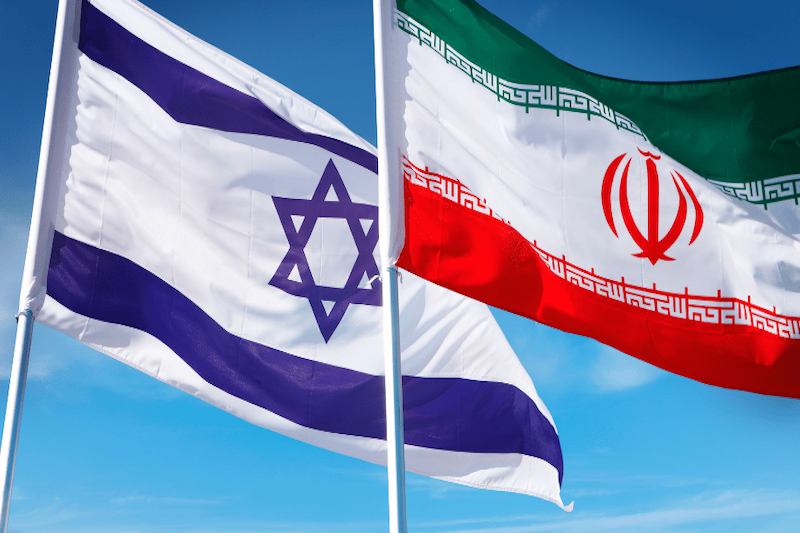
Did you know that up until 1979, Israelis actually lived in Iran? Not just diplomatically tolerated — Iran was an exotic and genuinely welcoming location for Israelis, and for centuries the relations between Jews and Persians were, by most accounts, smooth. Iran was the second Muslim country after Turkey to recognise the State of Israel after its inception in 1948. Between 1950 and 1979, Israel and Iran were, quietly, allies.
Then, in 1979, a revolution changed everything. And in 2026, the cold war that began that year became, for a period of weeks, a real one.
This is the full story — from 2,700 years of Jewish-Persian history to the missiles that struck Tel Aviv in March 2026.
“Up until 1979, Israel and Iran were allies. The enmity between them is not ancient — it is forty-six years old and it was a political choice.”
The History — 2,700 Years in Brief
The international relations between Jews and Persians date back over 2,700 years, when Jews lived in Persia after being expelled from Assyria by Shalmaneser V. Persia was, for many centuries, genuinely hospitable to its Jewish population. The Persian King Cyrus the Great is revered in Jewish tradition as a liberator — it was Cyrus who allowed the Jews exiled in Babylon to return to their homeland and rebuild the Temple in Jerusalem. The Book of Esther, read every year on Purim, is set in the Persian court.
This history matters because it demolishes the idea that Iranian-Israeli enmity is ancient, inevitable, or rooted in some deep civilisational conflict. It is not. It is forty-six years old. It began on a specific date with a specific political event — the Islamic Revolution of 1979 — and it was a choice made by a regime, not a verdict delivered by history.
Iran was the second Muslim country after Turkey to recognise the State of Israel after 1948. Although Iran voted against the UN Partition Plan for Palestine in 1947, by 1950 the Iranian government had recognised Israel de facto. For nearly three decades, the two countries maintained a prosperous, functioning relationship — cooperating on intelligence, trade, and regional security. Israeli engineers worked in Iran. Iranian students studied in Israel. The two governments shared concerns about Arab nationalism and Soviet influence in the region.
Then came 1979.
The Revolution That Changed Everything
The Islamic Revolution of 1979 did not just change Iran’s government — it reversed its foreign policy almost completely. The Shah’s Iran had been a US ally and an Israeli partner. Ayatollah Khomeini’s Iran was neither. Israel was redesignated from ally to enemy, the Israeli embassy in Tehran was handed to the Palestine Liberation Organisation, and the slogan “Death to Israel” became an official instrument of state rhetoric.
Since 1979, Iran and Israel have been in a state of what analysts call a “cold war” — a sustained conflict fought through proxies, cyberattacks, assassinations, and covert operations rather than direct military confrontation. Iran built and funded Hezbollah in Lebanon as a strategic threat to Israel’s northern border. It supplied weapons and money to Hamas in Gaza. It backed militia groups in Syria, Iraq, and Yemen — constructing what Israeli strategists called the “Axis of Resistance,” a network of armed groups encircling Israel from multiple directions.
Iran and Israel do not share a border — the shortest distance between the two countries is approximately 1,725 kilometres. But in the Middle East, geography is less important than reach. And Iran had spent four decades extending its reach.
“Iran spent forty years building an armed network around Israel. In 2023 and 2024, Israel systematically dismantled it.”
The Nuclear Question
At the heart of the Israeli-Iranian conflict, underneath the proxies and the rhetoric, is a single question: will Iran acquire a nuclear weapon?
The honest answer is that both sides have a legitimate argument. Iran’s position — that it has the right to develop nuclear technology, that its enemies hold nuclear weapons, and that it is being held to a standard not applied to others — is not without logic. Israel’s position — that a regime that has repeatedly called for Israel’s elimination cannot be trusted with the capability to deliver an existential threat — is also not without logic.
The 2015 JCPOA (Joint Comprehensive Plan of Action) attempted to resolve this by placing verifiable limits on Iran’s nuclear programme in exchange for sanctions relief. The Trump administration withdrew from the deal in 2018. Iran began accelerating its enrichment programme. By 2023, Iran was enriching uranium to 84% purity — just short of weapons-grade. The window for a negotiated solution was closing.
Cyber Warfare — The Invisible Front
Before the missiles, there was the Stuxnet worm. Discovered in 2010 and attributed to a joint US-Israeli intelligence operation, Stuxnet was the world’s first known cyber weapon — a piece of malware specifically designed to damage the centrifuges at Iran’s Natanz nuclear facility. It set Iran’s nuclear programme back by an estimated two years.
Since Stuxnet, Iran and Israel have been in a continuous cyber technology race. Iran has attacked Israeli water infrastructure, hospitals, and logistics companies. Israel has attacked Iranian fuel distribution, railway systems, and — most significantly — the computers controlling Iran’s nuclear centrifuges on multiple occasions. The cyber conflict between the two countries is the most sustained state-on-state cyberwar in history, running continuously for over fifteen years.
From Cold War to Hot War — The Timeline
Where Things Stand in June 2026
The ceasefire of April 2026 is holding — for now. But it is a ceasefire, not a peace. The fundamental issues that have driven the conflict since 1979 remain unresolved: Iran’s nuclear programme, Iran’s regional proxy network, and the question of whether the two countries can find a stable equilibrium short of permanent hostility.
Iran’s strategic position has been significantly weakened. Its nuclear facilities have been struck twice — by Israel in 2025 and by the US in 2025 and 2026. Its air defence systems have been degraded. Its regional allies are in disarray: Hezbollah is diminished, Hamas is militarily reduced, the Assad regime in Syria has collapsed, and Iran’s influence in Iraq is under pressure from a new post-2025-election government. The Axis of Resistance that took decades to build has been substantially dismantled in less than three years.
Inside Iran, the domestic situation is the most volatile since the Revolution. Protests that began in late 2025 over economic collapse and infrastructure failures grew into the largest internal challenge the regime has faced since 1979. The regime has responded with its characteristic violence — mass arrests, force, and the massacre of civilians in early 2026 — but the legitimacy crisis is real and deepening.
Nuclear negotiations between the US and Iran have resumed but are at an impasse. Iran is demanding sanctions relief; the US is demanding verifiable, permanent limits on enrichment. Neither side has shown willingness to compromise on the core demands. And as long as the nuclear question remains unresolved, the underlying logic that drove the conflict in 2025 and 2026 remains intact.
What Comes Next
The Iran-Israel conflict is one of the most consequential geopolitical relationships in the world — not because of what the two countries are to each other, but because of what their conflict does to everything around them. Every escalation disrupts oil markets, draws in great powers, threatens regional stability, and forces every other state in the Middle East to choose sides or navigate very carefully between them.
The most realistic near-term scenario is a continuation of the current uneasy ceasefire, with both sides managing their conflict below the threshold of open war while Iran rebuilds its capabilities and the US and Israel decide whether the nuclear question has been sufficiently set back. The most dangerous scenario is a collapse of the nuclear talks, a resumption of Iranian enrichment toward weapons grade, and a decision by Israel that it cannot wait.
What is clear is that the forty-six-year cold war between Iran and Israel has entered a new phase — one in which direct military confrontation has occurred, the proxy architecture has been substantially degraded, and the domestic legitimacy of the Iranian regime is in question in a way it has not been since 1979. Whether that produces a new equilibrium, a negotiated settlement, or a further escalation remains genuinely uncertain.
Both Iranian and Israeli citizens are still banned from entering each other’s country. But the world between them has changed enormously in a very short time.
Sources include Britannica, the House of Commons Library briefing on the 2026 Iran conflict, Al Jazeera, Reuters, the Atlantic Council, and contemporaneous reporting. This article reflects the situation as of June 2026 and will be updated as events develop.