
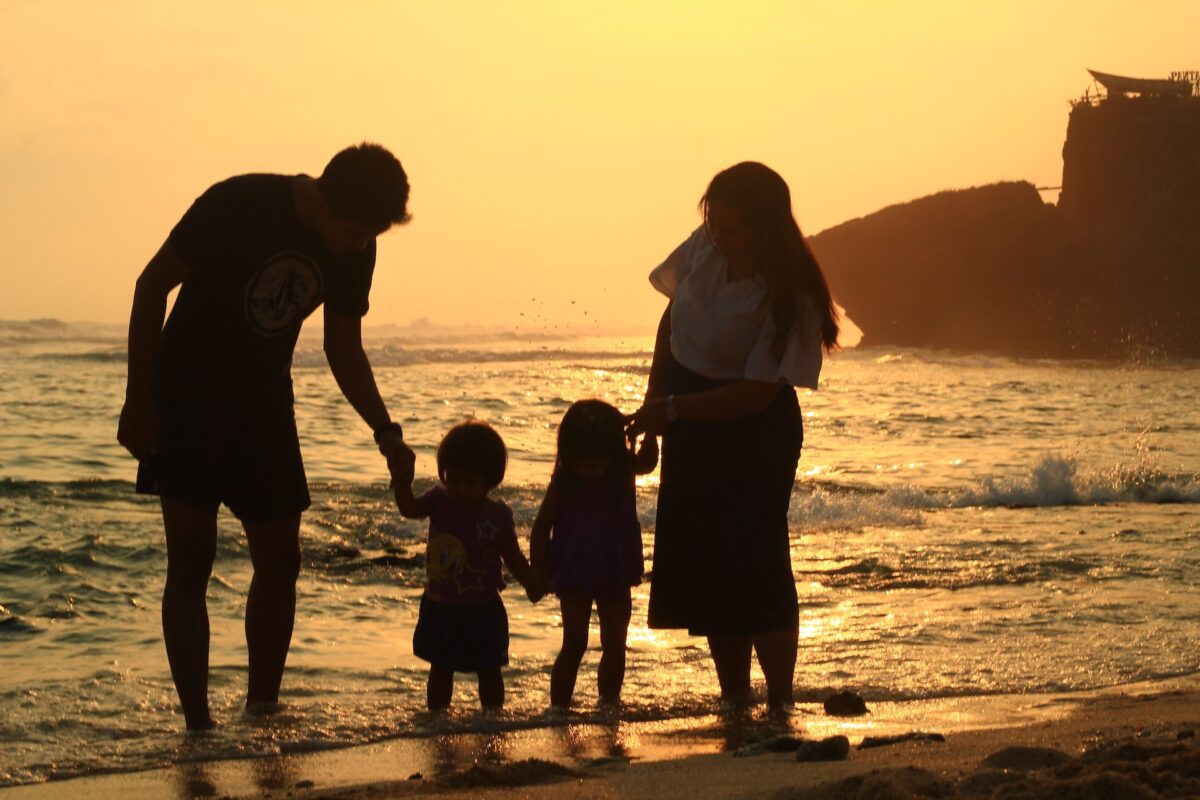
It usually starts with something small and a little absurd. You’re at an airport, or scrolling half-asleep after a long flight, and an ad appears for a “digital nomad visa” in a country you’ve never seriously considered living in. You close the tab. Then, a day later, you’re still thinking about it — not the ad exactly, but the question underneath it. Could we actually do this? Not a two-week holiday. An actual chapter, kids and all, somewhere else.
That is, roughly, how this article got written. A visa notification for Spain, popping up mid-trip, the kind of thing you’re meant to swipe away. Except it turns out the idea has legs. Dozens of countries now let remote-working parents bring their whole household along, legally, for a year or more — not as tourists sneaking in laptop hours between sightseeing, but as properly documented residents with a visa that says, in effect, yes, you can live and work from here, and yes, your kids can come too.
So here’s the honest version of that idea: what these visas actually are, five real places worth a serious look in 2026, and the unglamorous homework that separates “we did this and loved it” from “we did this and it was a nightmare by month four.”
What Is a Family Digital Nomad Visa, and How Does It Work?
Strip away the marketing language and it’s a fairly simple idea. A digital nomad visa lets you live in a country for an extended stretch — usually a year, sometimes two — while you keep working for whoever you already work for, back wherever that is. Not a local job. Your job, just relocated along with you. That’s the whole trick: you’re not competing for work in the country you’re moving to, so most governments are happy to let you in, provided you can show you’ll support yourself without needing anything from them.
The “family” part is really just an extension of that same logic. Most of these programmes will let you add a spouse and kids onto the same application — officially called family reunification — as long as you can prove your income stretches far enough to plausibly cover everyone, not just you. A few countries want separate applications for each family member. Most don’t.
One thing that trips people up: this is not the same as your partner also being allowed to work locally. In most cases, the visa covers your foreign income only. If your other half wants to pick up local work once you’re there, that’s usually a separate conversation, with separate paperwork — worth asking about early rather than assuming it’s bundled in.
“Nobody’s checking whether your children have a marketable skill. They’re checking whether your income does.”
On family reunification rulesWhat Does the Visa Actually Give You?
This is the question that actually matters once you get past the headline income figures: what does getting approved actually hand your family, day to day? The honest answer is that it depends more than the marketing pages let on, and three things in particular — your spouse’s work rights, healthcare, and how long any of this actually lasts — vary a lot more by country than people expect going in.
Your spouse or partner is added to your application as a dependent, which gets them a residence permit, not a separate visa of their own. Whether that permit comes with the right to work locally is where things split sharply by country. Spain and Portugal both grant dependents the right to work as employees or freelancers without needing a separate permit, which is more generous than a lot of people assume going in. Croatia is the outlier here — a dependent permit does not include work rights, and a spouse who wants to work locally has to apply separately and prove no qualified local candidate exists for the role, a genuinely difficult bar to clear. If this matters to your family, get it confirmed in writing before you commit rather than assuming it’s bundled in with everything else.
Kids go on the same application as dependents in most cases, and the visa itself doesn’t usually restrict which school they attend — that’s more a question of what’s actually available locally than a legal one. Spain and Portugal both give resident dependents access to the public school system, the same as a local family would have; in places with a smaller expat infrastructure, international or private schooling tends to be the more realistic option regardless of what the visa technically allows.
Healthcare is the part that trips people up most, because the assumption that “resident means public healthcare” doesn’t hold here. Every one of these visas requires private health insurance for the whole family as a condition of approval — not travel insurance, a real policy, usually with a minimum coverage level somewhere around €30,000. Whether your family can also access the public system later is a separate, slower question: in Spain, for instance, non-EU dependents generally can’t tap into public healthcare automatically, though it can open up once the main applicant is paying into social security, and that process is neither quick nor guaranteed. Croatia’s programme doesn’t include public healthcare for the family at all. Treat private insurance as the real plan, and any public access as a possible bonus later, not the other way around.
How long you actually get varies more than any other part of this. Every country starts you at around a year, but what happens after that is where the five profiles below genuinely diverge — anywhere from Costa Rica’s hard two-year ceiling with no path onward, to Spain and Portugal’s roughly five-year routes toward permanent residency or citizenship. There’s no universal answer, which is exactly why it’s worth checking the specific country’s long-term path — not just the first year’s approval — before treating this as a multi-year plan rather than a one-year experiment.
Five Places Actually Worth Looking At
There are, depending on how generously you count, somewhere north of fifty countries now offering some version of this. Most of those are thin on detail, new enough that nobody’s really tested them, or quietly impossible for a family once you read the fine print. These five aren’t. They’re established, they spell out the family terms clearly, and real people have actually gone through the process. The numbers below are current for 2026, but visa offices update these figures constantly, so treat them as a strong starting point rather than gospel.
Spain — Still the Easiest Entry Point
Spain’s digital nomad visa is the one most people have already half-heard about, and for good reason — there’s now a genuinely large community of relocated remote workers in places like Valencia, Málaga, and the outskirts of Barcelona, which means you’re not figuring this out entirely alone. The income bar works out to around €2,849 a month for the main applicant, with roughly another €916 for a first dependent and €305 for each additional one — so a couple with a child is looking at something like €4,070 a month, assessed on gross income rather than take-home pay, which catches a few people off guard. The upside: a real path toward permanent residency after around five years, not just a temporary stay with an expiry date.
Portugal — Built Around Families by Now
If you want the country that’s seen the most families actually go through this process and come out the other side, it’s Portugal. The D8 visa’s family reunification paperwork is well documented precisely because so many people have already done it — birth certificates, marriage certificates, proof of dependency for older kids or parents, all fairly standard by now even if the apostille-and-translate process takes longer than anyone expects. The income ask starts around €3,040–€3,480 a month for the main applicant, and Portugal adds the steepest family surcharge on this list — another 50% for a spouse, 30% per child — but in exchange you get one of the clearest routes to citizenship anywhere in Europe: five years, an A2-level language test, done. Newborns to parents who’ve already been resident a year can even qualify for citizenship of their own.
Croatia — Tax-Free, With a Catch
Croatia’s pitch is blunt and effective: move here, work remotely, and Croatia will not tax a cent of your foreign income for as long as the visa lasts. For a family already paying tax somewhere else, that’s not a small thing. The threshold sits around €3,622 a month, with a modest top-up of roughly €145 per dependent — the smallest family add-on of any country here. The catch, and it’s a real one, is that Croatia generally won’t let you renew from inside the country. When the year’s up, you leave and reapply from abroad, which is a meaningfully bigger commitment than just filing an extension. Worth it if the tax break is the whole point. Less so if you were hoping this quietly turns into permanent residency, because as things stand, it doesn’t.
Costa Rica — One Price, Kids Included
Costa Rica’s remote worker visa does something none of the European options do: it stops scaling the moment you add dependents. It’s $3,000 a month solo, or a flat $4,000 a month if you’re bringing family — no separate calculation per child, no spreadsheet required. Pair that with a tax system that doesn’t touch foreign income at all, and it’s an easy pitch for a family chasing Pura Vida over Europe. Just be careful when researching — Costa Rica also has an older, separate visa (the Rentista) that only accepts passive income like investments or rental income, not a salary or freelance earnings, and the two get confused online constantly. This is the other one. It also caps out at two years total, with no route to residency built in, so think of it as a defined chapter rather than a forever move.
Mexico — The Visa That Isn’t Branded “Nomad”
Mexico doesn’t actually have a visa branded “digital nomad” — families use the general Temporary Resident Visa instead, applied for at a Mexican consulate before you travel. That’s worth knowing upfront, because it means slightly less hand-holding than a purpose-built programme. What you get in return: a genuine four-year track to permanent residency, a cost of living meaningfully below anywhere in Europe on this list, and — for US and Canadian families especially — a time zone that doesn’t wreck your work calendar. The income figure looks steep on paper, somewhere around $4,300–$4,500 a month, but it’s worth running the actual cost of living before writing it off, because it tends to go further there than the number suggests.
If you want the numbers side by side before moving on, here’s how the five stack up:
| Country | Income / Month | Family Add-on | Foreign Income Tax | Path to Residency |
|---|---|---|---|---|
| Spain | €2,849 | +€916 first dependent, +€305 each after | Standard rates | ~5 years |
| Portugal | €3,040–€3,480 | +50% spouse, +30% per child | Standard rates | 5 years (+A2 test) |
| Croatia | €3,622 | +€145 per dependent | 0% exempt | No path |
| Costa Rica | $3,000 / $4,000 | Flat family rate, no per-child math | 0% exempt | No path (2-yr cap) |
| Mexico | $4,300–$4,500 | Same visa covers family | Standard rates | ~4 years |
What Nobody Puts on the Brochure
Here’s the part that matters more than any of the numbers above: the visa approval is the easy bit to plan for, because it comes with a checklist and a deadline. What actually derails families is the stuff nobody hands you a checklist for.
Start with taxes, because this is where the most confident-sounding bad advice lives. A lot of people believe that if you spend fewer than 183 days a year in a country, you automatically owe it nothing. That’s not really true. Plenty of countries also look at where your “centre of vital interests” sits — where your kids actually go to school, where your bank accounts are, where your family genuinely lives — regardless of the day count. Tax treaties resolve this with a hierarchy, not a stopwatch: permanent home first, then centre of vital interests, then habitual residence.
If you’re a US citizen, there’s an extra layer on top of that, because Washington taxes worldwide income no matter where you live; the Foreign Earned Income Exclusion (around $132,900 for 2026) can offset a lot of it, but only if you actually qualify, which isn’t automatic. None of this is something to guess your way through — a cross-border tax advisor, not a blog post, should sign off on your specific situation.
Then there’s school. Academic calendars are not the same everywhere, and this catches families out more than almost anything else on this list. Costa Rica’s school year runs roughly February to December. Most of Europe and North America run August or September to June. That mismatch usually means enrolling mid-year, which is completely normal and done all the time — but it’s a lot easier if you’ve planned for it rather than discovered it in week one.
“The visa approval is the easy bit — it comes with a checklist and a deadline. What actually derails families is the stuff nobody hands you a checklist for.”
Before you commit to anythingPaperwork always takes longer than the visa’s official processing time suggests, because the visa’s clock doesn’t start until your documents are ready — and apostilling and translating a birth certificate, a marriage certificate, and a background check is its own small project, one worth starting weeks before you think you need to. Health insurance is similar: most of these programmes want a specific minimum level of coverage, often somewhere around €30,000, not just whatever travel policy you already happen to have.
And before any of that, there’s a more basic question worth asking your employer, not just your future consulate: are they actually fine with this? Plenty of companies have quiet internal policies about where staff are allowed to work from, tied to their own tax and payroll obligations in places they don’t want to suddenly have a footprint. That conversation is worth having before you get emotionally attached to a specific beach town.
None of that is meant to talk anyone out of it. If anything, the families who tend to do well with this are the ones who treat the logistics as seriously as the lifestyle fantasy — who see it as either a genuine multi-year chapter or a real step toward living somewhere new long-term, and who’ve done the unglamorous homework before the plane tickets are booked. The visa, it turns out, was never really the hard part. Figuring out whether you actually want to do this — and then actually doing the paperwork properly — is.
This article is for general information only and isn’t immigration, legal, or tax advice. Visa income thresholds, family add-ons, and eligibility rules are set by each country’s government, change often — sometimes annually — and can vary by consulate. Always confirm current requirements directly with the relevant embassy or a qualified immigration attorney before making any plans. AllinAllSpace is not a registered immigration or tax advisor.