
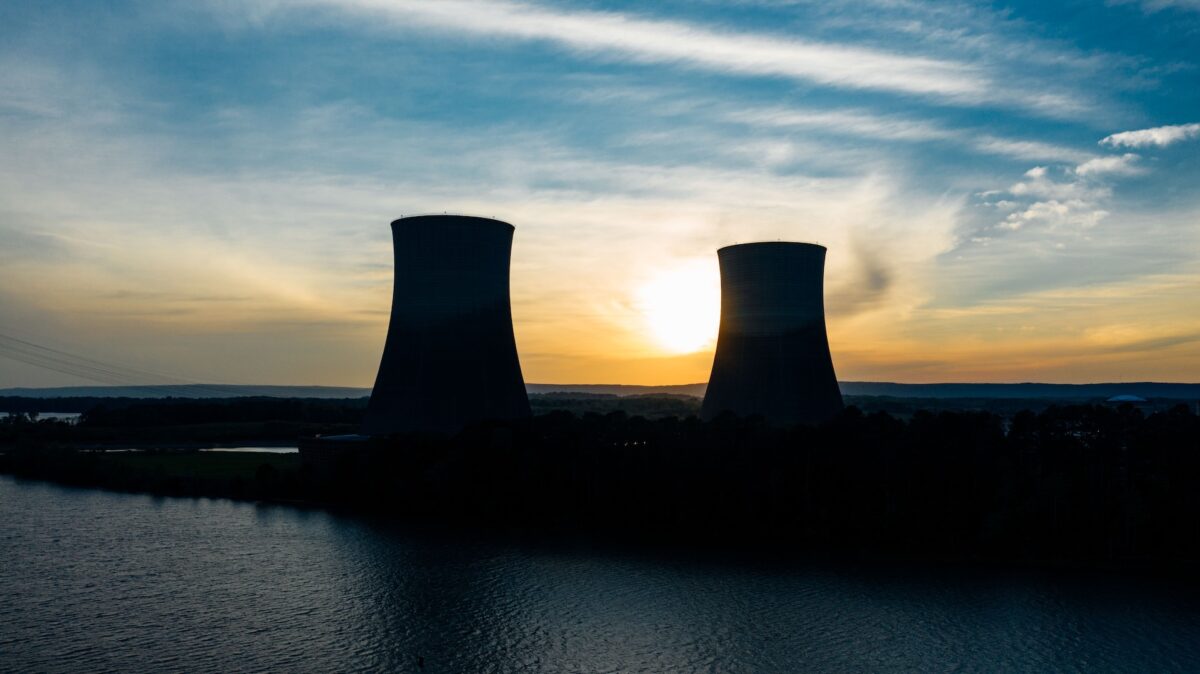
Uranium doesn’t get talked about the way oil does. It doesn’t have the cultural weight of gold. It doesn’t generate the breathless headlines that Bitcoin does. For most of the past decade, mentioning uranium as an investment got you polite smiles at best and the Fukushima conversation at worst.
That is changing. And the people who notice early — before the narrative fully shifts — tend to be the ones who do well.
I want to be clear about what this piece is. It is not a price prediction. It is not telling you to buy anything. What it is trying to do is lay out, as clearly as possible, why uranium matters more to the global economy than most people realise, why that importance is growing, and what the structural dynamics look like over the next decade. After that, you can make up your own mind.
Why Uranium Disappeared From The Conversation
To understand where uranium is going, you have to understand where it has been. And the honest answer is that uranium spent about a decade in the wilderness — misunderstood, underinvested, and carrying the weight of one of the worst industrial disasters in modern history.
On March 11, 2011, the Fukushima Daiichi nuclear plant in Japan was hit by a tsunami following a 9.0 magnitude earthquake. Three reactors melted down. Japan shut down all 54 of its operational reactors almost immediately. Germany, which had been one of the most nuclear-friendly countries in Europe, announced it would phase out nuclear power entirely by 2022. Other countries slowed or shelved reactor projects. Uranium prices, which had already fallen from their 2007 peak of over $130 per pound, collapsed further. By 2016 the spot price was hovering around $20 per pound — barely above the cost of production for most miners.
The consequence was predictable in retrospect but missed at the time. Uranium mines closed. Exploration budgets were cut to zero. The Kazakh state-owned mining giant Kazatomprom, which produces roughly 40% of the world’s uranium, voluntarily cut production. Canada’s Cameco, the other major Western producer, suspended operations at its McArthur River mine — one of the highest-grade uranium deposits in the world — and kept it idle for years. The supply side of the uranium market essentially went on strike.
What nobody adequately modelled was what happens when you underinvest in uranium supply for a decade while the world quietly keeps running its reactors. Because reactors don’t stop needing fuel just because the commodity is out of fashion.
The Supply Crunch Is Already Here
There are approximately 440 nuclear reactors operating around the world today. Each one needs uranium to run. The global fleet consumes roughly 180 million pounds of uranium per year. Global mine production is currently around 155 million pounds per year. That gap — roughly 25 million pounds annually — has been filled for years by drawing down inventories that utilities stockpiled during better times and by secondary supplies from decommissioned weapons programmes.
Those buffers are thinning. Weapons-grade uranium being converted to reactor fuel — the so-called “Megatons to Megawatts” programme between the US and Russia — ended years ago. Utility inventories are being consumed rather than replenished because term contracts signed at higher prices years ago are expiring, and utilities have been reluctant to sign new long-term contracts at spot prices they hoped would stay low. That reluctance is now becoming a problem, because they still need the fuel.
The world has been consuming more uranium than it mines for years. The only question is when the market fully prices that in.
Restarting a uranium mine is not like flipping a switch. McArthur River took Cameco years to bring back online after suspension. New mines take a decade or more from discovery to production. The Kazakh fields that dominate global supply are facing ground water challenges and declining ore grades. Kazakhstan also has a complicated geopolitical position — it neighbours Russia and China, and Western utilities nervous about supply chain security are quietly trying to diversify away from Kazatomprom, which only tightens the supply picture for Western-friendly producers.
The Demand Side Is The Story Nobody Is Telling
Here is where it gets genuinely interesting, because the demand picture for uranium over the next decade is unlike anything the market has seen before. It is not just that existing reactors keep running. It is that the world is actively building new ones at a pace not seen since the 1970s, for a reason that would have seemed unlikely five years ago: artificial intelligence.
AI data centres consume extraordinary amounts of electricity. A single large-scale AI training cluster can consume as much power as a small city. The technology infrastructure being built to support the AI revolution — the servers, the cooling systems, the networking — all of it requires reliable, around-the-clock power at a scale that wind and solar, with their intermittency, struggle to provide economically. Nuclear is the only low-carbon baseload power source that can deliver gigawatts of continuous electricity regardless of weather conditions.
Microsoft, Google, Amazon, and Meta have all either signed nuclear power agreements or publicly stated that nuclear is central to their clean energy strategy. Microsoft signed a deal to restart Three Mile Island — the site of America’s most infamous nuclear accident in 1979 — specifically to power its AI data centre load. That is not a small symbolic gesture. That is a multi-billion dollar commitment to nuclear power from one of the most sophisticated energy buyers in the world.
Then there is the policy shift. Governments that spent a decade apologising for nuclear are quietly reversing course. France, which gets over 70% of its electricity from nuclear and had been planning to reduce that share, has reversed policy and announced new reactor builds. Japan has restarted more than a dozen reactors and is planning to build new ones — a remarkable shift from the immediate post-Fukushima position. The United States passed the ADVANCE Act in 2024, streamlining the licensing process for new reactors. The UK, South Korea, Poland, the Czech Republic, and several other countries all have active nuclear expansion programmes underway.
And then there are small modular reactors. SMRs represent a genuinely new approach to nuclear power — factory-built, modular, deployable in smaller increments than traditional gigawatt-scale plants. They are not yet operating at commercial scale, but the pace of development has accelerated significantly. Companies like NuScale, Oklo, and X-energy are all moving through regulatory approval processes. If even a fraction of the SMR projects currently in development come online over the next decade, the demand for uranium increases substantially above what current reactor projections already suggest.
The Investment Angle: How To Think About Uranium Exposure
If the supply and demand picture above is roughly correct — and I think it is — then uranium is in the early stages of a structural rerating. Not a speculative bubble driven by retail enthusiasm, but a fundamental repricing driven by the gap between what the market currently produces and what it will need to produce over the next decade.
There are several ways to get exposure to this theme, each with a different risk profile.
How Do You Actually Buy Uranium?
This is the question most articles skip over. The honest answer is that uranium is not like buying gold or oil — you cannot walk into a broker account and buy a barrel of uranium the way you can buy a barrel of crude. The physical commodity market for uranium is an industrial market, dominated by utilities and producers signing long-term supply contracts. Retail investors have never had direct access to it.
The traditional way sophisticated investors have gained exposure to commodity prices is through futures contracts — agreements to buy or sell a commodity at a fixed price on a future date. Futures exist for oil, gold, wheat, natural gas, and dozens of other commodities. They are the backbone of how professional traders position themselves around commodity price movements. If you want to understand how futures work as a financial instrument, our piece on carbon dioxide emissions futures covers the mechanics in detail — the principle is identical for uranium, even though the underlying commodity is different.
The problem with uranium futures is that the market is thin, illiquid, and largely inaccessible to anyone outside institutional trading desks. The CME Group does list uranium futures contracts, but the trading volume is a fraction of what you see in oil or gold futures. For most investors, uranium futures are theoretical rather than practical.
Which is why the alternatives matter. The ticker cards above — CCJ, URA, OKLO, SMR — represent the four most practical ways for ordinary investors to get exposure to the uranium theme without touching futures at all. Each one gives you a different slice of the same structural story, with a different risk profile attached. A miner like Cameco gives you direct leverage to the uranium price. An ETF like URA gives you diversified exposure across the whole sector. An SMR developer like Oklo gives you a long-duration bet on the technology that will drive future demand. None of them require a futures account, margin, or anything beyond a standard brokerage.
I want to be honest about the risk side of this, because anyone presenting uranium as a straightforward bull thesis without discussing the risks is not giving you the full picture. Uranium is a volatile commodity. The spot price has already moved significantly from its lows — from $20 per pound in 2016 to around $80 today. Some of the supply-demand rerating has already happened. The question is how much of the future demand growth is already priced in.
The Risks Are Real And Worth Taking Seriously
The obvious risk is another Fukushima-type event. A serious nuclear accident anywhere in the world would have an immediate chilling effect on reactor construction plans and public support for nuclear expansion. This risk is lower than it was in 2011 — modern reactor designs are substantially safer, and the SMR designs in development have passive safety systems that make the kind of failure seen at Fukushima essentially impossible — but it is not zero.
The second risk is timeline slippage. Nuclear projects are notoriously prone to cost overruns and delays. The Vogtle plant in Georgia, the first new US nuclear reactor in decades, came in years late and billions over budget. If new reactor builds slow down or get cancelled, demand projections need to be revised downward. SMRs in particular face significant execution risk — the technology is promising but unproven at commercial scale.
The third risk is geopolitical. A significant share of global uranium production and enrichment capacity sits in countries with complicated relationships with the West. Any disruption to Kazakh supply — whether through political instability, export restrictions, or conflict — would be immediately disruptive. On the other hand, that same geopolitical risk is part of what is driving Western governments to support domestic uranium production, which is a long-term tailwind for North American and Australian producers.
Where This Leaves Us
Here is my honest view, stated as plainly as I can manage.
Uranium is not a niche commodity anymore. It is becoming critical infrastructure. The electricity that powers AI, the electricity that charges electric vehicles, the electricity that heats and cools buildings in a world trying to decarbonise — a growing share of all of it is going to come from nuclear. There is no credible net-zero scenario that does not include a significant expansion of nuclear power. The International Energy Agency, which spent years underweighting nuclear in its projections, now includes nuclear expansion as a central pillar of its clean energy transition modelling.
The supply side cannot respond quickly. Mines take a decade to build. The deficit between production and consumption is structural, not cyclical. And the demand side is accelerating in ways that were not anticipated even three years ago — the way technology has rewired energy demand patterns is genuinely new, and uranium is one of the cleaner beneficiaries of that shift.
I am not saying uranium is going to $200 per pound. I have no idea what the price will do in the short term and neither does anyone else. What I am saying is that the structural argument for uranium being more important to the global economy in 2035 than it is today is, to me, one of the more compelling cases in commodity markets right now. Not because it is exciting. Because the numbers point that way, and the world’s energy needs are not going to wait for the market to catch up.
The people who figured that out about oil in 2002 did very well. The people who figured it out about lithium in 2015 did very well. Uranium in 2026 feels like one of those moments where the fundamentals are clearly building toward something that the market has not fully priced yet.
That is not a guarantee. But it is worth paying attention to.
You can track uranium-related equities including OKLO and SMR on the AllinAllSpace Market Watchlist. For a deeper look at the SMR technology behind the next generation of nuclear plants, see our analysis of whether small modular reactors are the next big thing.
This article represents the opinion of the author and does not constitute financial or investment advice. AllinAllSpace is not a registered investment advisor. Commodity and equity markets involve significant risk. Always conduct your own research before making investment decisions. Data accurate as of June 2026.