
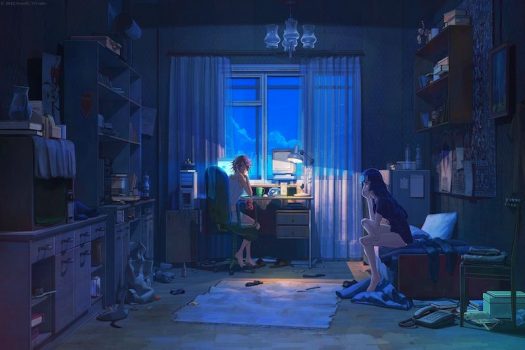
Lo-fi music shouldn’t work. It’s deliberately imperfect — the crackle of vinyl, the hiss of tape, the slightly off-tempo drum machines, the melodies that go nowhere in particular and arrive at nothing definitive. And yet millions of people listen to it every day — while working, studying, commuting, and falling asleep. Lo-fi Girl, the YouTube channel formerly known as Chilled Cow, now has over 15 million subscribers and streams live, without interruption, around the clock.
Lo-fi music has become a global phenomenon that is both a genre and a state of mind — a symbol of the modern internet, with its combination of drum machines, simple chords, and deliberately grainy production. It has transitioned from a niche corner of SoundCloud to Spotify playlists with millions of monthly listeners, creating an entirely new music culture along the way. This is the story of why it works, what it has become, and where it is going.
“If lo-fi music were a meal, it would be described as tasteless. And that is exactly what makes it so unique — and so useful.”
Lo-fi Music Is Good for Everything
This genre was popular well before it became a mainstream phenomenon. Lo-fi music was the subject of research and features in major publications including The Washington Post. Music is generally believed to be a tool for concentration and calming down — and lo-fi beats in particular have become popular among students, remote workers, and anyone who needs to focus but finds silence either too intense or too empty.
You can use lo-fi to fall asleep, to meditate, to concentrate, or simply to let the day go. Another benefit is that it is almost endless. Open Spotify or YouTube, select a lo-fi playlist, and the beats simply flow — it is genuinely difficult to notice the end of one track and the beginning of another. There is no need to shuffle or skip. Lo-fi streams on YouTube go live for days, weeks, and months. They are, in practice, infinite.
People consistently say that lo-fi helps them get into the right mindset for work. This became particularly important as remote and hybrid working became the norm — lo-fi filled the sonic space that an office environment used to provide, without the distraction of lyrics or the jarring energy of more conventional music.
The Science of Why It Works
Lo-fi’s productivity benefits are not just anecdotal — there is a growing body of research that helps explain why this specific kind of music aids concentration in a way that most other genres do not.
In short, lo-fi is not accidentally good for focus. It is structurally optimised for it — whether by design or by the evolutionary preferences of a large audience that discovered, through trial and error, what actually works.
The Sub-Genres — A Family of Micro-Genres
Lo-fi is no longer a single genre — it has spawned a family of related micro-genres, each with a distinct aesthetic, audience, and production style. Understanding the landscape helps explain why lo-fi has sustained its growth rather than fading like most internet music trends.
The Original
Sampled jazz chords, boom-bap drum patterns, and a deliberately low-fidelity aesthetic. The genre that started it all and still dominates. Lo-fi Girl streams this format 24/7. Characterised by slow BPMs (70–90), mellow samples, and a nostalgic, slightly melancholy mood.
Jazz Meets Hip Hop
A closer relationship with jazz harmony and improvisation. More complex chord voicings, walking bass lines, and sometimes live instrumentation rather than samples. Artists like Idealism and Philanthrope are central figures. Slightly more dynamic than standard lo-fi hip hop.
Warmth and Groove
Incorporates soul, R&B, and funk elements — deeper grooves, warmer chord progressions, occasional vocal chops. More emotional and groove-oriented than lo-fi hip hop. Popular with an older demographic and growing rapidly on Spotify’s editorial playlists.
Dark and Distorted
A darker, more aggressive offshoot originating from Memphis rap samples and distorted 808s. Went viral on TikTok in 2022–2023 and has since developed into its own distinct scene. Less ambient, more driving — used heavily in workout and gaming contexts.
Dance Floor Nostalgia
Applies lo-fi aesthetics — vinyl crackle, tape saturation, warm compression — to house music structures. Slower and more textured than conventional house. Artists like Ross from Friends pioneered the sound. Bridges the gap between lo-fi and electronic club music.
Pure Texture
The most minimal end of the spectrum — barely any rhythm, mostly texture and atmosphere. Rain sounds, distant piano, soft pads. Designed entirely for deep focus or sleep. The fastest-growing sub-category on Spotify’s sleep and focus playlists in 2025–2026.
Lo-fi and the Labels
Though lo-fi music is enormously popular, major music labels have largely continued to ignore it — and that mutual distance has become one of the genre’s defining characteristics rather than a limitation.
Since lo-fi music can be produced at home by enthusiasts with relatively basic equipment, many musicians simply do not need external forces intervening in their art. The genre is more directly connected to its listeners than almost any other — oriented toward the audience rather than toward commercial radio, label deals, or chart performance. Many lo-fi creators actively choose to stay independent, monetising through Patreon, Bandcamp, YouTube ad revenue, and sync licensing for video content.
Another factor is accessibility. Lo-fi can be created by almost anyone with a computer and a DAW. You do not need a recording studio, a manager, or a label advance. If you have access to YouTube and SoundCloud, you can build an audience. Some lo-fi creators have built followings of hundreds of thousands of subscribers entirely independently. This frictionless path from bedroom producer to online presence is part of what makes the genre feel authentic — and why its audience trusts it in a way they might not trust a polished major-label release.
The criticism exists too. Some question whether lo-fi deserves to be called music at all given its simplicity. Others note that the sheer volume of lo-fi content — and increasingly, AI-generated lo-fi that floods streaming platforms — makes it harder for genuinely creative producers to stand out. The risk of homogeneity is real. When everyone sounds the same, the genre loses the human touch that made it compelling in the first place.
The Road Ahead
Lo-fi music has moved well beyond a trend. It is now infrastructure — the sonic wallpaper of the remote working era, the default background for millions of study sessions, the audio equivalent of a city coffee shop. Lo-fi Girl streams to millions of concurrent listeners around the clock, every day of the year, without pause.
The emergence of AI-generated lo-fi is the most significant challenge facing the genre’s human creators. Algorithms can generate technically competent lo-fi tracks in seconds, and some streaming platforms are already flooded with AI content designed to capture lo-fi playlist placement. The response from the community has been to double down on authenticity — on the specific human qualities that AI cannot replicate: genuine musical taste, emotional intention, the kind of imperfection that comes from a person making a choice rather than an algorithm optimising for a target.
Lo-fi musicians continue to emphasise that they do not create music for money. Perhaps that is still what makes their craft unique, genuine, and worth listening to.