Novo Nordisk rode the GLP-1 wave to become Europe's most valuable company. But after a sharp pullback from its all-time highs, the question is whether the growth story is still intact — or if the easy money has already been made.
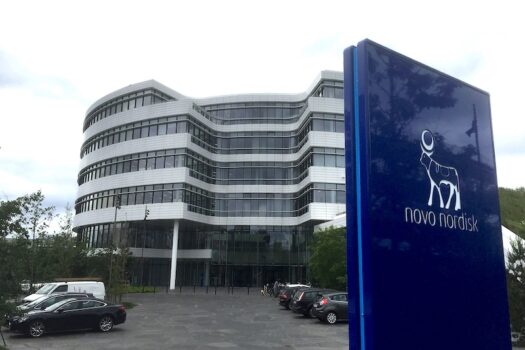
In 2024, Novo Nordisk briefly became the most valuable company in Europe — surpassing LVMH, ASML, and every major European bank — on the back of two drugs: Ozempic and Wegovy. Then the stock gave back most of those gains. Today, NVO trades at around $48 — down roughly 60% from its 2024 peak of $138 — with a P/E ratio of 10.3, the lowest in a decade, and a business that generated $51 billion in trailing revenue with 80% gross margins.
The question for investors in mid-2026 is not whether Novo Nordisk makes extraordinary products. It does. The question is whether the stock — battered by pricing pressure, US policy uncertainty, and Eli Lilly competition — has been sold down to a level where the fundamentals make a compelling case for buying.
This is a full fundamental analysis: revenue, earnings, margins, balance sheet, PE ratio, and the key risks and catalysts going into the second half of 2026.
What Novo Nordisk Actually Is
Novo Nordisk was founded in Denmark in 1923 — over a century ago — originally as an insulin manufacturer. For most of its history it was a steady, respected healthcare company with a dominant position in diabetes treatment and a modest profile outside specialist medical circles. Then GLP-1 happened.
GLP-1 receptor agonists — glucagon-like peptide-1 drugs — were originally developed for type 2 diabetes management. They work by mimicking a hormone that regulates blood sugar, slowing gastric emptying and reducing appetite. The weight loss effect was noticed as a secondary benefit. Then clinical trials showed the weight loss was not incidental — it was dramatic, consistent, and accompanied by meaningful reductions in cardiovascular risk. Suddenly Novo Nordisk was not just a diabetes company. It was the company that had invented the most effective weight loss drug in medical history.
Ozempic is the injectable semaglutide product approved for type 2 diabetes. Wegovy is the higher-dose injectable approved for weight loss. In early 2026, Novo Nordisk launched the Wegovy pill — an oral GLP-1 formulation that CEO Mike Doustdar called “one of the best drug launches ever.” The company is now seeking approval for the Wegovy pill in China, the UK has already approved it, and the addressable market is expanding globally.
The Financials: Extraordinary Numbers at a Discount Price
Strip away the stock price volatility and what you have is a company with financial metrics that almost no large-cap pharma business can match.
| Metric | 2023 | 2024 | 2025 | TTM 2026 |
|---|---|---|---|---|
| Revenue | $33.7B | $41.9B | $47.7B | $51.4B |
| Revenue growth | +31% | +24.9% | +11.1% | +16.8% |
| Gross margin | ~82% | ~83% | ~81% | 80.98% |
| Net profit Q1 2026 | — | DKK 48.6B (+67.2%) | ||
| EPS (diluted, DKK) | ~14.5 | 22.67 | 23.06 | 27.45 (TTM) |
| EPS growth | +23% | +56% | +1.7% | +67.1% (Q1 YoY) |
| ROIC | — | 53.04% | ||
| Operating cash conversion | — | >120% | ||
The numbers are almost absurdly good for a company trading at 10x earnings. A 53% return on invested capital means that for every dollar Novo Nordisk puts to work, it earns 53 cents back. Operating cash conversion above 120% means the company generates more cash than its reported net income — a sign of high-quality earnings with minimal accounting distortion. The gross margin of 81% is the kind of number you see in software businesses, not pharmaceutical manufacturers.
What Happened to the Stock: The Three Reasons It Fell 65%
Novo Nordisk went from Europe’s most valuable company to a stock trading near 10-year valuation lows in roughly 18 months. Three things drove the decline.
1. US pricing pressure and the 340B programme
The US government’s 340B Drug Pricing Program requires pharmaceutical companies to provide discounted drugs to certain healthcare providers. In Q1 2026, Novo Nordisk adjusted its provisioning for 340B liabilities — resulting in a large one-time reversal that made reported revenues look higher than underlying operational performance. When stripped of this reversal, adjusted US sales declined 11% year-over-year. American health insurers and pharmacy benefit managers have been pushing back hard on Wegovy’s list price, and lower realised prices are flowing through to revenue. This is the most significant fundamental headwind.
2. Eli Lilly competition
Lilly’s GLP-1 drugs — Mounjaro (diabetes) and Zepbound (obesity) — are growing faster than Novo’s. In Q1 2026, Lilly’s Mounjaro grew 125% and Zepbound grew 80% year-over-year. Lilly also launched Foundayo, an oral GLP-1 pill, in direct competition with Novo’s Wegovy pill — though early Foundayo prescriptions lagged Wegovy pill significantly. The market is big enough for two dominant players, but the competitive dynamic has compressed Novo’s premium multiple.
3. IRA and 2027 price cut risk
The US Inflation Reduction Act introduced Medicare drug price negotiation. Semaglutide products are in the pipeline for potential price cuts in 2027. The market has been pricing in a meaningful revenue headwind from these cuts, even though the full impact remains uncertain and the international business — which grew 6% in Q1 — partially offsets US pressure.
The Bull Case: Why the Selloff May Have Gone Too Far
The bear case is well-known and already reflected in the price. The bull case rests on several arguments that deserve equal weight.
The Wegovy pill changes the market size fundamentally. Injectable drugs require needles, prescription management, and a certain level of patient commitment. An oral pill removes the most significant barrier to GLP-1 adoption globally. The Wegovy pill’s UK approval, the ongoing China regulatory process, and the early US data all point to a product that could significantly expand the addressable market beyond what injectable Wegovy could reach.
The obesity market is structurally enormous. Over 1 billion people globally are classified as obese. Even at current penetration rates of a few percent of the eligible population, Novo and Lilly are generating combined revenues exceeding $50 billion annually. As the pill form expands access, the market could be multiples of its current size within five years.
The R&D pipeline extends well beyond GLP-1. Novo’s acquisition of Akero Therapeutics positions it in metabolic-associated steatohepatitis (MASH) — fatty liver disease — which affects an estimated 115 million people globally and currently has few treatment options. Its rare disease franchise (haemophilia, growth hormone disorders) provides diversification. The company is not a one-drug story, even if the market has occasionally treated it as one.
The valuation is objectively low. A fair value analysis using multiple methodologies — including peer multiples and discounted cash flow — suggests intrinsic value in the $60-$70 range based on current earnings power alone, according to analysts at Simply Wall St and Koala Gains. At $48, the stock trades at a meaningful discount to those estimates.
A company with 81% gross margins, 53% ROIC, and 17% revenue growth trading at 10x earnings is either a trap or an opportunity. Understanding which requires understanding the pricing risk.
The Balance Sheet: No Concerns Here
| Balance Sheet Metric | Current (2026) |
|---|---|
| Gross margin | 80.98% |
| Return on invested capital (ROIC) | 53.04% |
| Operating cash conversion | >120% |
| Dividend | Yes — ongoing buyback programme |
| Debt profile | Investment grade, manageable leverage |
| Share buyback | Active — 0.8% of capital in treasury shares |
| R&D spending | Increasing — Akero acquisition + pipeline investment |
Unlike Virgin Galactic — which has a going concern disclosure and burns $90 million per quarter — Novo Nordisk’s balance sheet is a source of comfort rather than concern. The company generates cash well in excess of its net income, funds a growing dividend and share buyback programme, and is actively investing in R&D and manufacturing capacity expansion. There is no financial distress here. The risk is a revenue slowdown, not a solvency risk.
Key Catalysts to Watch in H2 2026
Wegovy pill expansion. US uptake data for the oral semaglutide, China regulatory decision, and any additional market approvals will be closely watched. A strong US commercial ramp would significantly change the revenue growth narrative.
2027 IRA pricing clarity. Once the negotiated Medicare price for semaglutide is published, the market can properly model the 2027 revenue impact. Uncertainty has been a bigger overhang than the actual number may prove to be.
Lilly competitive data. Any clinical data comparing Wegovy pill to Foundayo directly, or any divergence in US prescription trends between the two, will move both stocks.
Akero MASH trial results. Efruxifermin, Akero’s MASH drug, is in Phase 3. Positive Phase 3 data could significantly expand Novo’s addressable market beyond obesity and diabetes.
Novo Nordisk is not a distressed company at 10x earnings — it is a category-defining pharmaceutical business with 81% gross margins, 53% ROIC, and the two most commercially successful drugs in medical history. The selloff from $138 to $48 reflects real concerns: US pricing pressure, IRA risk, and Lilly competition. Those concerns are legitimate. They are also largely known and visible in the financial results.
What is less often discussed is the scale of what the Wegovy pill represents. If oral semaglutide expands GLP-1 adoption from a few percent of eligible patients to a materially higher number — which pill formulations of drugs historically do — the revenue trajectory from 2027 onwards looks very different from what 2025’s pricing headwinds imply. The market has been pricing in the worst of the known risks. It has not been fully pricing in the upside of the pill transition.
At $48 with a forward P/E of 12.8x, NVO is trading at a significant discount to both its historical average and its pharma peers. Whether that discount closes in 2026 depends primarily on Wegovy pill momentum in the US and clarity on 2027 IRA pricing. Both should become clearer in the next two earnings releases.
For more on how to access healthcare and pharma stocks through different brokers and instruments, see our broker reviews — including Interactive Brokers and eToro. For broader market context see our State of Markets Q3 2026 report. For other stock analyses in a similar format see our stock analysis hub.
This article is for informational and educational purposes only and does not constitute financial or investment advice. Past performance is not indicative of future results. Data sourced from Novo Nordisk Q1 2026 SEC filing, MacroTrends, Yahoo Finance, Simply Wall St, Koala Gains, CNBC, and FinanceCharts. Accurate as of June 29, 2026.