
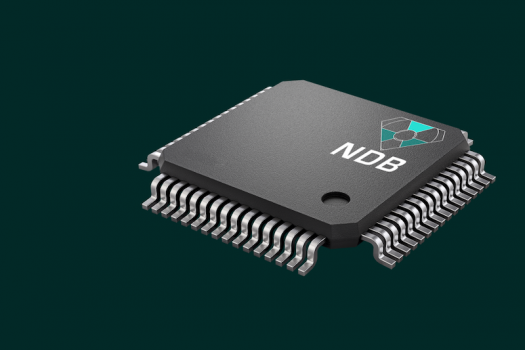
In 2020, NDB Inc claimed to have built a nuclear diamond battery that could power your phone for nine years without charging. It went massively viral. In 2023, the SEC sued the company for fraud. Here’s the full story — and what the real science behind diamond batteries actually looks like.
In the summer of 2020, a story went viral that seemed almost too good to be true. A California startup called NDB Inc had announced a breakthrough: a self-charging battery made from nuclear waste, encased in synthetic diamond, that could power a smartphone for nine years without ever needing to be plugged in. For low-power devices, it could last 28,000 years. The company had tested it at Lawrence Livermore National Laboratory. TechCrunch covered it. New Atlas covered it. The video went everywhere.
The concept was based on real science — betavoltaic cells using carbon-14 from nuclear waste are a genuine area of research, originally demonstrated at the University of Bristol. The idea that radioactive decay could be converted into usable electricity, using diamonds as both the energy converter and the protective casing, is not fiction. It works in the lab.
What happened next is a story about the gap between real science and startup hype — and it ends with the SEC.
In September 2023, the US Securities and Exchange Commission sued NDB Inc and its CEO Nima Golsharifi, alleging they raised over $1.2 million from 68 investors by making materially false and misleading statements about the company’s technology and test results. The case was filed in the US District Court for the Northern District of California.
The Promises That Made NDB Famous
NDB’s claims in 2020 were extraordinary. The company said it had achieved a 40% charge efficiency in tests at two major laboratories — Lawrence Livermore National Laboratory and a second unnamed facility overseen by University of Cambridge physicist Sir Michael Pepper. It announced it had signed two beta customers: one described as “a leader in nuclear fuel cycle products and services” and another as “a leading global aerospace, defence and security manufacturing company.”
The vision was even more ambitious. NDB’s CEO Nima Golsharifi spoke of batteries that could power electric vehicles for 90 years without recharging. Batteries that could be transferred from one device to the next, lasting longer than any individual owner’s lifetime. A battery that could theoretically power a low-draw device for 28,000 years — the half-life of carbon-14.
“Imagine you could use the same battery for the entire duration of your life and then transfer it to your kids. That is what the NDB battery promises.”
The story spread because it hit every note that viral tech content requires: revolutionary concept, real scientific basis, dramatic numbers, environmental angle (recycling nuclear waste), and a founder making confident claims about an imminent commercial product. It was picked up by major tech publications, shared hundreds of thousands of times, and generated enormous investor interest.
What the Scientists Actually Said
Even at the time, the scientific community was sceptical. The fundamental issue with betavoltaic batteries — nuclear batteries that convert beta radiation into electricity — is power density. Carbon-14 is a very weak beta emitter. The amount of electricity a betavoltaic cell can generate is tiny: useful for extremely low-power applications like pacemakers, deep-space sensors, or remote IoT devices, but orders of magnitude below what you would need to power a smartphone.
New Atlas reached out to Arkenlight — the company spun out of the University of Bristol by the researchers who actually invented the diamond betabattery technology — to ask directly about NDB’s claims. The response was illuminating. Arkenlight’s CEO acknowledged the technology works for very low-power applications and described a realistic market in IoT sensors. When asked about NDB’s consumer electronics claims, the implicit message was scepticism.
The University of Bristol’s own description of their technology is careful and honest: these batteries work, but they work for applications with extremely low current draw. The 40% charge efficiency NDB claimed referred to charge collection efficiency within the diamond — not the overall energy output of the battery. The two numbers are not the same thing, and conflating them was misleading at best.
“The technology works. The claims didn’t.”
The honest summary of the NDB storyThe Timeline: From Breakthrough to SEC Lawsuit
What the Real Technology Looks Like
The irony of the NDB story is that the underlying science is genuinely interesting — just not in the way NDB described it.
Betavoltaic batteries using carbon-14 or tritium really do work, and they have real commercial applications. City Labs’ NanoTritium batteries are in actual commercial use — powering medical devices, remote sensors, and military equipment in applications where the decades-long lifespan and zero-maintenance operation justify the cost. These are not consumer devices. They cost hundreds of dollars per unit and deliver microwatts of power. But they are real, they work, and they serve a genuine market.
Arkenlight, the Bristol spinout, has continued its work building toward commercial applications in IoT sensors and other low-power devices. Their approach is honest about what the technology can and cannot do: it is not a replacement for lithium-ion in consumer electronics. It is a complement to it, in applications where conventional batteries cannot go — remote sensors that need to run for decades without servicing, medical implants, deep-space instruments.
The global IoT sensor market is expected to be worth over a trillion dollars by 2030. Even a small fraction of that market, served by batteries that last decades without replacement, represents a significant commercial opportunity. The real diamond battery story is not about charging your phone for 28,000 years. It is about eliminating the battery maintenance problem in industrial and medical applications — which is considerably less exciting to tweet about, but considerably more likely to actually happen.
Why We Fall for This
The NDB story is a near-perfect example of how viral tech hype works. The formula is consistent across dozens of similar stories:
- Anchor in real science. Betavoltaic batteries are real. The Bristol research was real. This gives the story credibility that pure fiction could not.
- Make the numbers dramatic. 28,000 years. Nine years without charging. 90 years for an electric vehicle. These numbers are technically derived from real physics — the half-life of carbon-14 is real — but they omit the crucial caveat about power density that makes them meaningless for consumer applications.
- Announce milestones that are hard to verify. “Tests at Lawrence Livermore” sounds authoritative. The SEC alleged those descriptions were misleading. But at the time, there was no easy way for a journalist or casual reader to check.
- Create urgency. Beta customers. First commercial prototype “available later this year.” These create the impression of a product that is almost here, encouraging investment and coverage before due diligence catches up.
The lesson is not that you should distrust all science news. The University of Bristol’s work is real and important. Arkenlight is a legitimate company doing legitimate research. The lesson is that the gap between “this works in a lab for a specific application” and “this will power your smartphone” is vast — and companies that promise to bridge that gap instantly, with no commercial product and no independent verification, deserve scepticism proportional to the size of their claims.
The Bottom Line
The nano diamond battery is not a scam as a scientific concept. It is a real technology with real applications in low-power, long-duration devices — medical implants, IoT sensors, remote instruments. The researchers at Bristol who invented it did genuine, important work.
NDB Inc, on the other hand, is a company that the SEC has accused of defrauding investors by misrepresenting that technology’s capabilities and the state of its own development. Whether you could power your phone for nine years with a carbon-14 diamond battery was always a question the physics answered clearly: no. The SEC’s lawsuit suggests the company’s founders may have known that, too.
The battery that was going to last 28,000 years turned out to last about three years before the SEC came knocking.
Sources include the US Securities and Exchange Commission (case no. 3:23-cv-04724), TechCrunch, New Atlas, IFLScience, Bloomberg Law, and the University of Bristol. The SEC case against NDB Inc and Nima Golsharifi was ongoing as of the time of writing.