
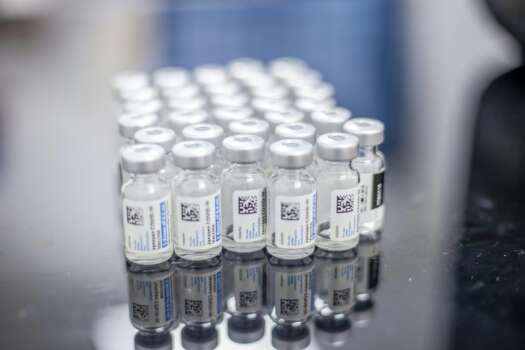
Let’s take a closer look at Pfizer’s fundamentals.
There is a stock that almost nobody is excited about right now. It doesn’t have a cult following on Reddit. It isn’t being discussed in breathless terms at investor conferences. It isn’t riding an AI tailwind or a defense spending wave. It’s a 175-year-old pharmaceutical company trading in the mid-$20s, down roughly 50% from its all-time highs, and carrying enough baggage that most growth investors won’t even look at it.
That stock is Pfizer. And it might be one of the more interesting fundamental stories in the market right now — depending on how you read the numbers.
Let’s look at those numbers. Honestly.
Why Is the Stock So Low?
To understand Pfizer in 2026, you have to understand what happened after 2021.
During the COVID-19 pandemic, Pfizer became one of the most valuable companies in the world almost overnight. Its mRNA vaccine, Comirnaty — developed in partnership with BioNTech — generated tens of billions in revenue in 2021 and 2022. Paxlovid, its oral antiviral treatment for COVID, added even more. At the peak, these two products alone were generating revenue that most companies could only dream of.
Then the world moved on.
COVID revenue cratered. What had been a $36 billion revenue stream from Comirnaty and Paxlovid at its peak has been reduced to an anticipated $5 billion in 2026. That is not a gradual wind-down. That is a cliff. And Pfizer, having loaded up on acquisitions to compensate — most notably the $43 billion purchase of cancer drug maker Seagen — is now carrying a significantly heavier debt load than it did before the pandemic.
At the same time, the company faces what the industry calls a “patent cliff.” A series of major drugs — including some of its biggest revenue generators — are losing or approaching the end of their exclusivity period between 2026 and 2028. When a drug loses patent protection, generics flood the market and prices collapse. Management has estimated the impact at approximately $17 billion in revenue exposure over that window.
So: COVID revenue gone, debt elevated, patent cliff approaching. That, in three sentences, is why the stock is where it is.
The Financials: The Full Picture
Revenue
Full-year 2025 revenues came in at $62.6 billion — down about 2% operationally from 2024’s $63.6 billion. Strip out the COVID products, however, and the non-COVID portfolio grew 6% operationally. That’s a meaningful distinction. The underlying business — oncology, cardiovascular, rare diseases, vaccines — is actually growing. The headline number is being dragged down by the COVID hangover, not by the core business deteriorating.
For Q1 2026, Pfizer reported $14.5 billion in revenue, up 5% year-on-year and ahead of analyst estimates. The non-COVID portfolio grew 7% operationally in the quarter. Full-year 2026 guidance is set at $59.5 to $62.5 billion — a slight step down from 2025, reflecting that $17 billion patent cliff and continued COVID product declines of around $1.5 billion year-on-year.
The honest takeaway: revenue is declining, but not collapsing. The business outside COVID is actually doing its job.
Earnings Per Share
Here is where the picture gets complicated — and where you need to pay close attention to which numbers you’re looking at.
Full-year 2025 reported GAAP diluted EPS came in at $1.36. That sounds modest. But the adjusted (non-GAAP) diluted EPS for 2025 was $3.22 — reflecting the actual operational performance of the business stripped of one-time charges, acquisition costs, and accounting items. For 2026, Pfizer is guiding for adjusted EPS of $2.80 to $3.00.
Q1 2026 reported diluted EPS was $0.47, while adjusted diluted EPS was $0.75 — ahead of analyst consensus estimates.
The gap between GAAP and adjusted earnings matters here more than usual. Pfizer’s reported numbers are being weighed down by amortization of acquired intangibles from its Seagen and other acquisitions, which are real costs but non-cash in nature and expected to diminish over time.
P/E Ratio
Based on the trailing twelve-month EPS of approximately $1.31, the current trailing P/E sits around 19x at a stock price in the mid-$20s. But that’s arguably the wrong lens to use. The forward P/E based on 2026 adjusted EPS guidance of around $2.90 at the midpoint puts the forward multiple closer to 8.9x. For a company of Pfizer’s size, pipeline, and dividend, that is strikingly cheap compared to the broader pharmaceutical sector, which typically trades at 15–18x forward earnings. Even against Pfizer’s own ten-year historical average P/E of around 19x, the forward multiple represents a significant discount.
Put differently: if you believe the adjusted earnings number is a reasonable proxy for the business’s cash-generating ability, the stock is trading at less than half its historical valuation.
EV/EBITDA
The EV/EBITDA ratio sits at approximately 7.7x. For context, the broader pharmaceutical sector average runs considerably higher. This is another metric suggesting the market is pricing Pfizer with significant skepticism — or, alternatively, significant pessimism about the outlook.
The Balance Sheet
This is the part of the Pfizer story that deserves the most scrutiny — and deserves honesty.
Pfizer’s debt-to-equity ratio stands at approximately 0.72. That’s not extreme by industrial standards, but for a pharmaceutical company, it’s elevated. The core concern is that operating cash flow coverage of total debt is sitting around 18%, which analysts note is a weak ratio. The company is managing it — it generated solid free cash flow in 2025 and is actively prioritizing de-leveraging — but it has suspended share buybacks to focus on paying down debt and maintaining the dividend.
Return on equity is around 8.3% and return on invested capital at 12.7%. Those are not headline numbers, but they’re real returns, not negative. The current ratio of 1.25 means the company has more short-term assets than liabilities — not a crisis balance sheet, but one that is clearly being managed conservatively given the debt load.
The Seagen acquisition, which was supposed to turbocharge Pfizer’s oncology ambitions, has been both transformative and burdensome. It gave Pfizer access to world-class antibody-drug conjugate (ADC) technology and drugs like Padcev and Adcetris. It also left the company with a pile of debt and a market that has punished it accordingly.
Pfizer generates over $60 billion in annual revenue, trades at a forward P/E of under 9x with a 6.6% dividend yield, but carries elevated debt from its Seagen acquisition and faces declining earnings as COVID product revenue fades and patent expirations loom.
The Pipeline and Recent News
If the balance sheet is the bear case, the pipeline is the bull case — and it’s more credible than many realize.
Pfizer plans to run 20 pivotal clinical trials in 2026. That is an unusually aggressive pace. On the oncology side, the FDA recently approved Veppanu (vepdegestrant) — a breast cancer treatment developed with Arvinas and the first FDA-approved oral PROTAC for advanced breast cancer. That’s a meaningful milestone: PROTAC technology, which works by degrading cancer-causing proteins rather than simply blocking them, is one of the more promising next-generation oncology platforms in development.
And then on May 21, 2026 — just days ago — Pfizer and its partners granted Rigel Pharmaceuticals an exclusive license to commercialize Veppanu. The move adds a new, partnership-driven revenue channel on top of the drug’s own sales, and follows Phase 3 data supporting clinical benefit in a difficult-to-treat patient group. Veppanu also secured inclusion in NCCN breast cancer treatment guidelines, which is a significant commercial tailwind — guidelines inclusion drives physician prescribing in ways that marketing alone cannot. This is a deal that adds real texture to the pipeline story. It signals Pfizer is willing to use partnerships to maximize the commercial reach of its oncology assets rather than going it alone, which is a smart allocation of resources given the debt load it’s managing.
Elrexfio has shown positive Phase 3 data in multiple myeloma. Atirmociclib, a next-generation CDK4 inhibitor, produced encouraging Phase 2 results in second-line metastatic breast cancer.
Legal settlements extended Vyndamax exclusivity to 2031 — a win that preserves a significant revenue stream from its cardiovascular franchise longer than previously expected.
Pfizer has also made a notable bet on obesity, completing its $7 billion acquisition of Metsera, which is developing next-generation GLP-1 drugs. The obesity market is one of the fastest-growing in pharmaceutical history, and Pfizer — having previously stumbled with an earlier oral obesity candidate — is making another serious attempt to compete with Eli Lilly and Novo Nordisk. The Metsera pipeline data is early, but the market potential is enormous, and a credible entry could meaningfully re-rate the stock.
On the dividend front, Pfizer continues to pay $0.43 per share per quarter — a trailing yield of approximately 6.6%. The company is leaning into the dividend as a signal of confidence in its cash flow outlook. The payout ratio against adjusted earnings is around 56–58%, which analysts generally consider sustainable, though the GAAP-based payout ratio is higher and flags as a concern for more conservative analysis.
The Bull Case and the Bear Case
The bull case is essentially this: Pfizer is a $60+ billion revenue business with a deep oncology pipeline, a 6.6% dividend yield, a forward P/E below 9x, an EV/EBITDA of 7.7x, and a management team that has committed to 20 pivotal trials in 2026. If even a handful of those trials succeed, if the obesity bet gains traction, and if the non-COVID base business continues growing at its current 6–7% clip, the stock is materially undervalued at current prices. Analyst targets on the optimistic end — Guggenheim has a Buy at $36 — reflect this view.
The bear case is equally coherent: Pfizer is carrying too much debt, its dividend payout ratio is stretched on a GAAP basis, the patent cliff is real and immediate, COVID revenue has structurally disappeared, and there’s no guarantee the Metsera obesity assets will generate anything like the returns Pfizer paid for them. Citigroup’s target of $27 — essentially the current price — reflects a “show me” stance that says the market is right to be skeptical until execution proves otherwise. Some analysts have reduced their fair value estimate to $23 per share, citing lower revenue and margin assumptions alongside cautious views on patent expiries.
Analyst consensus targets range from roughly $23 on the low end to $36 on the high end, with the mean landing around $30–$31. That suggests moderate upside from current levels in the base case, and meaningful upside if the pipeline delivers.
Is the Stock Undervalued?
Probably — but with an important caveat.
The numbers, taken at face value, look like a value case. A forward P/E below 9x, an EV/EBITDA of 7.7x, a 6.6% dividend yield, $60 billion in annual revenues, a pipeline running 20 pivotal trials, and a non-COVID growth rate of 6–7% operationally. Against Pfizer’s own historical valuation and against peers in the pharma sector, the stock is trading at a significant discount.
The risk is that the discount is deserved. Patent expirations are not theoretical — they are contractual and they are coming. The debt load from Seagen and Metsera is real. The COVID revenue that once inflated everyone’s expectations for Pfizer is gone and is not coming back. And the obesity pipeline, while promising, is genuinely early-stage and competing against two companies — Lilly and Novo — that have a massive head start.
What separates a value stock from a value trap is usually pipeline execution. If Pfizer’s oncology assets continue to gain traction, if Vyndamax holds its position until 2031, and if even one of its obesity candidates generates clinical excitement, the re-rating case becomes real. The company is not broken. It is digesting a structural shift from a COVID-inflated high, carrying the weight of expensive acquisitions, and trading as if all the bad news has arrived and none of the good news will.
Our view: Pfizer is likely undervalued, and the forward P/E makes it genuinely hard to ignore — but it’s a stock for patient investors, not those expecting a near-term catalyst. The dividend provides a real return while you wait. The pipeline provides optionality. The debt provides a reason for caution.
If you’re a value investor with a 3–5 year horizon who can live with limited near-term excitement, the fundamentals here are more interesting than the stock’s reputation suggests. If you’re looking for momentum, a story, or near-term upside, there are better places to look.
The case for Pfizer isn’t exciting. That might be exactly why it’s worth paying attention to.
This article is for informational purposes only and does not constitute financial or investment advice. All investments involve risk. Always conduct your own research before making investment decisions.