Forestry Investing: Is It Worth It? Risks, Returns and How to Start
Plant a tree, wait, and let nature compound. It sounds too good to be true, so here is how forestry investing really works, what the returns have been around the world, and the risks to know before you put money in.
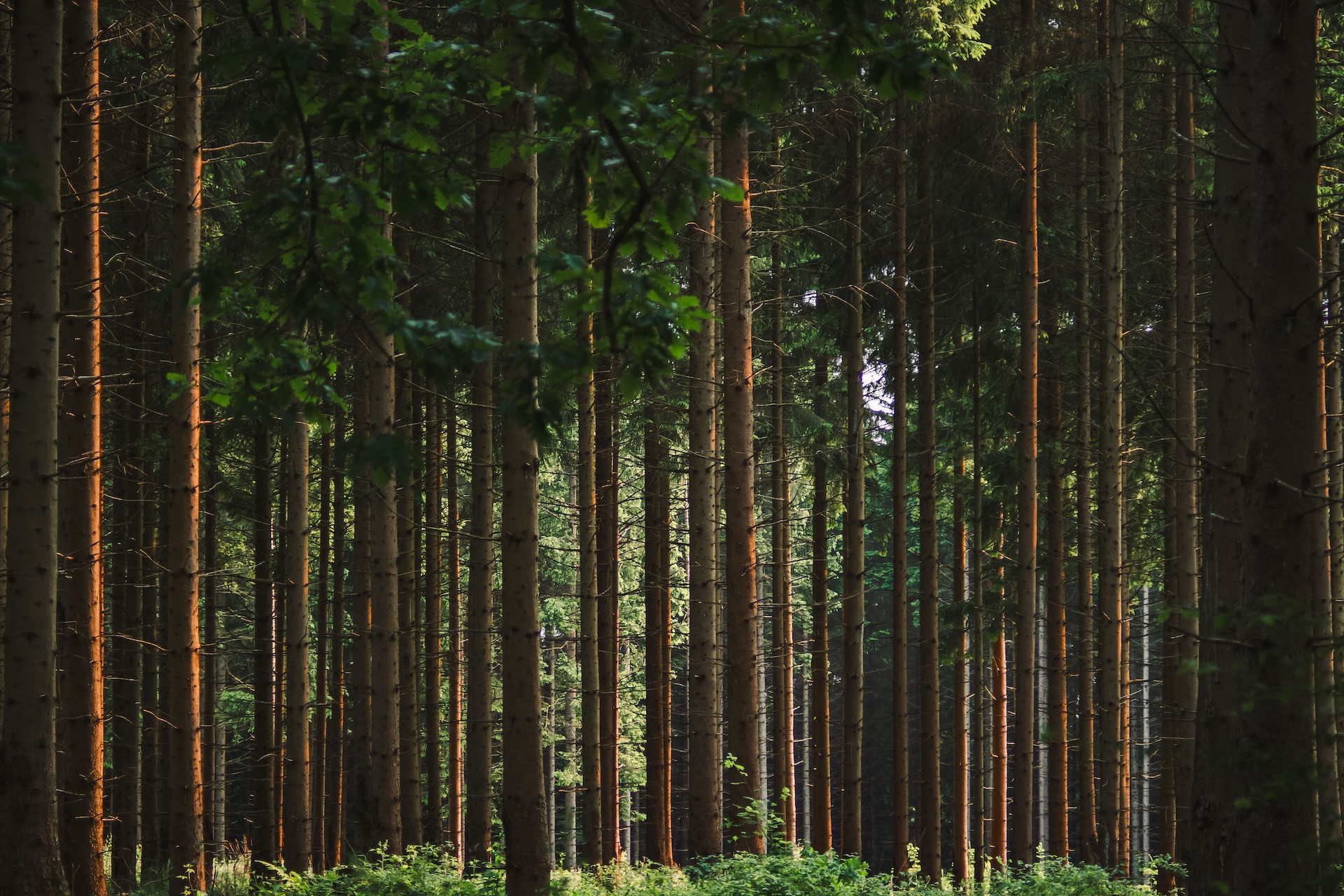

Here is a thought that sounds almost too nice: plant a tree, wait, and let nature do the compounding. That is the pitch behind forestry investing, and it keeps turning up in my feed next to words like “inflation hedge” and “real asset.” So I wanted to know if there is anything to it, or if it is just a good story with leaves on.
The short version is that forestry is a real asset class and big institutions have owned forests for decades. But the returns are slower and bumpier than the marketing suggests, and some products sold to ordinary investors are risky. This guide covers how it works, what the numbers say in different parts of the world, and who it might suit. I use examples from the US, the UK and Europe because that is where the best data is, but the logic works anywhere.
In This Guide
- How it pays: trees grow, timber is sold, and the land can rise or fall in price.
- Easiest way in: shares in timber companies or a forestry fund. Buying woodland yourself usually takes serious money.
- Track record: US timberland returned about 10.7% a year from 1987 to 2021, but the main forestry ETF lost 4.09% in the latest 12 months.
- Versus savings and P2P: forestry is not the best yearly return. The case for it is long-term real value, not yield.
- Watch out for: falling timber prices, tree disease and fire, money locked up for years, and scams.
- Our view: a small slice at most, not a get-rich idea.
What Is Forestry Investing and How Does It Make Money?
Forestry investing means putting money into land that grows trees for timber, or into companies that own and harvest such land. The money comes from three places, and it helps to keep them apart. First, the trees keep growing, so a forest gets more valuable each year without anyone doing anything. Second, the owner sells the timber when it is ready, which gives cash income. Third, the land itself can go up or down in price, like any property.
The first source is what makes forestry unusual. A timberland platform called AcreTrader describes tree growth as predictable, and that is fair, because a tree does not care about the stock market. But the second source, the timber price, moves with the economy, so growth in volume is steady while the price you sell at is not. That gap explains most of what follows.
It is also slow. A commercial forest is usually managed over decades, not quarters, and an owner can hold trees back when prices are weak and wait. That is a real advantage compared with a factory that has to keep producing, but it also means your money can be tied up for a very long time.
Ways to Invest in Forestry
There are four main routes, and they are very different. The easiest is to buy shares in a timber company. The largest timberland owner in North America, on the 2025 list compiled by the research firm Forisk, is Weyerhaeuser, and it says in its September 2026 investor presentation that it holds more than 10 million acres in the US. That is roughly the size of Maryland and Delaware combined, so you are buying a slice of a very large landlord. Weyerhaeuser is a REIT, which is a company that owns property and passes most of its income to shareholders.
The second route is a fund that holds many of these companies, such as the iShares Global Timber & Forestry ETF (ticker WOOD). It holds about 40 stocks and charges 0.39% a year, according to StockAnalysis data from October 26, 2026. But its biggest holdings, which include Weyerhaeuser, Suzano, SCA and West Fraser, are mostly makers of paper, pulp and wood products, so it behaves partly like an industrial stock fund, not like a forest. Either of these can be bought through a normal investment app, though what is available depends on your country.
The third route is to buy woodland yourself, and here the entry cost is the catch. A UK report from Goldcrest and Tilhill, covered by Farmers Weekly in November 2025, put the average value of commercial woodland at £19,200 per stocked hectare, and the listings averaged about 30 hectares. A hectare is 10,000 square meters, a little over two and a half acres. Our calculation is that a typical UK listing therefore costs around £576,000.
The fourth route is crowdfunding, private funds and “plot” schemes. Before you put money into any of them, ask one question: what exactly do I own? It could be land, trees, a loan to a forestry company, or shares in the company. That one answer tells you how safe it is and how easily you can get out.
| Route | What you own | Roughly how much to start | Easy to sell? | Main catch |
|---|---|---|---|---|
| Timber stocks e.g. Weyerhaeuser | Shares in a company that owns forest | The price of one share | Yes, any trading day | Prices follow the stock market and housing |
| Forestry ETF e.g. WOOD | Small pieces of about 40 companies | The price of one share | Yes, any trading day | Mostly paper and wood-products firms, not forest owners |
| Buying woodland | Real land and trees | About £576,000 for a typical UK listing (our calculation) | No, can take months or years | Management costs, tree disease, owner liability |
| Crowdfunding, funds, plots | Depends: a loan, shares or a plot | Varies, often low | Usually locked in | Check what you own and whether it is regulated |
Weyerhaeuser acreage from its September 2026 investor presentation; WOOD data from StockAnalysis as of October 26, 2026; woodland value from the Goldcrest and Tilhill UK Forestry Market Report 2025. The listing price is our own calculation (30 hectares times £19,200) and ignores buying costs.
How Have Forests Performed as an Investment?
Over the long run, quite well. The main benchmark for US timberland is the NCREIF Timberland Index, which tracks the value of forests owned by institutions. AcreTrader reports that it returned about 10.7% a year from 1987 to the end of 2021, and that the stock market did only a little better but with much bigger swings: a standard deviation of 6.9% for timberland versus 15.9% for the S&P 500 between 1991 and 2020. Standard deviation is just a measure of how bumpy the ride was, so a lower number means smoother. AcreTrader sells timberland investments, so this is a claim from an interested party.
There is a good reason to be careful with that smooth line. Forests are not traded every day, so the index relies partly on appraisals, which are professional estimates of value, and estimates tend to move more gently than real prices. The index has also been described as leaning toward the US South, and NCREIF itself says it may not be representative of the whole market. So the true ride was probably bumpier than the chart suggests, and that is our reading, not a measured figure.
More recent numbers are less exciting. The WOOD ETF lost 4.09% in the 12 months to October 26, 2026, including dividends, and has returned about 3.5% a year since it launched in 2008, according to StockAnalysis. Lumber futures, the price of sawn wood in the US, were near $520 per thousand board feet at the start of November, close to a two-year low, according to Trading Economics. A board foot is a piece of wood one foot by one foot by one inch, so the unit is simply a way to price volume.
One more point on timing: the same year can look very different depending on where the forest is. In the US, one manager, Domain Timber Advisors, says timberland values stayed firm in 2025 even though timber prices were flat, which means land did the work, not wood. In the UK, Savills said commercial forest prices fell 15.5% in the year to September 2025. So “forestry” is not one market, it is many local ones.
Forestry Returns vs P2P Lending and Savings Accounts
Here is the honest comparison. If all you care about is the yearly return, forestry is not the winner. P2P lending usually advertises more, and a savings account is safer and easier. So the case for forestry has to rest on something else, and I will get to that after the numbers.
| Option | Return | Main risk | Access to your money |
|---|---|---|---|
| High-yield savings account US example | 3.66% typical, 4.40% top | Inflation eating the return | Anytime |
| P2P lending | Typically 6% to 12% | Borrowers failing to repay, platform risk | Varies by platform |
| Forestry fund (WOOD ETF) | 3.5% a year since 2008 −4.09% last 12 months | Stock market and timber price swings | Any trading day |
| Private US timberland index, 1987–2021 | About 10.7% a year | Slow to sell, valuations are estimates | Years |
Savings rates from SwitchWize (US accounts, November 3, 2026; the typical figure is the median of 30 listed accounts). P2P range is our own comparison, see the P2P lending guide. WOOD returns from StockAnalysis (October 26, 2026). Timberland return from AcreTrader, citing the NCREIF index, an interested source. Periods and risks differ, so this is a guide to the order of magnitude, not a ranking. UK and other readers should check current local savings rates.
Start with savings. In the US, the best high-yield savings accounts paid up to 4.40% in early November, while the typical account on SwitchWize’s list paid 3.66%. That sounds fine until you remember that US inflation was 3.7% in September, according to Trading Economics, so after inflation your money is roughly standing still. The upside is that bank savings are usually insured up to a limit and you can withdraw at any time. If that is your goal, our guide to high-yield savings accounts shows what they are best used for.
P2P lending sits above that. In our comparison, platforms typically advertise 6% to 12%, which is clearly more than a savings account, but that money is lent to borrowers, so your capital is at risk and there is no deposit protection. That is the price of the higher yield. If you want steady income and are comfortable with that risk, start with the P2P lending guide, and for bonds and other income funds you can compare options with our fixed income fund screener.
Forestry funds do not beat either on yield. The WOOD ETF has returned about 3.5% a year since 2008, which is close to a savings account today and well below P2P, and it lost 4.09% in the latest 12 months. The 10.7% figure you see quoted is for private US timberland over a long period and comes from a platform that sells it, so I would not plan around it.
So why bother? Because a forest is a physical thing. Trees keep growing whatever the stock market does, wood always has a buyer, and the land is still there at the end, which is why people talk about forestry as having real value. That is our view, not a guarantee: forest prices can fall, as UK values did, and a fund share can drop. But it points to the right way to think about it. Savings and P2P are for income now. Forestry is for people who can wait decades and want something that holds value over time, so it fits as a small, patient slice, not as a way to earn the most each year.
What Does Forest Land Cost Around the World?
It depends enormously on where you look, and even inside one country. In Sweden, the Swedish Forest Agency reports an average of 92,000 kronor per hectare in 2025, up just over 5%, which was the second rise in a row after a fall in 2023. But the south of the country (Götaland) averaged 144,500 kronor per hectare, while the far north averaged only 42,700. Same country, more than three times the price, probably because southern trees grow faster and sit closer to the mills, though that is our reading.
Further east, the picture is of a region that has caught up. A Danske Bank economist, quoted in a March 2025 article, said Baltic forest land has gone from about €500 per hectare 25 years ago to about €3,700 in 2025, helped by Swedish companies that draw up to 40% of their timber from the Baltics. The UK numbers look contradictory, because Savills tracked a 15.5% fall in the average price of sales while Goldcrest and Tilhill reported a 3% rise in the value of stocked hectares of listings. They measure different things, so neither is wrong.
| Place | Price | Direction | Source and period |
|---|---|---|---|
| Sweden | 92,000 kronor per hectare (average) | Up just over 5% in 2025 | Swedish Forest Agency, 2025 data |
| Baltic region | About €3,700 per hectare | Up from about €500 25 years earlier | Danske Bank economist, March 2025 |
| UK commercial forest | £19,200 per stocked hectare | Up 3% (Goldcrest/Tilhill) versus down 15.5% (Savills) | Different measures, to late 2025 |
| United States | No single public price found | Land values firm in 2025 | Domain Timber Advisors, a manager |
Currencies are not converted because exchange rates move. One hectare is about 2.47 acres. Prices vary hugely by region, tree species, age of the trees and access to roads and mills, so treat these as examples, not a price list.
The Benefits of Forestry Investing
The first benefit is diversification, which means owning something that does not always move with your stocks. Because a tree keeps growing whatever the market does, forestry has historically been a smoother ride than shares, at least on paper. That makes it useful as a small part of a portfolio, not as the main event.
The second is flexibility. A forest owner can delay a harvest when prices are low, so the asset stores value on the stump, which is the part of the tree still standing. A factory or a rental property cannot do that as easily.
The third is the inflation question. AcreTrader says long-run timber prices have trended above inflation, and an older study by the research firm LANDTHINK found that timberland did better than stocks and bonds in years when inflation was higher. Both are old or interested sources, so I would not bank on it, but it explains why “inflation hedge” sits next to forestry so often.
The fourth is that forestry can pay for more than wood. Savills expects a positive ten-year outlook for UK forestry and points to new income from carbon and biodiversity, but it also warns that these can take time to produce real money. So treat them as an upside, not a plan.
The Risks of Forestry Investing
The biggest risk is price. Timber is a commodity, which means its price swings with housing and with trade policy, so a falling lumber market can hurt even a perfectly healthy forest. Savills lists weak timber prices, complex regulation and rising operating costs as current headwinds for UK forestry, which tells you that even the experts see costs and rules as a real drag.
The second risk is nature. Fire and storms are the obvious dangers, and disease is already here: ash dieback was first found in the UK in 2012 and the Forestry Commission says it is now widespread. The part many buyers miss is that the owner is responsible, and if a diseased tree falls and causes harm you may be liable, while removing trees can be complicated and expensive.
The third risk is that you cannot get out quickly. A share is sold in seconds, but woodland can sit on the market, and the UK regulator, the FCA, warns that high-risk investments in general typically offer lower liquidity and that you must be prepared to lose all of your money. For high-risk investments as a group, it suggests no more than 10% of your net assets.
The fourth risk is scams, and this is where forestry has a bad reputation. The FCA lists “UK forestry” and “international forestry” among the unregulated investment scams people should watch for, and it notes that land investments are not regulated by the FCA, so buyers may have no access to the Financial Ombudsman Service or the compensation scheme. Its guide to land investment scams is worth reading before you buy anything.
A real case shows how it goes wrong. According to the UK Insolvency Service, two linked companies sold teak-tree investment bonds on Brazilian plantations, typically £5,000 each with promised interest of 8% to 11%. Customers were misled, the companies lacked the right ownership rights, and both went into liquidation in March 2022. At least 250 investors lost a combined £8.5 million or more, and the director accepted an 11-year ban starting in March 2025 (full announcement). The lesson is portable to any country: a fixed return on trees in a faraway country, sold to you by someone you never met, is a red flag.
Forestry Investment Funds and Platforms Compared
If you want to act on all this, there are two places to look. The first is listed funds, which trade on a stock exchange like any share and are the simplest and most regulated route. The second is online platforms, which are newer, usually private, and mostly work by lending money or signing a contract with a forestry company. The first group is easy to compare. The second needs much more care, so I have said plainly what I could and could not check.
Start with the funds. I found only three pure-play forestry ETFs that ordinary investors can buy, which is why the table has three rows and not four. An ETF, or exchange-traded fund, is a basket of shares you can buy in one go. All three hold timber owners and wood-product makers, and in each case the biggest holdings are companies like Weyerhaeuser, Suzano, Mondi and the Swedish forest group SCA.
| Fund | Where it trades | Yearly fee | Size | Holdings | Last 12 months |
|---|---|---|---|---|---|
| iShares Global Timber & Forestry ETF WOOD | US (Nasdaq) | 0.39% | About $250M to $270M | About 40 | −4.09% |
| Invesco MSCI Global Timber ETF CUT | US (NYSE American) | 0.76%* | About $29M | 50 | +0.88% |
| iShares Global Timber & Forestry UCITS ETF WOOD (London) | London, with a second line in Amsterdam | 0.65% | About 56M to 63M | 46 | −3.59% |
Data from ETF Database (CUT, October 16, 2026), StockAnalysis (WOOD, October 26, 2026; London WOOD, September 1, 2026) and Motley Fool (September 3, 2026). *Motley Fool lists CUT’s fee at 0.99%, so check the fund’s own fact sheet. Fund sizes differ by source and date, and the London fund’s currency was not clear, so check it with your broker. Past returns do not predict future results.
So which one? WOOD is the largest, cheapest and the one most people mean when they say “the forestry ETF.” CUT tracks a different index, holds more companies and spreads across more countries (about 31% in the US, 14% in Finland and 9.5% in Sweden, according to ETF Database), but it costs about twice as much and is small, and small funds are sometimes closed by their provider. The London fund is the same idea in a European wrapper, which matters if you cannot buy US-listed ETFs from your country. UCITS is the label for funds regulated under European rules. Whichever you choose, remember that these funds are only part forest, so judge them on the mix of holdings, not the name.
Now the platforms. These are different from ETFs in one important way: you are usually lending money or signing a private contract, so you depend on the company honoring it, and you cannot sell in seconds. I picked three that let you invest in forestry and that I could find at least some verifiable information on. Read each description before you read the numbers.
Debitum. Debitum is a Latvian platform where you lend to businesses, and in forestry it funds loans to forest-buying companies such as the Latvian Forest Development Fund (LFDF). Debitum’s own marketing says investors can target 10% to 15% a year, and that is a target, not a promise. The numbers behind it are growing fast: unaudited figures published by Debitum say LFDF’s assets rose from €9.3 million to €43.9 million in 2025, with a net profit of €1.58 million. Fast growth can be a strength or a strain, and these are management figures, not audited ones. Debitum says it is EU regulated, and its footer lists an investment brokerage licence from Latvia’s central bank held by SIA DN Operator. I could not check the minimum investment or whether you can sell early.
AcreTrader. AcreTrader is a US platform where you buy shares in individual pieces of land, and since 2022 that includes timberland. According to a 2022 review on an affiliate site, so treat it with care, you must be an accredited investor, which in the US means a high income or net worth, with minimums of roughly $10,000 to $20,000, a 0.75% yearly servicing fee and a 5% fee when the property is sold. The same review says holding periods run an estimated 5 to 10 years, with a projected cash yield of 3% to 5%. That is old and secondhand, so check the current terms yourself, and note that for most readers this is simply not open to them.
Silvaland. Silvaland is a Latvian company that advertises returns of up to 14% a year on terms of 21 days to a year, from €100. It earns money from timber trading, harvesting rights, farmland and land price rises. Here is the part to read twice. Its own FAQ says it does not hold an investment services licence and that it intends to begin the MiFID II licensing process in October 2026, which is the European licence for investment firms, and I could not confirm whether that has started. It says it is not a crowdfunding service. You are not registered as an owner of any land: you sign a private agreement with the company, so your money depends on the company itself. Its website says returns are not guaranteed and that you can lose your capital. When I checked, its Trustpilot profile had a single review. Put it against the red flags in the risks section above before you go anywhere near it.
Forestry Investing and Tax: It Depends Where You Live
Tax is one area where the answer changes completely by country, so I will give two examples and one rule. In the UK, according to HMRC guidance, income tax and corporation tax do not apply to woodland managed commercially for profit, and profits from selling the trees are exempt from capital gains tax. The land itself is not exempt. For inheritance tax, commercial woodland may qualify for business relief, and there is also a woodlands relief that leaves out the value of the trees until they are sold.
In the US, the timber tax guidance at timbertax.org says that timber held as an investment for more than a year and then sold produces a long-term capital gain, which is usually taxed at lower rates than ordinary income. The details depend on whether you sell the trees in one lump or as they are cut, so a US woodland owner should ask a forestry-savvy accountant. Shares and funds are different again: they are taxed under your country’s normal rules for dividends and gains.
The rule: tax can change the real return a lot, and the rules (and any limits on foreigners buying forest land) differ by country. Check yours before you buy, and speak to a qualified adviser. This section is information, not tax advice.
Is Forestry Investing Worth It?
It can be, for the right person and in the right size. For most people the practical answer is a small allocation through listed timber companies or a low-cost fund, because you can buy and sell them easily and start with very little. Buying woodland directly makes sense mainly for people who already have wealth, want land for its own sake, and can spend time or money managing it.
What I would avoid is the glossy offer: a plot of “managed forest” sold with promises of fixed returns. If you cannot say who owns the land, who sells the timber and how you get your money out, do not buy it. And do not expect forestry to rescue a portfolio, because the recent returns we found were modest and the wood price is near a two-year low.
Forestry is a slow, real-asset diversifier, not a get-rich idea. If you want exposure, a small slice through listed companies or a fund is the simplest way in. Treat direct woodland and crowdfunded forestry as specialist territory, and avoid anything unregulated that promises a fixed return. This is our opinion, based on the sources named above, and not personal advice.
Final Word: Patient Money Only
Trees reward patience, and that is both the appeal and the problem. If you could not leave the money alone for ten years, forestry is not for you, and that is fine. If you can, start small, know exactly what you own, and keep the rest of your portfolio ordinary.
Looking for something with a shorter horizon? Our P2P lending guide covers a different kind of alternative, our fixed income fund screener compares bond and income funds, and our investment app reviews show where to buy shares and funds.
Frequently Asked Questions
Is forestry a good investment?
It can be a good diversifier. US timberland returned about 10.7% a year from 1987 to 2021 according to AcreTrader, which sells timberland, but recent returns have been weak: the main forestry ETF lost 4.09% in the 12 months to October 2026. Treat it as a small, long-term holding, not a core one.
How do you make money from forestry?
From three sources: the trees grow and become more valuable, the timber is sold for cash, and the land itself can rise in price. If you buy shares or a fund instead of woodland, you also receive dividends from the companies.
How much money do you need to invest in forestry?
Very little through shares or an ETF, since you only need the price of one share. Buying woodland takes far more: our calculation puts a typical UK commercial listing at about £576,000. Crowdfunding and fund products vary, so check the minimum and what you actually own.
Can you invest in forestry through an ETF?
Yes. The iShares Global Timber & Forestry ETF (WOOD) holds about 40 companies and charges 0.39% a year. Most of its biggest holdings make paper, pulp and wood products rather than own forests, so it is not a pure forest investment. Availability depends on your country and broker.
Which ETFs invest in forestry?
We found three pure-play forestry ETFs: the iShares Global Timber & Forestry ETF (WOOD, fee 0.39%), the Invesco MSCI Global Timber ETF (CUT, fee about 0.76%) and the iShares Global Timber & Forestry UCITS ETF listed in London (fee 0.65%). Most of their holdings are timber owners and wood-product makers. Availability depends on your country and broker.
Is forestry better than P2P lending or a savings account?
Not for yearly return. Savings accounts typically pay about 3.7% to 4.4% in the US, P2P platforms typically advertise 6% to 12% with capital at risk, and the main forestry ETF has returned about 3.5% a year since 2008. Forestry’s case is long-term real value, so it suits money you can leave alone for decades.
Is forestry a hedge against inflation?
Partly, according to some research. AcreTrader says long-run timber prices have trended above inflation, and an older LANDTHINK study found timberland did better than stocks and bonds in higher-inflation years. The data is old or from interested parties, so do not rely on it.
Is forestry investing safe?
Not risk-free. Timber prices swing, trees face disease and fire, and money can be locked up for years. Scams are a particular problem: a UK teak bond scheme cost at least 250 investors £8.5 million or more. Stick to regulated, transparent products and know exactly what you own.
Other sources: Savills (UK forestry market, March 2026), Goldcrest and Tilhill via Farmers Weekly (November 2025), Swedish Forest Agency (2025 prices), Weyerhaeuser (September 2026 investor presentation), Forisk (2025 timberland owner list), StockAnalysis (WOOD ETF, October 26, 2026), Trading Economics (lumber futures, November 2, 2026), AcreTrader and LANDTHINK (timberland returns), Domain Timber Advisors (US timberland values, February 2026), HMRC and timbertax.org (tax), the Forestry Commission (ash dieback). Figures are as of November 6, 2026 unless stated.
This guide is for general information and education only and is not investment, tax or legal advice. Investments can fall as well as rise and you can lose some or all of your money. Forestry investments can be hard to sell. Figures come from the sources named and may change. Tax rules depend on your circumstances and country, so check with a qualified adviser. AllinAllSpace is not a regulated financial adviser. Some links on this site may be affiliate links, which does not affect our ratings.