CFD Broker or Stock Broker? What I’d Check Before Opening an Account
Before you can trade anything, you have to decide where to trade it. This guide explains what CFD brokers and stock brokers really are, where each one hurts, and who each one suits.
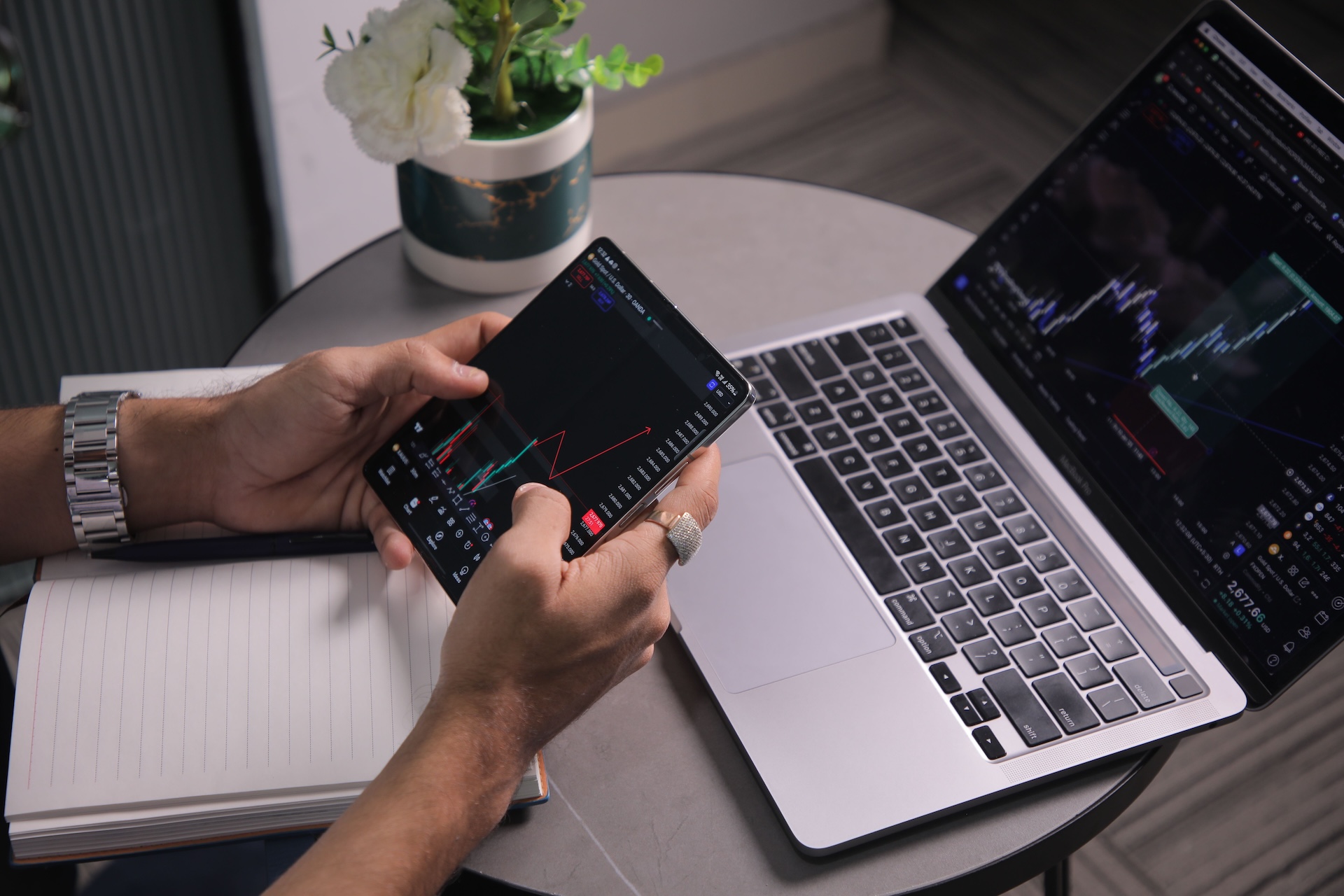

Before you can trade anything, you have to decide where to trade it. It sounds like a small question. It isn’t, and I still go back and forth on it myself.
Beginners often don’t realize there are different kinds of brokers at all. They open whatever app an ad put in front of them and find out the differences later, usually after it costs them something. More experienced traders know the differences and still argue with themselves, because every choice has a price. For me it always comes down to three things: how much money I can start with, how hard it is to get set up, and how big a position I’m forced to take.
This guide covers the two options most people end up choosing between: CFD brokers and stock brokers, which are also called investment brokers. I’ll explain what each one is, where each one hurts, and who I think each one suits. Near the end there’s a short section on futures, because they sit somewhere in between and plenty of people mix them up with CFDs.
One thing up front. I’m not going to tell you one of them is always better. They’re different tools, and the right one depends on the trader holding it.
In This Guide
What Are CFD Brokers?
CFD stands for contract for difference. When you trade one, you aren’t buying a share of Apple or a barrel of oil. You’re making a deal with your broker: if the price goes up from where you opened, they pay you the difference, and if it goes down, you pay them. You never own the thing itself.
That sounds like a technicality, but it explains almost everything else about CFDs. Because it’s a contract and not the real asset, you can open a trade with only a small part of its value as margin. You can go short as easily as long. And you can trade stocks, indices, currencies, oil, gold and crypto from a single account, since the broker is just quoting you a price on each one.
Some CFD brokers act as the other side of your trade themselves. Others pass your order on to a pool of liquidity providers. Which model a broker uses matters, because it changes both the spreads you pay and how much you can trust the price on your screen.
What are the downsides of CFD trading?
Let me start with the part most broker ads skip. CFD trading is the wild west of trading. I don’t mean it’s lawless. I mean it isn’t like the stock market, where orders meet on one exchange and everyone sees the same price. With CFDs a few things work differently, and they catch beginners out. Here they are, one by one.
The price comes from your broker and its liquidity providers. A CFD price is built from the quotes of liquidity providers, so it can differ a little from one broker to the next, and from the exchange price. It isn’t one fixed price shown on every platform, the way it is on an exchange. In practice that means CFD quotes can be more volatile and less predictable.
I’ve seen this myself. A few months ago I was trading crude oil CFDs and had the futures contract open next to it. Out of nowhere the CFD price spiked, while the futures contract stayed exactly where it was. Same market, same minute, a different picture. So CFD quotes follow a different model: they can spike without notice, and they can be more volatile and more unpredictable than the market they track. It’s something you should know before you start trading CFDs.
Spreads aren’t fixed. The spread is the gap between the price you buy at and the price you sell at, and it’s the first cost you pay on every trade. With CFDs it isn’t one set number. It changes from broker to broker and with the time of day: tight in busy hours, and much wider at news time, at the market open or late at night. But even when it narrows, the CFD spread is still significantly wider than the quoted spread on the exchange, and here’s why that matters.
Say you trade CFDs on a big stock like Apple. On a standard account you’ll often start with a spread of around 0.15, and it varies by broker. That sounds tiny, but it’s a lot. The price has to move 0.15 in your favor before you’re even at break-even. With a stock broker, a liquid stock normally trades with a spread of about a cent, so the quote looks like 344.00 / 344.01. That’s roughly fifteen times less. This is why day trading and scalping with CFDs is hard: when you’re aiming for a few cents a trade, the spread alone can eat the whole profit. Raw-spread accounts bring the spread down, but then you pay a commission instead. So the spread makes CFDs less convenient for short-term trading, and it lowers your chances of a winning trade.
Leverage changes everything. Leverage means a small deposit controls a much bigger position. At 10:1, $1,000 controls a $10,000 position. That sounds great when the trade goes your way, but it works in both directions. A 1% move against you costs $100, which is 10% of your account. A 10% move against you wipes the account out. In Europe, regulators cap retail leverage at 30:1 for major currency pairs and 5:1 for individual stocks (ESMA). At 30:1, a move of roughly 3% against you is enough to lose everything in the account. Elsewhere, brokers can offer far more. Leverage doesn’t change your odds of being right, it only changes how fast a mistake becomes expensive.
Leverage also changes the way you approach trading. Because you control a bigger position than your deposit, the real position size is often unclear, the risk is higher, and it’s harder to keep control of your account. That’s why leverage is perhaps the biggest reward and the biggest risk that CFD brokers offer.
Overnight fees. When you hold a leveraged CFD past the daily rollover, your broker charges a financing fee, usually called a swap. It’s based on interest rates plus the broker’s markup, and depending on the market and the direction of your trade you may pay it or, sometimes, receive it. Each night it looks small. But say it costs $3 a night: that’s about $90 a month, and the trade hasn’t moved yet. With stocks you buy outright there’s no such fee. So CFDs are built for shorter holds, and the longer you stay in a trade, the more the fees work against you.
Simpler platforms. Most CFD brokers give you MetaTrader 4 or 5, which were built mainly for forex. They’re fine for placing trades, drawing a few lines and running indicators. What you usually don’t get is the depth a stock platform offers: the order book, deeper research, news and screeners. Some brokers offer better platforms, like cTrader or TradingView, so check which one yours uses. Still, even these can’t be compared to what advanced brokers offer. Remember, a simple platform won’t stop you trading, but you’ll see less of the market while you do it.
Before you trade CFDs, understand what leverage is, practice on a demo account, and learn the right position size for you. Getting this wrong kills many accounts, and it’s a big part of why most traders lose money.
So Why CFDs?
After all that you might wonder why anyone uses them. There are real reasons, and I use some of them myself.
- You can start small. Because you only put up margin, a few hundred dollars is enough to open a real position and learn how a market moves.
- Everything is in one place. Forex, indices, commodities, shares and crypto, on one platform and one balance.
- Active trading is cheaper than it used to be. ECN and raw-spread accounts show the market’s tight spread and charge a small commission on top.
- Going short is easy. Selling first works exactly like buying first.
You can start small. This is the biggest one. A few hundred dollars is enough to open a real position and learn how a market moves, and our list of the best CFD brokers for beginners under $500 shows where to start. That goes for beginners who don’t want to risk much while they learn, and for experienced traders who simply don’t want a big chunk of capital tied up in one trade. Used carefully, with small size and a stop, that low entry point is a gift. Used carelessly, it’s how accounts blow up, so treat the leverage with respect.
Everything is in one place. A few years ago you needed a different broker for forex, another for stocks, another for commodities. Today most CFD brokers give you all the popular markets on a single platform and a single balance. You can watch oil, the Nasdaq, gold and EUR/USD side by side and move between them in seconds.
Active trading is cheaper than it used to be. Many brokers now offer ECN or raw-spread accounts. Instead of building their fee into a wide spread, they show you the market’s tight spread and charge a small commission on top. On the major pairs and indices the spread itself can get down to zero or close to it. If you scalp or trade actively all day, that structure can cost you far less than a standard account. Just read the commission per lot, because that’s where the real price is hiding.
Going short is easy. Selling first works exactly like buying first. No borrowing shares, no extra permissions.
What Are Stock Brokers?
A stock broker is the more traditional route, and it’s what most people picture when they hear the word “investing.” When you buy a share through a stock broker, you actually buy the share. You own a small piece of a real company. If the company pays a dividend, the money lands in your account. If it holds a shareholder vote, you usually get a say. And if the company goes under, that’s on you too.
That ownership is the biggest difference from a CFD, where you never hold anything. You’re only betting on the price.
The second thing stock brokers give you is a clearer look at the real market. Many of them offer Level 2 data, which shows the order book: who wants to buy, who wants to sell, at what price, and how much of it. If you trade actively, that is a real window into where the pressure is building. With a CFD you’re usually trading against your broker’s own quoted price, so you often don’t get that view.
There’s also what I’d call the professional path. If you ever want to take trading seriously, join a prop firm, or manage other people’s money, you’ll be working in the stock and futures world, not the CFD world. The tools, the language and the markets are the same ones the professionals use. Learning there is slower, but it carries over.
What are the downsides of stock brokers?
- Money. Real shares cost real money, so the share price sets your floor.
- Less flexible for short-term trading. More rules and guardrails than the CFD world.
- Complexity. Order types, market hours, settlement, tax forms and corporate actions.
- Harder shorting. You have to borrow the shares first, and fees apply.
Money. Buying real shares means paying for real shares. One share of a big company can cost hundreds of dollars, so a small account gets crowded fast. Fractional shares help, since many brokers now let you buy a slice of a share for a few dollars, but the moment you want to size positions properly and spread them across several stocks, you need more capital than a CFD account asks for. With a CFD you can open a small position with a small deposit. With stocks, the size of the share sets the floor.
Flexibility. In the US, active traders have long run into the pattern day trader rule, which used to demand a $25,000 minimum balance for frequent day trading in a margin account. That rule has been changing, and the newer version asks for far less, but the details depend on your broker and your country, so check the current rules before you count on anything. Either way, the system is built with more guardrails than the CFD world.
Complexity. Stock platforms are usually busier: order types, routing, market hours, settlement times, tax forms, corporate actions. None of it is hard once you’ve seen it a few times, but the first week can feel like learning a new language.
Shorting. With a CFD, selling is as easy as buying. With real shares, you have to borrow them first, pay borrowing fees, and sometimes the shares simply aren’t available to borrow.
So, Why Stock (Investment) Brokers?
After the downsides, you might wonder why anyone puts up with the bigger budget and the busier platforms. My answer is simple: with a stock broker you trade in a real trading environment, and that comes with tools that help you increase your chances of winning.
- A real trading environment. Your order goes into the real market, and everyone sees the same price.
- Level 2 data. You can see the order book of buyers and sellers.
- Tight spreads. On liquid stocks the spread is often about a cent.
- Real dividends. Actual dividend payments, not just an adjustment.
- Advanced platforms and tools. Better charting, order types, scanners, news and research.
You get a real trading environment. Your order goes into the real market, where buyers and sellers meet, and the price you see is the price everyone else sees. There’s no broker quote in between. That’s the opposite of the CFD wild west, so it’s a price you can trust, and it’s the main reason professionals trade here.
You get Level 2 data. Level 2 shows the order book: who wants to buy, who wants to sell, at what price, and how much. Instead of guessing, you can see where the buyers and sellers are stacked up, and whether a move has real volume behind it. With CFDs you usually don’t get this view, so it’s a real advantage when you trade actively.
Spreads are tight. On liquid stocks the spread is normally about a cent, so the quote looks like 344.00 / 344.01. Compare that with the 0.15 you may start with on a stock CFD. Some brokers charge a commission on top, so check that, but the spread itself is small. That’s why day trading and scalping are realistic here: the cost of getting in and out is much lower.
You receive real dividends. If you hold the stock when the dividend is paid, the money lands in your account as an actual dividend, not an adjustment. For a long-term investor, that income is a big part of the reward, so it’s one more reason stock brokers suit the long road.
You get advanced platforms and tools. Stock brokers usually offer professional platforms with advanced charting, more order types, scanners, news and research, and depth of market. Some, like Interactive Brokers, are built for serious traders. Of course, tools alone won’t make you profitable. Still, the more of the market you can see, the better your chances of making good decisions.
CFD Brokers vs Stock Brokers, Side by Side
Here’s the short version in one place. A tick marks the side that comes out ahead on that row, though “ahead” depends on what you want.
Who Is Each One For?
A CFD broker tends to fit you if you’re starting small, you want to trade short-term, and you want to try both directions without a lot of paperwork. It’s also where you can practice with a demo account and learn how markets move before you put real money on the line. Just go in knowing the leverage works both ways, and don’t treat it as a free upgrade on your account size.
A stock broker tends to fit you if you’re thinking in years, not days. If you want to own companies, collect dividends, and build something slowly, this is the better home. It’s also the right choice if you’d like to follow the professional route (see the best brokers for professional traders), or if you live somewhere that doesn’t allow CFDs for retail clients, like the US.
A lot of people end up with both. One account for the long-term money that just sits there, and a smaller one for active trading. They do different jobs, and there’s no rule saying you have to pick one forever. Some of the brokers that offer both include Saxo Bank and moomoo.
Where to Start
A few brokers we would look at first, split by type. Full details are in each review.
Stock brokers
 Interactive Brokers
Global market access and professional tools, and it accepts US clients.
Visit site → Read review Moomoo
US stocks and options with no minimum deposit, plus most US futures.
Visit site → Read review Saxo Bank
A premium platform with stocks, ETFs and CFDs under one roof.
Visit site → Read reviewCFD brokers
 Pepperstone
Raw-spread accounts with MT4, MT5, cTrader and TradingView, and broad regulation including the FCA.
Visit site → Read review eToro
CopyTrader lets you mirror other investors. Watch the 0.5%+ conversion fee on non-USD deposits.
Visit site → Read review CMC Markets
A wide CFD range with strong regulation. Not available to US residents.
Visit site → Read reviewWant more CFD options? See our list of top CFD brokers.
What About CFDs vs Futures?
If you’re in the US, CFDs aren’t an option for retail traders, so futures are usually the closest thing. Futures also let you trade price movement with leverage, on oil, gold, stock indexes, currencies and more, and you can go long or short just as easily.
The differences matter, though. Futures trade on a regulated exchange with standardized contracts, so the price is the same for everyone, and there are no overnight swap fees (the cost of margin is built into the contract). Contracts have a fixed size, and that size can be big. A standard crude oil contract, for example, covers 1,000 barrels, so one tick of movement is worth real money. That’s why the exchanges also offer micro contracts, which are a tenth of the size or smaller, and those are the sensible place to start.
A CFD, by comparison, is flexible. You can pick almost any position size you like, which is why small accounts like them. The trade-off is that the CFD is a contract with your broker, not with an exchange, so you’re relying on that broker’s pricing and their honesty.
So if you can trade CFDs and want a small, flexible start, CFDs are easier. If you can’t, or if you want exchange-level transparency, futures are the grown-up alternative.
The Wild West or the Long Road? Choosing Between a CFD Broker and a Stock Broker
There’s no winner here, because they’re built for different jobs. CFD brokers are about flexibility, low entry cost and short-term trading, with leverage and holding costs you have to respect. Stock brokers are about real ownership, dividends and the long road, with a higher starting budget and a bit more complexity.
If I had to give one piece of advice, it would be to start from what you actually want to do, not from which product sounds more exciting. Want to own companies for years? Go with a stock broker. Want to trade price moves in the short term with a small account? A CFD broker can do that, as long as you keep your risk small and read the fine print. Not sure yet? Open a demo account first and spend a few weeks there.
Whichever way you go, check that the broker is regulated by a body you recognize, compare the real costs (spreads, commissions, swap fees and withdrawal fees), and test the platform before you deposit much. When you’re ready to compare actual options, our broker reviews break down fees, platforms and regulation, and our trading tools reviews cover the platforms and tools traders use.
Frequently Asked Questions
What is the main difference between a CFD broker and a stock broker?
Ownership. With a stock broker you buy real shares and own a piece of the company. With a CFD broker you make a contract on the price and own nothing, which is why you can use leverage, go short easily and start with a small deposit.
Can I trade CFDs if I live in the US?
No. CFDs aren’t offered to US retail clients. US traders usually look at stocks, options and futures instead, with futures being the closest match to a CFD.
Are CFDs riskier than stocks?
Usually, yes, mainly because of leverage. A small move against a leveraged CFD position can wipe out your margin quickly. Stocks can also fall a long way, but without leverage a loss is limited to what you put in. European regulators make CFD brokers publish the share of clients who lose money, so check that figure.
Do I get dividends with a CFD?
It depends on the broker. Some CFD brokers do offer dividend payments, usually as a cash adjustment on a long position (and a charge on a short one), so check how yours handles dividends before you trade. You still get no shareholder vote. With a stock broker you receive actual dividends and usually a vote.
Can I start with a small account at a stock broker?
Yes. Many brokers offer fractional shares, so you can buy a slice of a share for a few dollars. It still gets harder to spread your money across several positions than with a CFD account.
Is the pattern day trader rule still in force?
The US rule that required $25,000 for frequent day trading in a margin account has been changing, and the newer version asks for far less. Details depend on your broker and country, so check the current rules before you rely on them.
Can I use both a CFD broker and a stock broker?
Yes, and many traders do. A stock account holds the long-term money, and a smaller CFD account (where available) handles active trading. They do different jobs.
What is the safest way to start?
Pick a regulated broker, open a demo account and spend a few weeks there. Compare the real costs, including spreads, commissions, swap fees and withdrawal fees, and only then deposit a small amount.
This guide is for informational purposes only and does not constitute financial advice. The Moomoo, Pepperstone and eToro links are affiliate links, and we may earn a commission if you open an account. The other brokers mentioned are not affiliate relationships. CFDs carry a high risk of losing money rapidly due to leverage, and most retail investor accounts lose money when trading CFDs. Rules, fees and broker products can change, so always check current details with your broker and your local regulator.