P2P Lending: Higher Yields, Real Risks, and How to Do It Right
Peer-to-peer lending can generate 9-12% annual returns. That is real — and it is not the whole story. Behind the headline yield sits a risk structure that most platforms explain poorly and most investors understand incompletely. Originator failures in 2020 left millions in recovery. A war in 2022 tested every buyback guarantee in the market. Some platforms passed. Some didn’t.
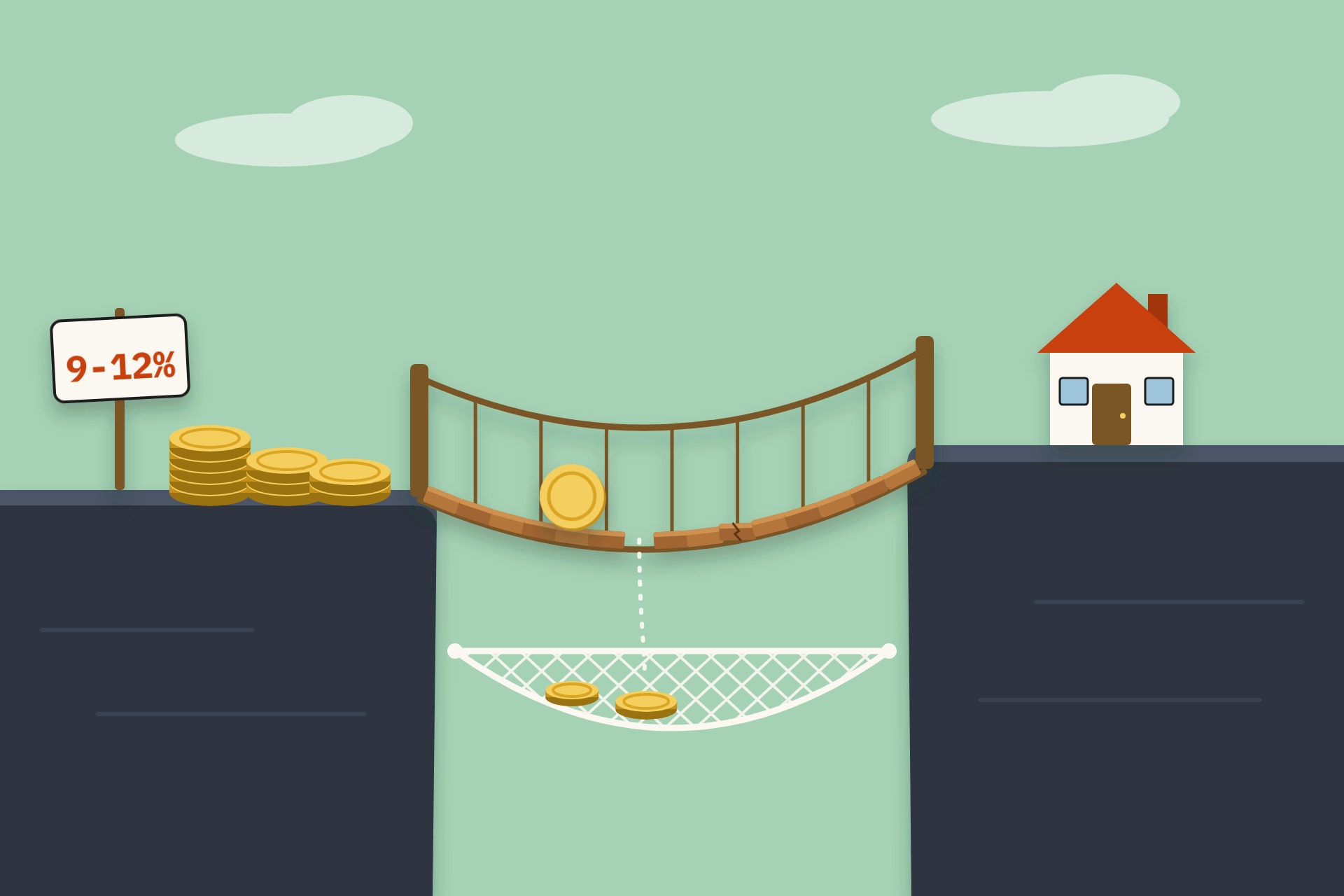

This guide covers how P2P lending actually works, where the risk really sits, and how experienced investors structure a portfolio that earns the yield without taking unnecessary exposure. The four platforms below represent the strongest options in the European market — each reviewed independently by AllinAllSpace.
If safety is your main concern, start with our safest P2P platform guide, compare all four platforms on the P2P lending hub, or jump to the P2P lending calculator.
In This Guide
What P2P Lending Actually Is
Peer-to-peer lending is one of those terms that gets used in a dozen different ways. Strip away the marketing language and the mechanics are straightforward: you lend money to borrowers, and they pay you back with interest. No bank in the middle. No fund manager taking a cut. Just a platform connecting lenders with borrowers and handling the plumbing in between.
The critical thing to understand before anything else: in P2P lending, you are the lender, not the borrower. This confuses a surprising number of first-time investors. When you deposit money on Mintos or PeerBerry, you are not taking out a loan. You are funding one. The borrower pays interest at a high rate — often 20-40% APR for consumer loans in emerging markets — and a portion of that flows back to you as your return. The platform and loan originator take their spread in the middle. What reaches you, typically 6-12% annually, is your net investor yield.
Loan originator, explained. A company that lends money directly to borrowers and then lists those loans on a P2P platform for investors to fund. The originator handles credit assessment, collections, and borrower relationships. On most platforms, the originator also provides the buyback guarantee. The financial health of the loan originator — not just the borrower — is the critical risk factor for investors.
There are two distinct models in the European P2P market. The first is the marketplace model, where the platform connects investors with multiple independent loan originators — this is how Mintos and PeerBerry work. The second is the vertically integrated model, where the platform and all its loan originators belong to the same group — this is how Robocash works. Go & Grow sits in its own category: a pooled product where Bondora lends directly to borrowers and pays investors a fixed target rate from the combined portfolio returns.
Each model has different risk implications, which this guide covers in detail.
Key takeaway. You are the lender. You earn interest from borrowers via a platform and originator that take their cut. Your net return of 6-12% is what remains after that spread. Understanding who sits between you and the borrower — and whether they can honour their obligations — is the foundation of P2P risk assessment.
How the Returns Actually Work
P2P platforms advertise returns of 9-12%. Those numbers are real — but they require unpacking, because the headline figure and what you actually earn in your account can diverge meaningfully. For reference, Mintos Core Loans targets 9.1% APY, PeerBerry reports a platform average of 11.02%, and Go & Grow targets 6%.
Gross vs Net Return
The gross return is the interest rate on the loan itself — what the borrower pays. The net return is what you actually receive after the platform and originator take their spread. On Mintos, for example, the platform-wide weighted average gross interest rate is 10.79%, but the Core Loans portfolio targets 9.1% APY net to investors. The difference is the originator and platform margin.
Cash Drag
Cash drag is the hidden return killer that most platforms understate. When you deposit money that sits uninvested — waiting for suitable loans to become available — it earns nothing. On platforms where loan availability fluctuates (Robocash reported a 42% year-on-year decline in monthly origination volume in June 2026), cash can sit idle for days or weeks. A portfolio nominally earning 11% gross can yield significantly less in practice once uninvested periods are factored in.
XIRR (Extended Internal Rate of Return), explained. The most accurate measure of your actual P2P return, accounting for the timing of every cash flow in and out of your account. Unlike a simple percentage return, XIRR captures the effect of cash drag, reinvestment timing, and partial exits. Long-term investors on Mintos with diversified auto-invest portfolios consistently report XIRR in the 9-12% range. This is the figure you should use to compare P2P returns against alternative investments.
Fees
Fee structures changed significantly in 2025. Mintos introduced a 0.29% annual management fee on Custom Loan Portfolios and a 0.39% fee on High-Yield Bonds (previously free). Robocash and PeerBerry charge no investor fees. Go & Grow charges only a flat €1 withdrawal fee. Always factor fees into your net return calculation — a 0.29% annual fee on a 9.1% gross return is modest, but it compounds over time.
How Much Could You Make? A Worked Example
Here is a simple illustration of our own, not a platform claim. Take a platform advertising 9.1%, assume 5% of your money sits idle and 1% a year is lost to defaults, and you are left with about 7.6% net. On €5,000 that is roughly €390 in the first year, and about €7,200 after five years if you reinvest the interest. The same €5,000 in a savings account at 3.5% would reach about €5,940. The gap is real, but it is the reward for taking credit risk, and the P2P figure is a target, not a promise.
Key takeaway. Headline returns are gross, pre-fee, and assume no cash drag. Real investor XIRR typically runs 1-2 percentage points below the advertised rate. Still significantly better than savings accounts — but the gap between what platforms advertise and what you earn in practice is real and worth understanding before you invest.
P2P Lending Calculator: Estimate Your Own Return
The worked example above uses one set of numbers. To see your own, use the calculator below, which starts from the same numbers. Pick a platform to start from, enter your amount and timeframe, and it takes off idle cash, fees and losses, then compares the result with a savings account.
Enter what you plan to invest to see what P2P lending could earn after idle cash, fees and losses, and how it compares with a savings account. Results update as you type.
More assumptions
Your money could grow to about €7,227 in 5 years.
That is about €1,288 more than a savings account at 3.5%. It is the reward for taking credit risk, and it is a target, not a promise.
- Advertised return9.1%
- After idle cash (5% idle)8.6%
- After fees and losses7.6%
- Total paid in€5,000
- Interest earned, P2P vs savings€2,227 vs €938
- P2P beats savings if yearly losses stay below5.1%
Year-by-year table
| Year | You have paid in | Savings account | P2P lending |
|---|---|---|---|
| 1 | €5,000 | €5,175 | €5,382 |
| 2 | €5,000 | €5,356 | €5,794 |
| 3 | €5,000 | €5,544 | €6,237 |
| 4 | €5,000 | €5,738 | €6,713 |
| 5 | €5,000 | €5,938 | €7,227 |
How the calculator works and what it assumes
We start from the platform’s advertised return and take away three things that investors often forget. Then we compound what is left month by month and compare it with a savings account.
- Idle cash. Money that has not yet been lent out earns nothing. If 5% of your money is idle on average, you only earn the advertised rate on the other 95%.
- Fees. Some platforms charge an annual fee on top (Mintos, for example, charges 0.29% on Custom Loan Portfolios). We subtract it from your return.
- Losses. Some loans are never recovered, for example when an originator fails and its buyback guarantee is worthless. We subtract the share of your money you expect to lose each year.
Whatever is left is your net annual return. If you choose to reinvest, interest is added to your balance each month and earns interest itself. If you take the interest out, it is paid out each month and does not compound.
What it assumes and leaves out:
- Advertised rates. The presets use each platform’s own reported figures from our reviews (Mintos, Go & Grow, PeerBerry and Robocash as of July 2026, InRento as of November 2026). They are targets, not guarantees, and they change. InRento’s preset is the middle of its reported 8.8-11.8% range, which includes a 1.5% extra paid at the end of each project.
- Your own return. Choose “Your own return” to enter any rate, from another platform, a bond or a fund. We assume the figure you enter is already what you expect to earn, so idle cash, fees and losses are set to zero. You can add them back under “More assumptions”.
- Idle cash and losses. The presets assume 5% idle cash (0% for Go & Grow, which is pooled) and 1% lost a year, or 2% for InRento because you hold one property project at a time and some projects have run late on interest. These are our own assumptions, not platform figures, so change them if you disagree.
- One rate for the whole period. Real returns move up and down, and a single bad year can erase several good ones.
- Tax. Optional, and applied as one flat rate to the interest from both P2P and savings. Check how interest is taxed where you live.
- Currency. Most platforms lend in euros. If you invest in pounds or dollars, exchange-rate moves can change your result and are not modelled.
- No protection. Unlike a bank savings account, P2P investments are not covered by a deposit guarantee, so the savings figure is far safer than the P2P figure.
An illustration, not a forecast or financial advice. P2P lending is high risk, your capital is at risk, and P2P investments are not covered by deposit protection schemes.
The Three Layers of Risk
P2P lending involves three distinct types of risk, stacked on top of each other. Most investors focus on the first — which is actually the least dangerous. The second is where most historical losses have occurred. The third is the tail risk that determines whether you should invest at all.
Layer 1 — Borrower default (low risk). An individual borrower fails to repay their loan. On most platforms, this is neutralised by the buyback guarantee: the loan originator repurchases the loan from you after 30-60 days of non-payment. Individual borrower defaults are the risk P2P platforms talk about most, but it is the risk investors need to worry about least — provided the originator can honour the buyback.
Layer 2 — Originator failure (medium risk). The loan originator itself becomes insolvent and cannot honour its buyback obligations. This is what actually hurt investors in 2020-2022. When Mintos originators like Capital Service, Cashwagon, and Aforti failed during COVID, their buyback guarantees became worthless. Around €130 million in Mintos investor funds entered recovery processes. Some has returned over multi-year timelines. Some is effectively lost.
Layer 3 — Platform failure (high risk). The P2P platform itself fails. Between 2020 and 2022, several European P2P platforms shut down entirely — Kuetzal, Envestio, Grupeer, Monethera. In some cases these were outright fraud. Investors on unregulated platforms had limited legal recourse. This is the tail risk that makes regulation genuinely important: Mintos’s MiFID II licence and €20,000 investor compensation scheme provide meaningful protection that unregulated platforms cannot.
What 2020-2022 actually showed. The COVID-19 pandemic and the Russia-Ukraine war were the first real stress tests for European P2P platforms at scale. The results were instructive. Platforms with diversified originator pools and strong regulation (Mintos) survived but had significant defaults. Platforms with group guarantee structures (PeerBerry) fully repaid investors including war-affected loans. Platforms with direct lending models (Go & Grow) briefly limited withdrawals but maintained returns. Platforms that were poorly structured or fraudulent collapsed entirely. The stress test largely validated the importance of regulation, originator diversification, and group guarantee structures — not as marketing claims, but as actual protection mechanisms. For a closer look at which platforms held up, see our guide to the safest P2P platforms.
Key takeaway. Worry about originator failure, not borrower default. The buyback guarantee protects you from individual borrowers. Nothing protects you from an originator that cannot honour its buyback — except choosing platforms with strong originator pools, group guarantees, and regulatory frameworks that mandate investor protection.
Buyback Guarantees: What They Are and When They Fail
The buyback guarantee is the most marketed feature in P2P lending and the most misunderstood. Every major platform offers one. Very few investors understand what it actually covers — and more importantly, what it does not.
Buyback guarantee, explained. A contractual commitment from a loan originator to repurchase a loan from an investor if the borrower is more than 30 or 60 days late on repayment, at the loan’s face value plus accrued interest. The guarantee is only as strong as the financial health of the originator making it. If the originator itself becomes insolvent, the buyback guarantee is worthless.
In normal conditions, the buyback guarantee works exactly as advertised. A borrower misses payments, the 30 or 60-day clock runs, and the originator automatically repurchases the loan. You receive your principal plus the interest that accrued during the overdue period. No action required on your part. This mechanism is why individual borrower defaults are largely invisible to investors on well-functioning platforms.
The failure mode is originator insolvency. When multiple borrowers default simultaneously — as happened during COVID lockdowns in 2020 — originators that were already thinly capitalised could not absorb the losses and honour their buyback obligations simultaneously. The guarantee became a liability they could not meet. Investors on Mintos who had concentrated exposure to these originators found their loans frozen in recovery, earning nothing while legal processes slowly unwound the situation.
The group guarantee: a stronger protection. Some platforms go beyond the individual originator buyback with a group guarantee: the parent group entity backstops the originator’s buyback obligations if the originator itself cannot meet them. PeerBerry’s originators are backed by Aventus Group, Gofingo Group, and other parent entities. When PeerBerry’s Ukrainian and Russian originators were unable to repay in 2022, Aventus Group stepped in to cover the full €51.4 million outstanding — every euro, with interest. This is the group guarantee working exactly as designed. It only fails if the group itself becomes insolvent — a higher threshold than individual originator failure.
The buyback periods also matter. Mintos and PeerBerry operate on 60-day buyback terms. Robocash offers a 30-day buyback — the fastest in the market — because the same group that owns the platform also owns all the originators, making internal processing faster than cross-company transactions.
Key takeaway. A buyback guarantee is only as strong as the entity behind it. When evaluating platforms, look beyond whether a guarantee exists to who is backing it, what their financial health looks like, and whether a group guarantee provides an additional layer of protection above the individual originator level.
Is P2P Lending Legal?
Yes. P2P lending is legal in the UK, the EU and the US, and it is regulated as a financial activity. The catch is that regulation varies a lot from platform to platform, and being legal does not mean being protected. Most importantly, P2P investments are not covered by deposit guarantee schemes the way bank savings are. The next section shows what protection each of the four platforms in this guide actually offers.
Regulation: What Protection You Actually Have
Regulatory standing is the starkest differentiator between European P2P platforms — and the one most investors underweight when making platform decisions. The spectrum runs from full MiFID II investment firm regulation with an investor compensation scheme, to no licence of any kind.
| Platform | Regulatory Framework | Investor Compensation | Fund Segregation |
|---|---|---|---|
| Mintos | MiFID II — Latvijas Banka | €20,000 per investor | Yes — mandatory |
| Go & Grow | Bondora AS via EFSA (loan originator) | None | Yes — LHV Pank |
| PeerBerry | No licence (ECSP pending) | None | Not disclosed |
| Robocash | No licence | None | Yes — 3S Money/Multipass |
MiFID II Investor Compensation Scheme, explained. Under Latvia’s investor compensation scheme (which Mintos qualifies for as a MiFID II-licensed investment firm), up to €20,000 per investor is protected in the event of Mintos platform insolvency. This covers uninvested cash and the value of Notes held on the platform — not investment losses from loan originator defaults. If Mintos were to collapse and investor assets were misappropriated or lost, the scheme would compensate up to €20,000. It is a platform insolvency protection, not a return guarantee. Mintos applied for a banking licence in February 2026; if approved, this protection would rise to €100,000.
The honest framing: regulation matters most in tail-risk scenarios. In normal operation, an unregulated platform with a strong track record (PeerBerry, Robocash) can perform as well as a regulated one. The difference shows up when things go wrong — when you need a legal framework, fund segregation enforcement, and compensation backstop. That is when regulation earns its value. Our safest P2P platform guide ranks the platforms on exactly these points.
Key takeaway. Only Mintos holds a MiFID II licence with an investor compensation scheme. Go & Grow holds funds at LHV Pank with legal ownership of loan claims. PeerBerry and Robocash are unregulated. This does not make them bad investments — both have strong track records — but it changes the risk calculus and should determine how much of your P2P allocation you concentrate there.
How to Build a P2P Portfolio
The single most common mistake P2P investors make is treating platform diversification as equivalent to genuine diversification. Having money on four different platforms does not fully protect you if all four platforms use the same underlying loan originators, operate in the same geographies, or are concentrated in the same loan type.
Genuine diversification in P2P works across four dimensions:
- Platform diversification — spread across multiple platforms so a single platform failure does not wipe your entire P2P allocation
- Originator diversification — within marketplace platforms like Mintos, spread across as many originators as possible. A diversified auto-invest portfolio across Mintos’s 64 originators is structurally safer than a concentrated manual portfolio in two or three
- Geographic diversification — exposure to different borrower markets reduces correlation. Kazakhstan and Philippines (Robocash) carry different risk than Estonia and Finland (Go & Grow) or Eastern Europe (PeerBerry)
- Loan type diversification — short-term consumer loans, long-term loans, business loans, and real estate loans behave differently in different economic environments
Recommended allocation framework. Total P2P allocation: 5-15% of your overall investment portfolio. P2P should complement, not replace, a diversified stock and bond portfolio. The higher yields come with corresponding risk that makes large concentrations inadvisable. On a €10,000 portfolio that is roughly €500-1,500.
Within P2P: Mintos as primary platform (50-60% of P2P allocation) for its regulatory standing and originator breadth. PeerBerry as secondary (20-30%) for track record and group guarantee structure. Robocash or Go & Grow as third platform (20-30%) for structural diversification. Cap any single unregulated platform at 30% of total P2P allocation.
Key takeaway. The most cited combination among experienced European P2P investors is Mintos + PeerBerry + Robocash at roughly 50/30/20. This combines regulatory protection (Mintos), a stress-tested track record (PeerBerry), and structural diversification via vertical integration (Robocash). Go & Grow suits investors who prioritise liquidity or are new to P2P.
How to Start Investing in P2P Lending
You do not need to be an expert to get started, but the order of the steps matters.
- Decide how much. Stay within the 5-15% range above, and only use money you can lock away for 12-36 months and would not need in a downturn.
- Check where you can invest. Mintos, PeerBerry and Robocash accept UK investors. Go & Grow does not, because it is limited to the EU, Norway and Switzerland.
- Start small. Go & Grow starts at €1, PeerBerry and Robocash at €10 per loan, and Mintos at €50 for portfolio products. To spread risk properly on a marketplace like Mintos, plan on €500-1,000 or more.
- Turn on auto-invest. Pick a diversified portfolio rather than choosing loans by hand, and keep an eye on cash sitting idle.
- Track your XIRR and your tax. Interest is taxable income in most countries, so keep records. UK investors declare it on a self-assessment return as foreign-source income.
If you are choosing a first platform, our guide to the safest P2P platforms shows how each one handles the risks above.
P2P vs Savings Accounts: An Honest Comparison
P2P lending is frequently positioned as a high-yield alternative to savings accounts. The comparison is valid but incomplete. The higher yield comes with a fundamentally different risk profile — and the differences matter more than most marketing materials acknowledge.
| Feature | Savings Account | P2P Lending |
|---|---|---|
| Typical return (2026) | 2.5-4.5% | 6-12% |
| Capital protection | Government-guaranteed (FSCS/FDIC) | No guarantee — capital at risk |
| Liquidity | Instant (easy access accounts) | Conditional — secondary market or loan maturity |
| Complexity | Open account, earn interest, done | Platform selection, originator assessment, monitoring |
| Tax treatment | Interest taxed as income (UK/EU) | Interest taxed as income; losses may be deductible |
| Regulation | Bank regulation — FSCS/FDIC protected | Varies by platform — MiFID II to no licence |
| Suitable for | Emergency fund, short-term savings | Long-term allocation, capital you can afford to lose |
The practical implication: P2P lending should not hold money you need to access reliably or cannot afford to lose. Emergency funds, short-term savings, and any capital with a defined near-term purpose belong in deposit-protected savings accounts (our high-yield savings guide covers the best options). P2P is appropriate for a portion of your long-term investment allocation — money you can commit for 12-36 months and would not need to access in a downturn.
The Platforms We Recommend
After reviewing four of the strongest European P2P platforms in detail, here is our condensed assessment. Which one is best depends on who you are: for most people Mintos is the strongest base, and Go & Grow is the easiest first step outside the UK. Each card links to a full review covering returns, fees, regulation, originator structure, and our honest verdict, and you can see how they compare on safety in our safest P2P platform ranking.
Mintos
4.4/5AAS RatingEurope’s largest P2P platform — the only one with MiFID II regulation and an investor compensation scheme. €130M in legacy defaults from 2020-2022 are real but manageable. The regulatory standing makes it the default first choice.
Go & Grow
4.1/5AAS RatingThe most beginner-friendly P2P product in Europe. Fully automated, daily returns, near-instant withdrawal. Lower yield than marketplace platforms — the trade-off for simplicity and liquidity. Not available to UK investors.
PeerBerry
4.0/5AAS RatingThe cleanest default track record in European P2P — zero defaults ever and full repayment of all war-affected loans. No MiFID II licence is the gap. Best as the second platform in a portfolio alongside Mintos.
Robocash
3.8/5AAS RatingVertically integrated — the platform and all originators belong to UnaFinancial. Fastest buyback (30 days), zero fees, 100% repayment since 2017. Single-group concentration is the key risk. Best as a third platform. Available to UK investors.
AllinAllSpace Verdict
P2P lending belongs in a long-term investment portfolio for investors who understand what they are buying. It is not a savings account with better rates. It is a lending investment with genuine credit risk, platform risk, and regulatory gaps that range from strong (Mintos) to non-existent (Robocash, PeerBerry).
Done right — diversified across platforms and originators, sized appropriately at 5-15% of your total portfolio, with the bulk allocated to regulated platforms — P2P can deliver 9-11% net annual returns that compound meaningfully over time. Done wrong — concentrated in a single unregulated platform, sized too large, or treated as an emergency fund substitute — it can result in capital losses that take years to recover.
Start with Go & Grow if you are new to P2P and want to learn the product with minimal complexity (UK investors can start with Mintos instead). Move to Mintos as your primary platform once comfortable — the MiFID II regulation and originator diversification make it the most defensible base. Add PeerBerry and Robocash as second and third platforms to build genuine diversification. Read the full reviews before committing capital to any platform, or compare all four on our P2P lending hub.
Frequently Asked Questions
Is P2P lending safe?
P2P lending is higher risk than a bank savings account. Your capital is not covered by deposit protection schemes. Between 2020 and 2022, several European P2P platforms failed or had significant originator defaults that resulted in real investor losses. The platforms reviewed here — Mintos, Go & Grow, PeerBerry, and Robocash — have stronger regulatory standing and track records than those that failed, but risk cannot be eliminated. Most experienced investors allocate 5-15% of their portfolio to P2P rather than treating it as a primary savings vehicle. See our safest P2P platform guide for how they compare.
How much can I realistically earn from P2P lending?
Realistic net returns for diversified P2P investors in 2026 range from 6% (Go & Grow) to 11-12% (Mintos Custom Portfolio, PeerBerry). The platform-reported averages — Mintos Core Loans 9.1% APY, PeerBerry 11.02%, Robocash 9.91% — reflect what investors actually receive on diversified portfolios. Your individual return depends on which platforms and originators you use, how much cash sits uninvested, and whether any originators encounter difficulties during your investment period. Always measure your return as XIRR, not simple percentage return, to account for cash flow timing.
What is the minimum amount I need to start with P2P lending?
Go & Grow has the lowest barrier at just €1. PeerBerry and Robocash start from €10 per loan. Mintos requires €50 for portfolio products. In practice, meaningful diversification on a marketplace platform like Mintos requires at least €500-1,000 to spread across enough loans and originators to reduce concentration risk. For Go & Grow, any amount works immediately since the product is a pooled account.
How do I get my money back from a P2P platform?
It depends on the platform. Go & Grow offers near-instant withdrawals for a flat €1 fee — the most liquid option. Mintos, PeerBerry, and Robocash all have secondary markets where you can sell loans before maturity (fees may apply). If you do not sell on the secondary market, you receive your principal back as each loan matures — typically over weeks to months for short-term loans. In stress scenarios, secondary markets can freeze for affected originators. P2P should be treated as a medium-term investment, not an instant-access product.
Is P2P lending income taxable?
Yes — in most jurisdictions, interest earned from P2P lending is taxable as investment income and must be declared. In the UK, this means including it on your self-assessment tax return as foreign-source income. In most EU countries, P2P interest is taxed at the applicable personal income tax rate. Go & Grow has an advantageous structure where tax is only triggered when you withdraw more than your total invested capital — allowing tax-free compounding until withdrawal. Always verify the tax treatment in your own jurisdiction and consult a tax adviser if in doubt.
Which P2P platform should I start with?
For first-time P2P investors: Go & Grow. The pooled product, fixed 6% target, daily returns, and near-instant withdrawal make it the simplest introduction to the asset class. No loan selection, no originator monitoring, no secondary market to navigate. Once comfortable with how P2P works, add Mintos as your primary marketplace platform — the MiFID II regulation and 64-originator breadth make it the most defensible base. PeerBerry and Robocash are appropriate as third and fourth platforms for investors building a fully diversified P2P portfolio. Note: Go & Grow is not available to UK investors; Mintos and Robocash are.
What happened to P2P platforms during the Russia-Ukraine war?
The war in February 2022 created an immediate problem for platforms with Russian and Ukrainian loan originators. Mintos froze 8 Russian originators, with affected capital entering recovery processes. PeerBerry, by contrast, fully repaid all €51.4 million in war-affected investor obligations through the Aventus Group guarantee — every euro, with interest, without exception. This made PeerBerry’s war-loan handling the strongest real-world demonstration of the group guarantee structure working under genuine stress conditions. Robocash divested from affected originators promptly and maintained uninterrupted investor repayments.
Can UK investors use European P2P platforms?
Yes, with platform-specific restrictions. Mintos accepts UK investors. Robocash explicitly accepts UK investors. PeerBerry accepts UK investors. Go & Grow is not available to UK residents — it is limited to EU countries, Norway, and Switzerland. UK investors should note that P2P income must be declared via UK self-assessment as foreign-source income.
Disclosure: P2P lending is a high-risk investment. Your capital is at risk. P2P investments are not covered by deposit protection schemes, and returns are not guaranteed. Mintos is covered by Latvia’s investor compensation scheme up to €20,000 per investor in the event of platform insolvency, which does not cover investment losses from loan originator defaults. AllinAllSpace may earn a commission when you sign up via platform links on this page. This does not affect our editorial independence or ratings. Data sourced from platform websites, audited financials and independent P2P research. Accurate as of July 2026. This is not financial advice. Always do your own research and consider independent financial advice before investing.