
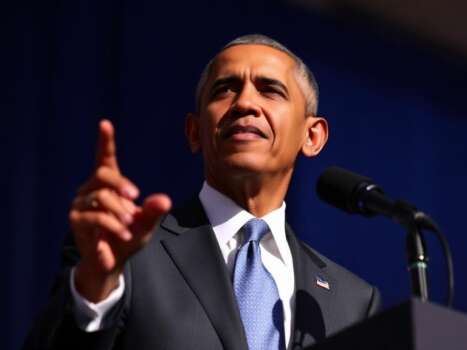
Eight years later, the answer is more complicated than either side wants to admit.
Barack Obama is one of those figures whose conversation never really ends. Bring him up at a dinner table, and you’ll have either someone getting misty-eyed about hope and change, or someone going red in the face about drones and Wall Street bailouts. The actual truth, as usual, lives somewhere in the uncomfortable middle — and it’s worth spending some time there.
So let’s try something unusual: an honest assessment of Obama’s presidency that doesn’t involve either worshipping at the altar of his 2008 campaign speeches or pretending he was some kind of secret supervillain. He was the president. A pretty good one in some ways. A pretty disappointing one in others. Let’s get into it.
The Case For: He Did Some Real Things
Obamacare is a genuine achievement — even if nobody will admit it.
The Affordable Care Act is one of the most politically tortured pieces of legislation in modern American history. Republicans spent a decade trying to kill it. Democrats spent a decade being embarrassed to defend it by name. And yet, it is still here, and it has insured tens of millions of people who would otherwise have had nothing.
Is it a perfect system? Not even close. It’s a complicated, compromise-heavy Frankenstein of a law that was designed specifically not to offend the insurance industry, which tells you a lot about how Washington works. But before the ACA, insurance companies could simply deny you coverage because you had a pre-existing condition. That was legal. It happened all the time. Obama ended that. That matters.
The fact that the American left wanted Medicare for All and the American right wanted nothing means that what actually passed satisfied no one — which, oddly, is the most convincing argument that it was a genuine political compromise rather than an ideological vanity project.
The Iran nuclear deal was actually good diplomacy.
The 2015 Joint Comprehensive Plan of Action — the Iran nuclear deal — was one of the most serious pieces of foreign policy work of the Obama era. The deal wasn’t pretty. It didn’t make Iran into a democracy or solve every problem in the Middle East. What it did was put verifiable limits on Iran’s uranium enrichment program and get international inspectors into facilities that had previously been off-limits.
Was Iran trustworthy? No. Did that matter? Less than you think, because the whole point of the deal was to create a verification system that didn’t require trusting anyone. When Trump pulled out of it in 2018, Iran’s nuclear program accelerated significantly, which is what the people who opposed the withdrawal predicted would happen, and it did. That’s a point in Obama’s column. And, believe it or not, this is pretty close to the deal Donald Trump is about to close with Iran after the 2026 US/Israel-Iran war.
He stabilized a collapsing economy.
This one gets forgotten quickly, but Obama took office in January 2009 in the middle of the worst financial crisis since the Great Depression. The auto industry was days from collapse. The banking system was technically insolvent. Unemployment was heading toward 10%. By the end of his presidency, unemployment was at 4.7%, and the stock market had tripled.
You can argue – and many people do – that the recovery was too slow, too friendly to banks, and left too many working-class people behind. Those are fair criticisms. But “the economy didn’t collapse into a second Great Depression” is a real accomplishment, even if it doesn’t make for a great bumper sticker.
The Case Against: This Is Where It Gets Uncomfortable
The drone program was a moral disaster.
This is the Obama legacy that his supporters most consistently refuse to engage with, and it deserves a lot more attention than it gets. Obama dramatically expanded the CIA and military drone strike program, carrying out hundreds of strikes across Pakistan, Yemen, Somalia, and elsewhere. Many of those strikes killed civilians, including American citizens, without trial or due process.
The administration developed a creative accounting method for counting civilian casualties that basically redefined any military-age male in a strike zone as a combatant unless proven otherwise posthumously. That’s not a counterterrorism policy. That’s a bureaucratic workaround for international law.
Obama gave eloquent speeches about American values and the rule of law while simultaneously running a program that operated largely outside both. The dissonance was real, it was significant, and the people who gave him a pass on it because they liked his demeanor and his speeches should think about whether they’d have given the same pass to someone they liked less.
He bailed out Wall Street and left Main Street to figure it out.
The 2008 financial crisis was caused, in significant part, by reckless behavior on the part of major financial institutions. The banks that blew up the economy received hundreds of billions of dollars in government support. The executives responsible largely kept their jobs and their bonuses. Essentially, no one went to prison.
Meanwhile, millions of ordinary Americans lost their homes in a foreclosure crisis that the Obama administration’s response programs — HAMP, HARP — addressed too slowly and too timidly. Historians will debate whether more aggressive action was politically possible, but the optics of socialism for banks and capitalism for homeowners was exactly as bad as it sounds, and it planted seeds of populist anger on both left and right that bloomed into Bernie Sanders and Donald Trump.
He deported more people than any president before him.
Obama was dubbed “Deporter-in-Chief” by immigration advocates — not by Fox News, but by the people who were supposed to be his allies. His administration deported more people than any previous president, using a prosecutorial discretion policy that in practice meant aggressive enforcement against long-settled immigrant communities alongside the more sympathetic cases he talked about publicly.
DACA was a genuine and humane policy for dreamers. The broader deportation record was not. You can hold both of these things at once, and you should.
The red line in Syria.
In 2012, Obama declared that the use of chemical weapons in Syria would cross a “red line” with “enormous consequences.” In 2013, chemical weapons were used. The consequences were a diplomatic arrangement to remove Syria’s declared chemical weapons stockpiles, which was probably the right call given the risks of military intervention, but which was presented in a way that made the United States look like it had backed down from its own stated position. The damage to American credibility was real and lasted.
So What’s the Verdict?
Obama was a smart, serious president who genuinely accomplished meaningful things — particularly on healthcare, climate (the Paris Agreement was real, if non-binding), and diplomacy. He was also a president who, on civil liberties, drone warfare, financial accountability, and immigration, governed in ways that were more continuations of Bush-era policies than the rupture his supporters believed they were voting for.
The version of Obama his fans carry around — the transformational progressive who was going to fundamentally change America — was always more speech than substance. The actual Obama was a cautious, institutionalist, centrist lawyer who believed deeply in working within existing systems even when those systems were failing.
That’s not a scandal. It’s just the gap between campaign mythology and governing reality that exists for almost every president. The difference with Obama is that the mythology was so powerful, and the man so genuinely compelling, that the gap felt larger than it actually was.
He wasn’t a great president. He wasn’t a bad one. He was a good president with real accomplishments and real failures, operating in a genuinely difficult political environment, who will be remembered more warmly than his record fully warrants and more critically than his accomplishments deserve.
Which is, honestly, about what most presidents get.
What do you think? Was Obama underrated, overrated, or exactly rated? Let us know in the comments.